
Victorian Standing Bookshelves
Victorian standing bookshelves bring open storage and rich timber grains to a room, offering accessible display space for everyday volumes.
Victorian Standing Bookshelves
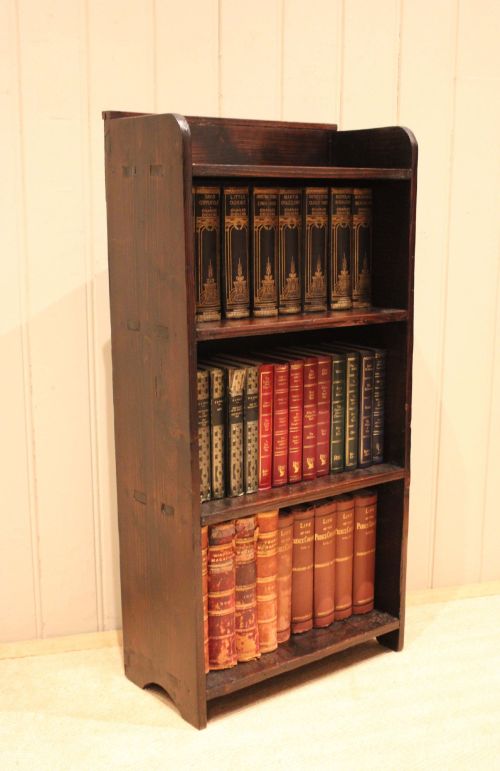
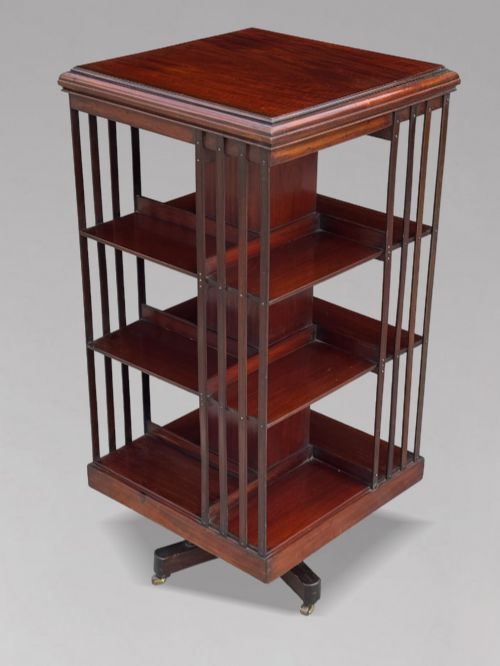
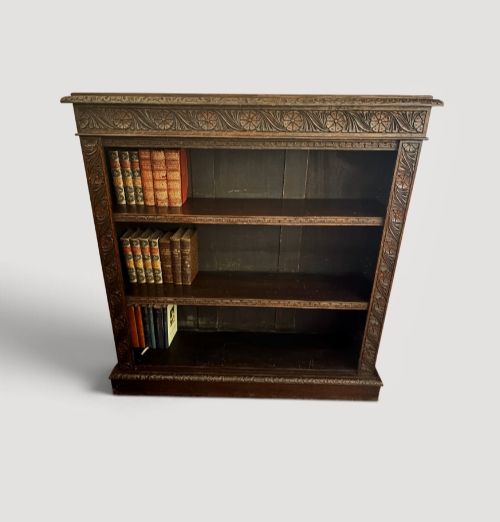
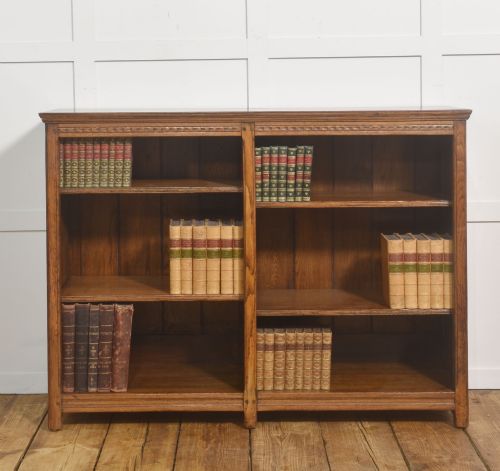
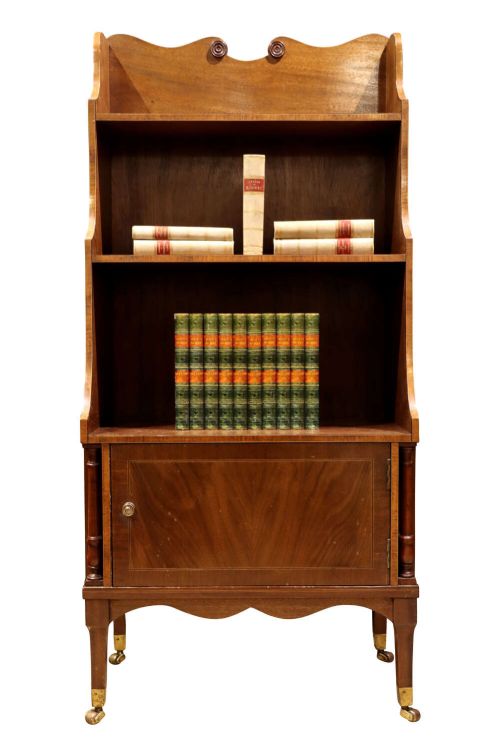
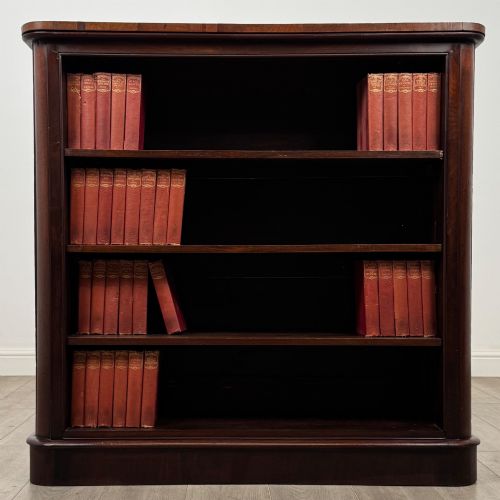
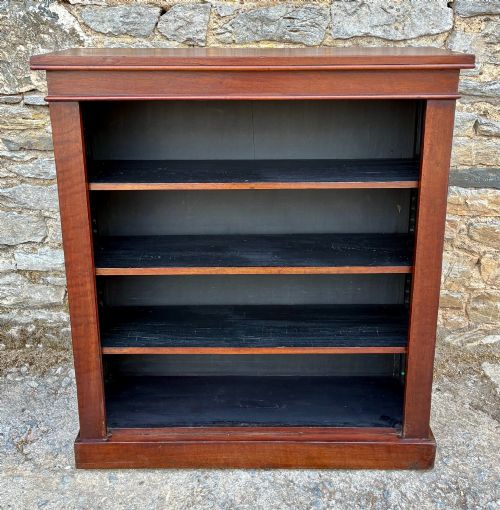
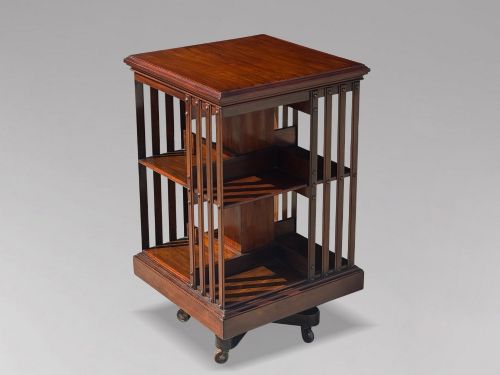
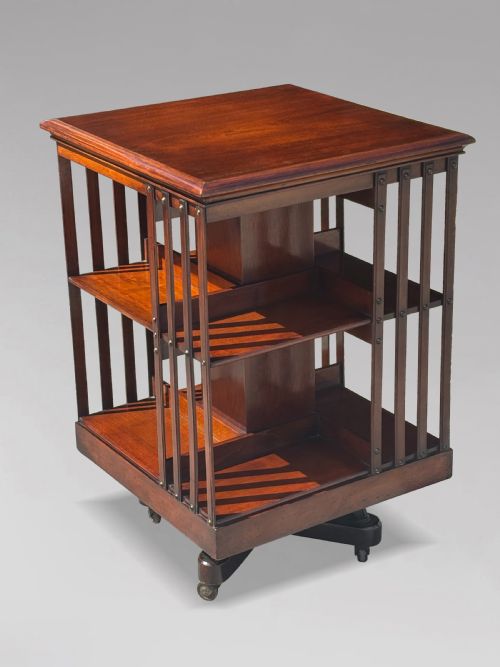
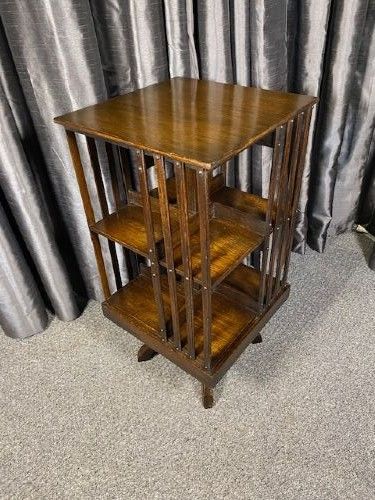
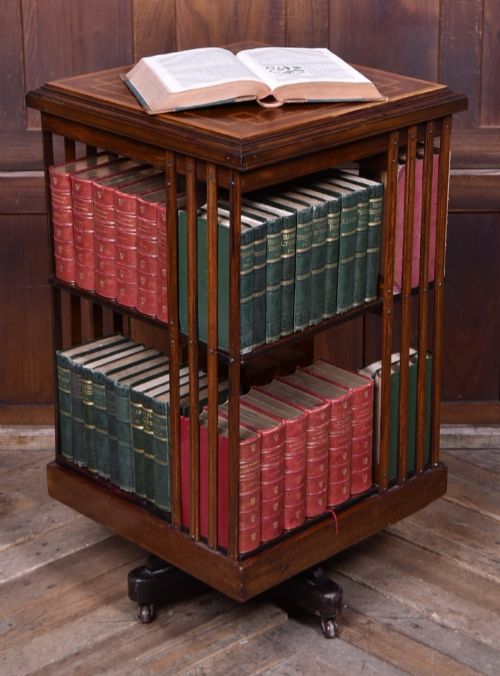
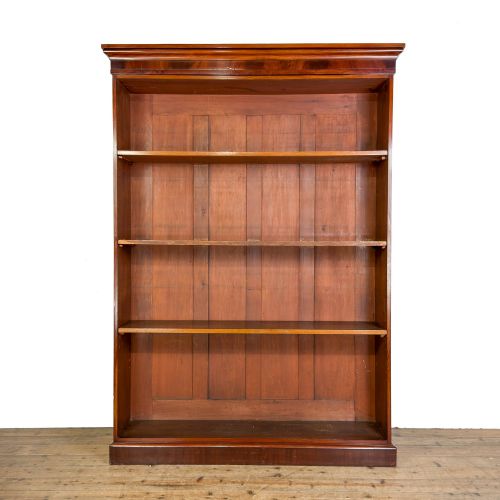
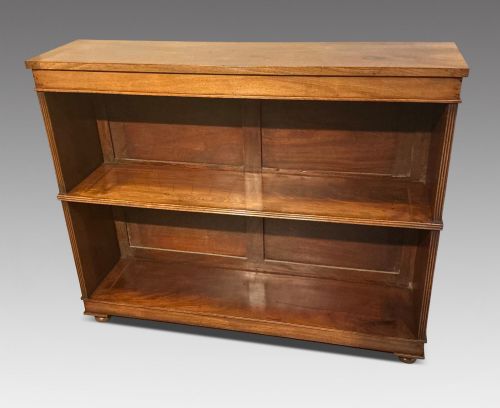
Victorian standing bookshelves encompass open bookcases, revolving designs, and tiered whatnots intended for floor placement rather than wall mounting. The versions most commonly encountered on this page are mahogany open bookcases and revolving designs dating from the nineteenth century.
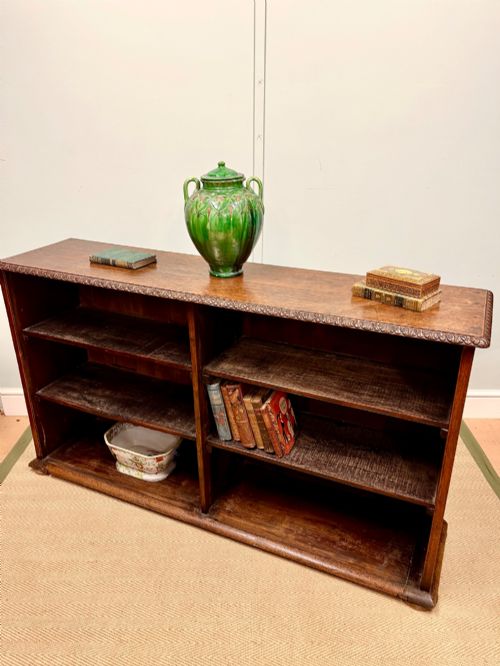
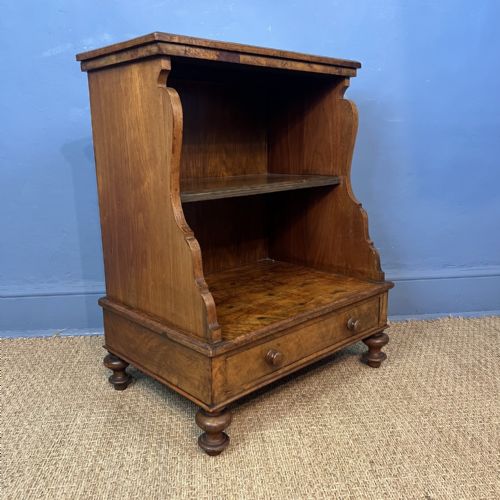
Makers and cabinetmakers produced these pieces in various configurations, including tall stands, low cabinets, and graduating waterfall shelves. The selection reflects both formal domestic settings and more modest rustic country interiors.
Pieces frequently incorporate adjustable internal shelves or brass castors to ease movement across floorboards. Their footprints range from compact bedside units to tall architectural bookcases designed for substantial libraries.
Construction and Materials
Cabinetmakers relied heavily on dense hardwoods such as mahogany, walnut, burr walnut, and rosewood, often figuring the grain on primary display surfaces. Softer timbers like pine and oak served utilitarian or regional pieces.
Detailing involved hand carving, fret-cutting, and delicate inlay work, alongside functional brass hardware and castors. Joinery techniques prioritized structural stability to bear the weight of heavy bound volumes without sagging.
A revolving bookcase lets you spin away from unhelpful literature with literal momentum.
Assessing Quality
The degree of refinement in the timber selection and decorative carving dictates the standing of a piece within the range. Elaborate exhibition items display superior figuration in burr walnut or rosewood, coupled with precise joinery.
Proportion and the integration of functional elements, such as smooth-running revolving mechanisms or adjustable shelf racks, separate standard utility furniture from finer examples.
Samson & Son London
The Victorian Standing Bookshelves Glossary
- Waterfall bookcase
- A standing set of open shelves that steps back progressively from bottom to top. This form emerged during the nineteenth century to display books and small ornaments efficiently.
- Revolving bookcase
- A compact bookcase mounted on a rotating spindle and cross base. It allows multiple directions of access to books in restricted spaces.
- Breakfront
- A piece of furniture where the central section projects forward from the flanking wings. This architectural arrangement adds visual depth to larger bookcases.
- Adjustable shelves
- Shelves supported on moveable brackets or ratchets within the bookcase interior. This system allows the vertical spacing to alter according to book heights.
Victorian Standing Bookshelves: Frequently Asked Questions
How do I identify a revolving bookcase?
A revolving bookcase sits upon a concealed internal pivot and a cross-shaped floor base, allowing the entire structure to spin freely by hand.
Most examples date from the late nineteenth or early twentieth century and stand at desk or table height for easy access.
What is the difference between a whatnot and a bookcase?
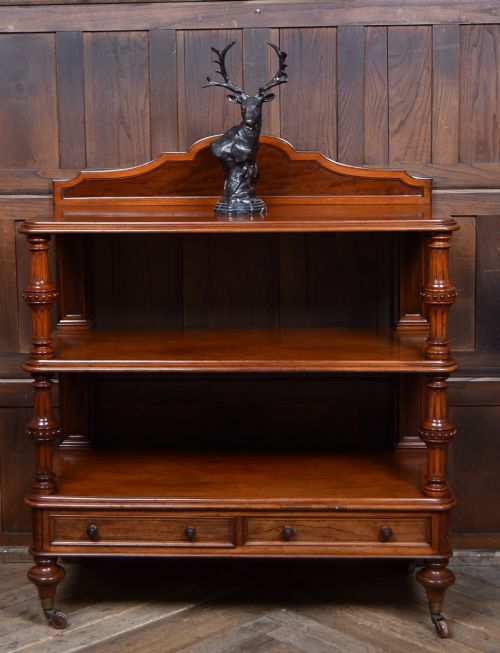
A whatnot is typically an open, multi-tiered stand designed for general display objects as well as books, often featuring lighter upright supports.
Bookcases are structurally heavier, built specifically to bear the weight of dense rows of volumes on sturdy shelves.
Are shelves usually adjustable in these pieces?
Many nineteenth-century open bookcases feature adjustable shelves supported by wooden ratchets, brass studs, or movable pegs.
Simpler country pieces often have fixed shelves that were nailed or glued permanently into the cabinet carcase during manufacture.
Where should I place a freestanding bookcase?
These pieces require a stable, dry floor space away from direct heat sources and strong sunlight to protect the polished timber veneers.
Because many are finished on the front only, they sit best against interior walls or library partitions rather than in open rooms.