


Victorian Sporting Dog Picture
These Victorian sporting dog picture selections capture field sports and canine portraits in oil and watercolour, bringing heritage field scenes straight to your wall.
Victorian Sporting Dog Picture
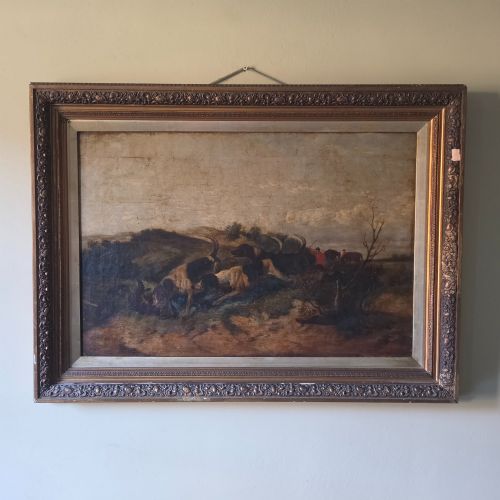
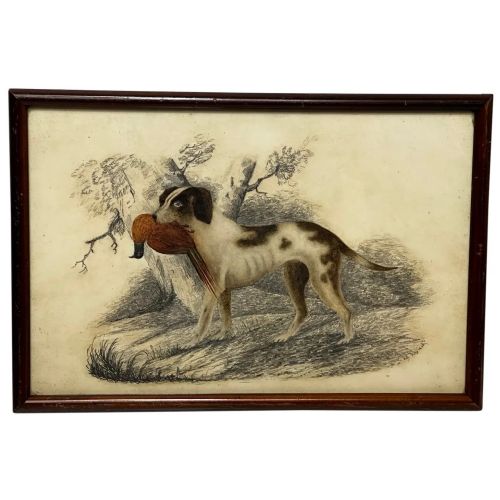
A victorian sporting dog picture brings canine subjects into domestic spaces, recording working hounds, terriers, and gundogs in varied rural settings. These works capture the relationship between human, dog, and countryside across the nineteenth century.
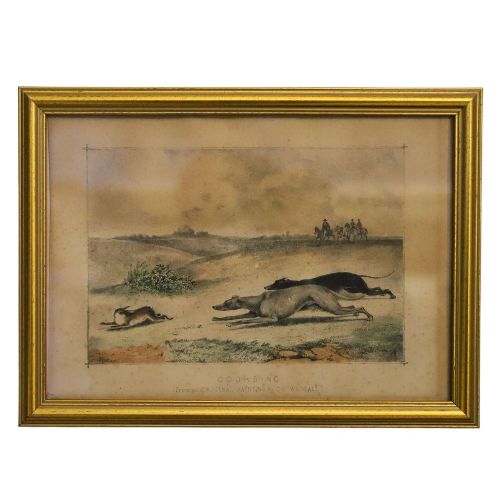
The selections available here range from oil paintings on canvas and board to watercolours, lithographs, and framed engravings. Oils dominate the offerings, often presenting setters, pointers, and terriers within Highland or lowland landscapes.
Most pieces align with the Victorian period and the wider nineteenth century, reflecting the era's fascination with hunting art and canine portraiture. Buyers encounter both intimate watercolours and large-scale oil compositions framed in wood and gilt.
Materials and Techniques
Artists working in this genre relied primarily on oil on canvas or oil on board, building up rich textures for animal coats and rural backgrounds. Watercolour on paper served for lighter, more immediate studies and finished drawings.
Framing forms an integral part of these pieces, utilising wood, gilt wood, and gold leaf to house the paintings and prints. Engravings and lithographs on paper represent the printed methods used to reproduce sporting imagery for wider distribution.
Listings feature works spanning the nineteenth century into the early twentieth century, utilising oil, watercolour, paper, and gilt wood.
Assessing Quality
Quality in a sporting dog picture rests on the artist's command of canine anatomy, expression, and movement. The finest hands capture the tension of a hound on the scent or the alert posture of a terrier with remarkable psychological depth.
The integration of the subject within its landscape setting marks another distinction, where superior brushwork unites dog, handler, and terrain into a single coherent atmosphere. Condition of the canvas, paper, and original gilt frame also shapes the standing of each piece.
John Emms·Arthur Wardle·Colin Graeme Roe·John Charles Tunnard·Alfred Duke·Robert Cleminson·Frank Dadd·Thomas Blinks·Samuel John Egbert Jones
The Victorian Sporting Dog Picture Glossary
- Oil on Canvas
- Pigment suspended in drying oil applied to stretched woven fabric. This medium allows for deep blending of colours and tactile rendering of fur.
- Watercolour
- Paint consisting of transparent pigment suspended in a water-based solution applied to paper. It yields luminous washes and fine linear detail.
- Lithograph
- A print made from a planographic image on stone or metal. It permits multiple faithful reproductions of an original drawing.
- Gilt Wood
- Timber decorated with gold leaf or metallic powder. It frames and elevates the artwork within it.
- Gundog
- A type of hunting dog trained to find and retrieve game. They feature prominently in nineteenth-century sporting art.
Victorian Sporting Dog Picture: Frequently Asked Questions
How do I hang a heavy oil painting?
Heavy oil paintings require secure fixings into wall studs or solid masonry using appropriate picture hooks rated for the weight.
Ensure the hanging wire or rings on the wooden frame match the support capacity to keep the piece level and safe.
Where should I place these paintings?
Position these works away from direct sunlight and damp environments to protect oil paint, paper, and gilt frames.
Studies, hallways, and living rooms provide traditional settings that complement the rustic and sporting themes of the artwork.
What is the difference between an oil and a watercolour?
Oils use pigment bound in slow-drying oil on canvas or board, offering rich texture and deep colour layering.
Watercolours use water-soluble pigments on paper, presenting a lighter, more translucent finish usually protected beneath glass.