

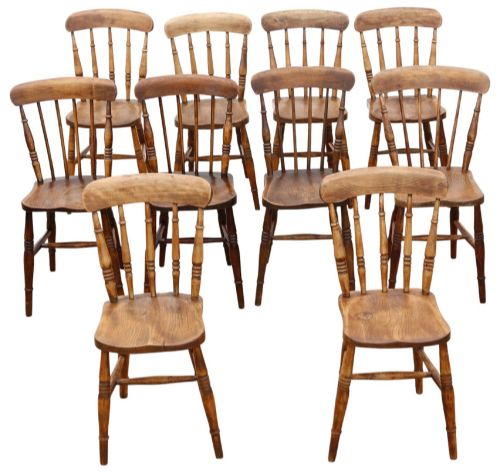
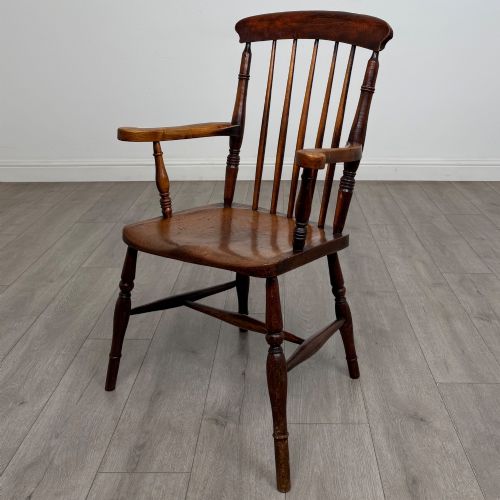

Victorian Spindle Chairs
Victorian spindle chairs bring honest vernacular woodwork and turned grace into a room, offering sturdy seating with genuine period character.
Victorian Spindle Chairs
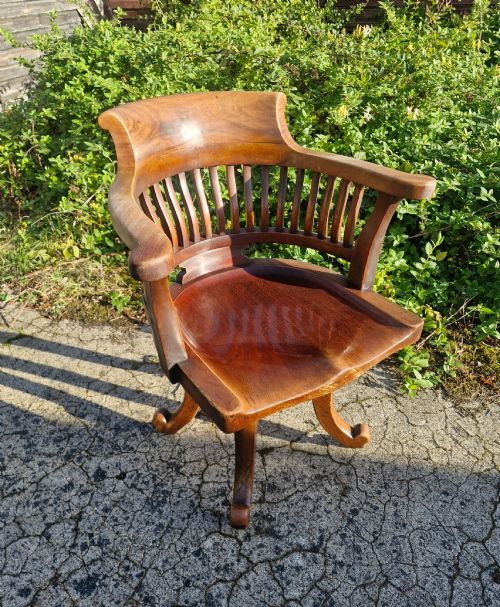
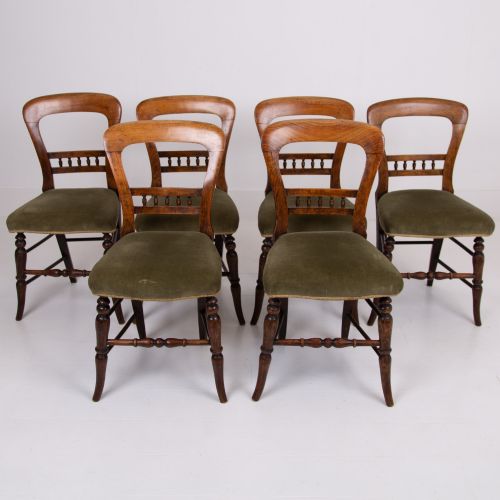
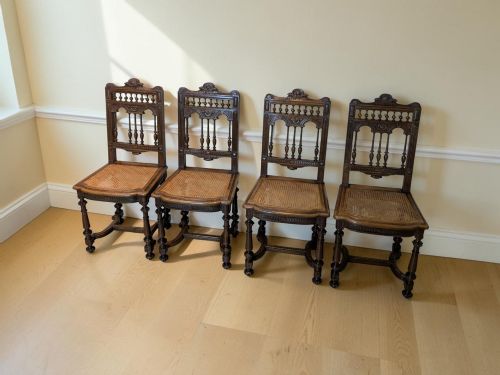
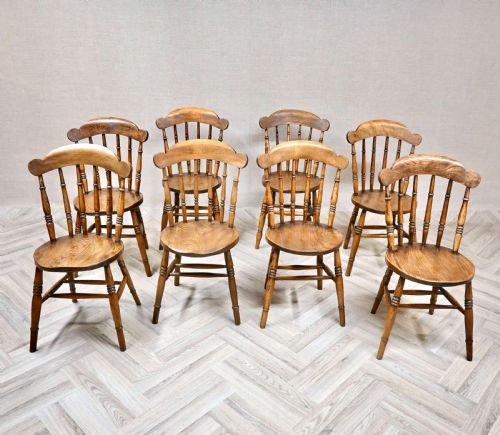
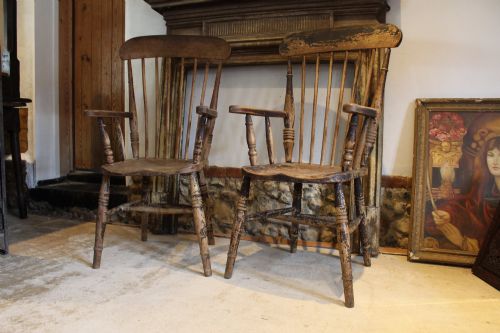
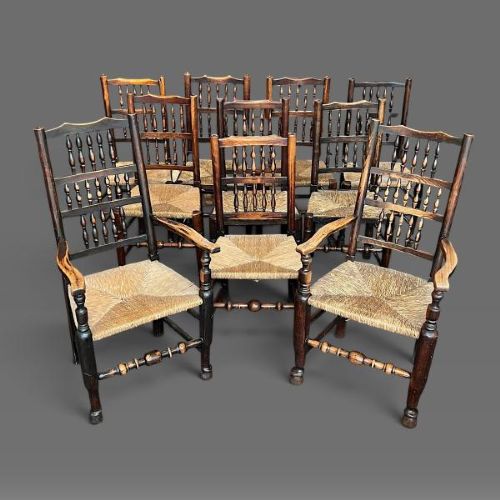
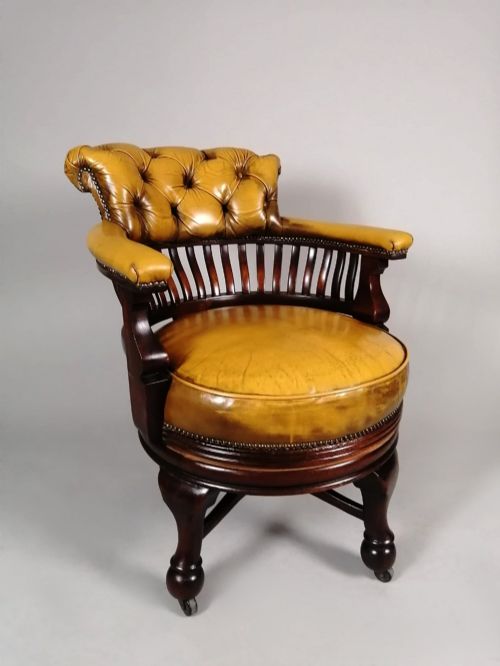
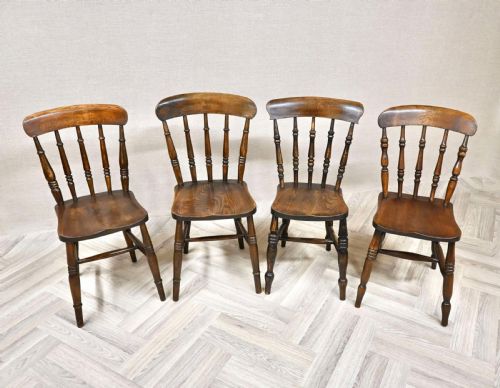
Victorian spindle chairs encompass a diverse group of nineteenth-century seating, ranging from robust kitchen dining chairs to refined salon armchairs and revolving desk seats. The version most frequently encountered here is the vernacular Windsor or farmhouse chair in elm and beech, often featuring traditional turned spindles along the back.
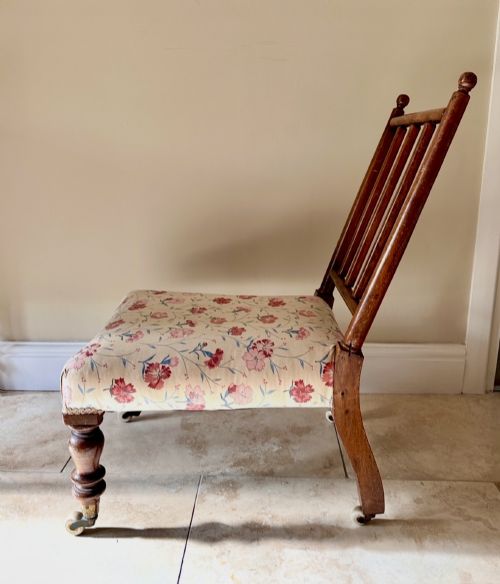
Makers produced these pieces across several distinct stylistic movements, including Arts and Crafts, Aesthetic Movement, and traditional English country forms. Dining sets, carvers, rocking chairs, and low slipper chairs make up the primary forms available.
Origins stretch from rural English workshops to urban offices, spanning the Victorian era alongside occasional Edwardian examples. The focus remains on functional timber seating built for everyday utility.
Construction and Materials
Makers relied on native timbers, pairing durable elm seats with bent beech, ash, or oak for spindles, bows, and legs. This combination utilised the natural strength and flexibility of each wood to withstand heavy daily use.
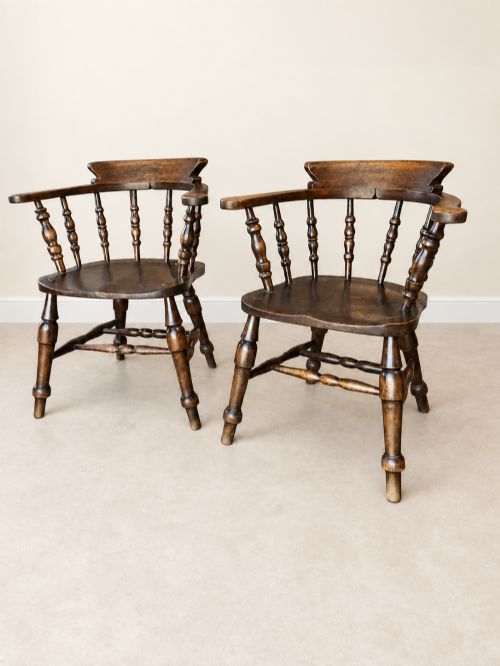
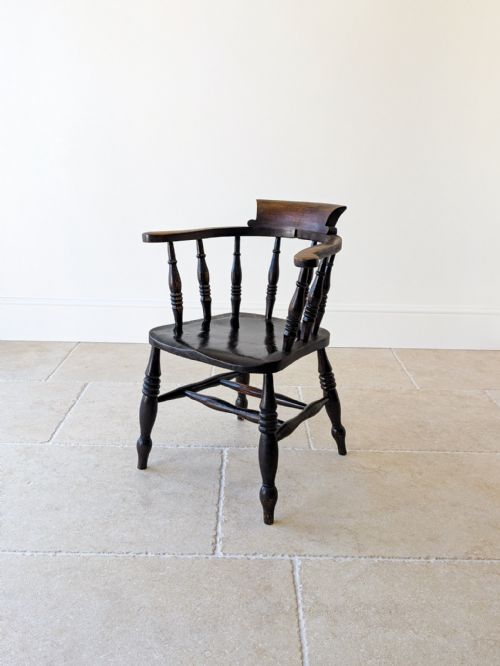
Turnery lathes shaped the characteristic vertical spindles and structural stretchers, while steam-bending formed the curved crest rails and arm bows found on Windsor and Captains chairs. Joinery typically involved pegged mortise and tenon construction.
Certain formal salon and desk variants introduced mahogany, birch, or ebonised wood, sometimes incorporating rush seating, cane panels, or leather upholstery for added comfort.
Some nineteenth-century desk chairs feature concealed revolving mechanisms that allowed clerks to pivot briskly between ledgers without moving their heavy wooden bases.
Judging Quality
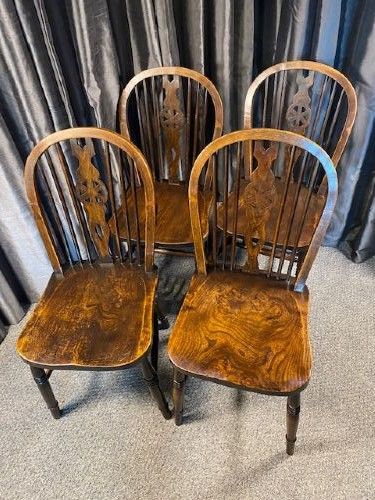
Quality rests primarily on the integrity of the timber and the crispness of the turnery. A heavier, well-figured elm seat combined with tightly fitted ash or beech spindles indicates superior workshop standards.
Proportion and stance dictate visual success, separating utilitarian workshop output from more considered Arts and Crafts or Aesthetic Movement commissions. Original surface patination and minimal timber replacement elevate the standing of a piece.
Morris and Co·Philip Webb·J Spencer
The Victorian Spindle Chairs Glossary
- Spindle-back
- A chair back constructed from a series of slender turned wooden rods. These vertical elements provide structured support while keeping the frame visually light.
- Smokers bow
- A low-backed Windsor armchair with a continuous curved armrail popular in nineteenth-century public houses and parlours. It is also frequently known as a Captains chair.
- Windsor chair
- A chair built with a solid wooden seat into which the legs and back spindles are directly joined. Regional variations include distinct comb-backs and hooped frameworks.
- Penny seat
- A saddle-shaped wooden seat base shaped by adzing and dishing for comfort. The term derives from the circular depression resembling a large coin.
- Turners chair
- A heavy chair constructed entirely of turned wooden members joined in a grid pattern. This ancient form saw revival during the nineteenth century.
- Ebonised wood
- Timber treated with a dark stain or finish to imitate ebony. This technique gained prominence during the Aesthetic and Late Victorian periods.
Victorian Spindle Chairs: Frequently Asked Questions
How do I identify a Windsor chair?
Windsor chairs feature a thick solid wooden seat that acts as the central chassis into which the undercarriage legs and upper back components are wedged.
They often include steam-bent armbows and multiple slender spindles, distinguishing them from framed or upholstered seating.
Are these chairs suitable for daily dining?
Most of these pieces were built for rigorous everyday use in farmhouses, kitchens, and offices, making them exceptionally durable for modern dining tables.
Pairing mismatched or harlequin sets creates an authentic rustic aesthetic while offering practical, sturdy seating.
How do I care for antique elm and beech?
Maintain the timber by keeping the chairs away from direct heat sources and sudden temperature shifts that can dry out old wood.
Applying a traditional beeswax polish occasionally helps nourish the surface and preserves the natural patina without sealing the grain.