




Victorian Smelling Bottle
A victorian smelling bottle is a pocket companion of glass and silver, carried to ward off vapours and revive the senses with fragrant salts.
Victorian Smelling Bottle
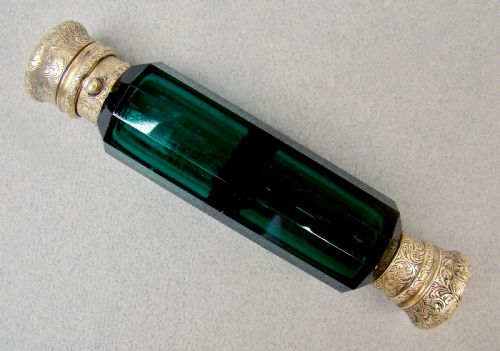
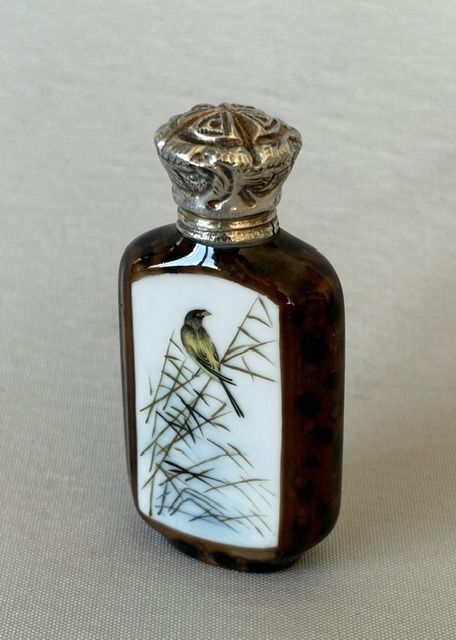
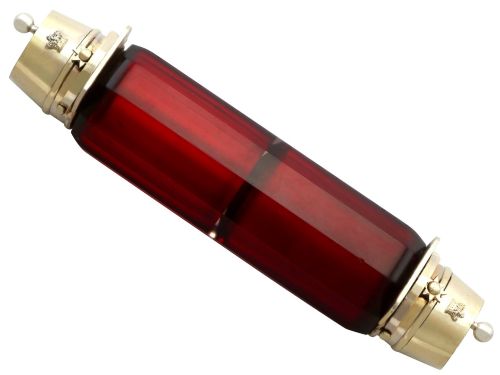
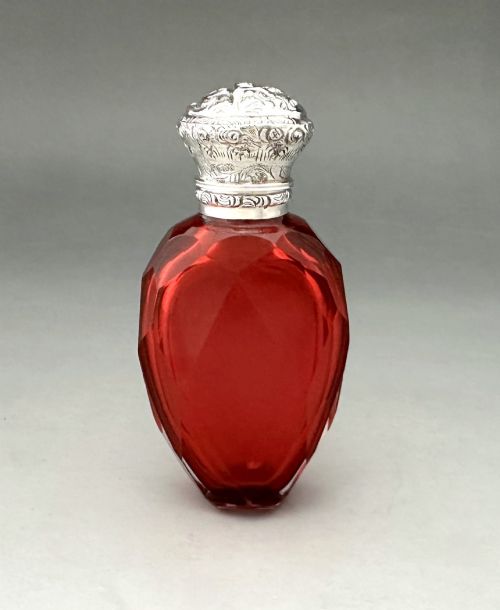
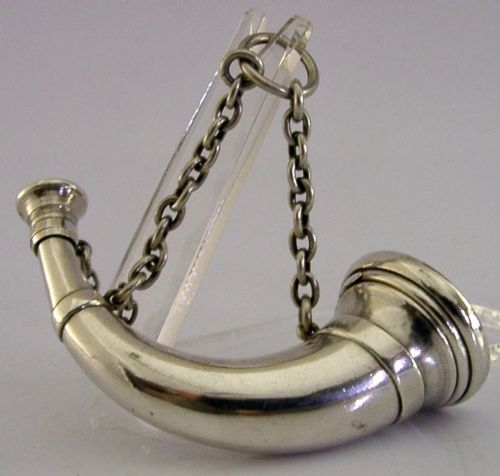
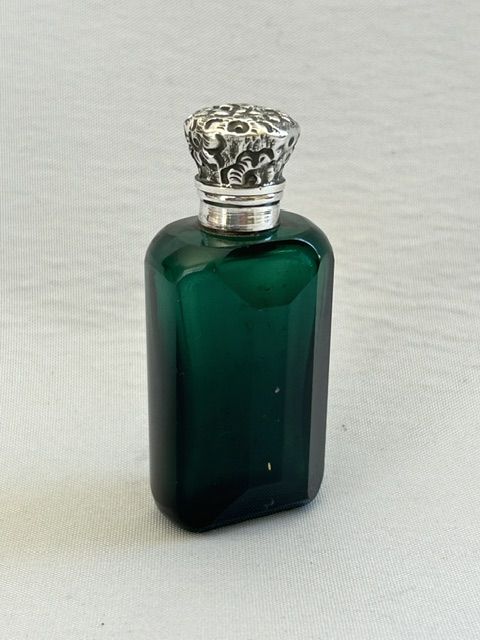
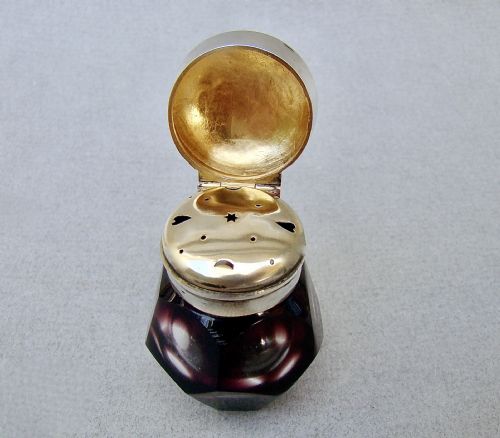
A victorian smelling bottle takes many distinct shapes, from double-ended glass cylinders to silver-mounted flasks and miniature hunting horns designed to fit snugly into a pocket or reticule. Collectors encounter ruby, cranberry, amethyst and Bristol green glass, often paired with sterling silver or silver-gilt mounts that screw or hinge shut.
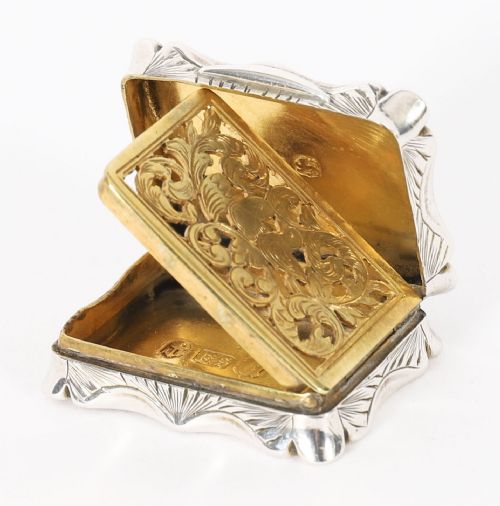
Makers shaped these scent containers as single vessels for perfume or dual chambers combining a scent bottle with a pierced vinaigrette grille for aromatic sponge. The materials span clear cut glass, opaline glass and speckled ceramic finishes alongside bright silver work hallmarked in London and Birmingham.
The pieces on this page represent the late nineteenth century, principally the Victorian and Edwardian decades, capturing a time when personal scent was both a necessity and a refined accessory. Each surviving specimen reflects the domestic and social habits of its original owner through distinct craftsmanship.
Factors of distinction
The quality of a victorian smelling bottle rests upon the depth and clarity of the glass-cutting, the richness of the glass colour, and the crispness of the silversmith's engraved or cast ornamentation. Pieces bearing clear hallmarks from established makers demonstrate superior workshop origin.
Double-ended bottles and complex forms like hunting horns or speckled ceramic eggs demand greater technical skill than simple cased cylinders, elevating their standing among collectors. The presence of original matching inner stoppers and undamaged silver hinges preserves the integrity of the piece.
Victorian Smelling Bottle Retail Price Guide 2026
Typical asking prices for victorian smelling bottle among the pieces listed under this phrase on Sellingantiques today, from the lower quarter to the upper quarter. They describe what is for sale here now, not the wider market.
Some Victorians carried smelling bottles shaped precisely like hunting horns, ensuring aromatic relief came with a blast of sporting style.
Sampson Mordan·Edward Smith
The Victorian Smelling Bottle Glossary
- Vinaigrette
- A small ornamental box or bottle containing a sponge saturated with aromatic vinegar. It was used in the nineteenth century to relieve fainting or mask unpleasant odours.
- Silver-gilt
- Silver that has been coated with a thin layer of gold on its surface. This technique provided the rich appearance of solid gold while maintaining structural strength.
- Double-ended
- A bottle featuring two separate compartments accessed from opposite ends. These often stored smelling salts at one end and liquid perfume at the other.
- Opaline glass
- An opaque or semi-translucent glass developed in various pastel and bold colours. It gained popularity during the nineteenth century for decorative table and vanity wares.
- Cranberry glass
- A rich red transparent glass coloured with gold chloride. It was widely utilised by Victorian glassmakers for scent bottles and tableware.
Victorian Smelling Bottle: Frequently Asked Questions
What is a victorian smelling bottle?
A victorian smelling bottle is a small personal container fashioned from glass and silver, designed to hold liquid perfume or aromatic salts.
Ladies and gentlemen carried them in pockets or chatelaines during the nineteenth century to revive the senses in crowded rooms or when feeling faint.
How do double ended bottles work?
Double-ended bottles feature a central metal band with a cap at each end, allowing the owner to access two different substances.
Typically, one end held liquid perfume while the other contained a sponge soaked in smelling salts.
How do I clean a scent bottle?
Cleaning requires gentle warm water and mild soap, avoiding harsh abrasives that might scratch the delicate glass or wear away old silver.
Interior residue should be soaked out carefully without submerging vintage cork stoppers or fragile glued mounts.
How are silver mounts dated?
Silver mounts carry hallmarks stamped by official assay offices such as London and Birmingham, indicating the specific year of manufacture.
These tiny marks include date letters, maker's initials and the lion passant denoting sterling standard silver.