





Victorian Slope Front Box
These Victorian slope front box pieces are practical desk accessories and fire companions built to keep correspondence and fuel neat.
Victorian Slope Front Box
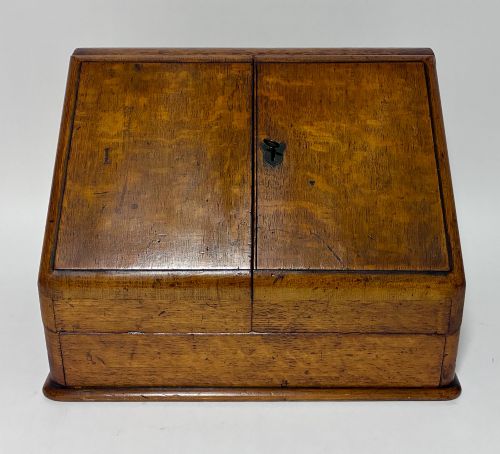
A Victorian slope front box brings refined organisation to a desk or hearth through forms like stationery cabinets, writing boxes, and coal boxes. These objects originate from the nineteenth century, spanning periods such as 1800, 1850, 1860, 1880, 1890, and 1900 under Victorian and Victorian Gothic Revival styles.
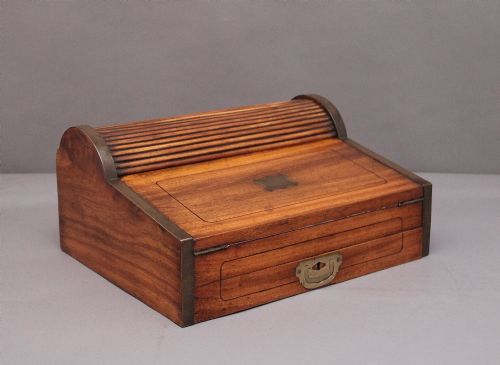
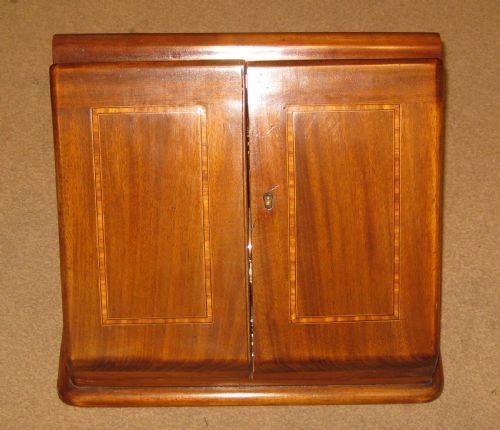
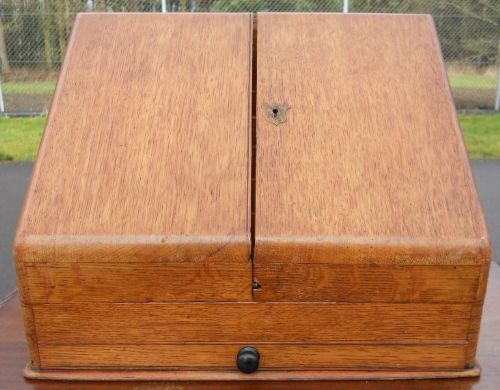
The selection on this page focuses heavily on stationery boxes and cabinets alongside writing slopes and purdonium coal boxes. Drop front designs and slope fronts dominate the functional forms, providing immediate access to papers or writing implements.
Makers and craftsmen of the era utilised distinct formats for domestic utility, ranging from tabletop storage to fireside accessories equipped with liners and shovels. Buyers frequently encounter these pieces rendered in mahogany, oak, and walnut.
How they were made
Cabinet makers constructed these boxes using solid timbers and decorative veneers such as mahogany, oak, walnut, burr walnut, coromandel, camphor wood, and satinwood. These woods provided the structural integrity required for daily desktop use and heavy fireside duties.
Metalwork played a functional and decorative role, with brass hardware reinforcing corners, hinges, and handles. Certain pieces incorporate gilt covered elements, hand-painted porcelain plaques, and carved details to elevate their visual appeal.
Interior layouts utilised fitted compartments for paper, envelopes, and inkwells, while coal boxes featured metal liners for practical containment.
Materials represented across the inventory include brass, mahogany, oak, satinwood, burr walnut, camphor wood, coromandel, and walnut.
What varies in quality
The choice of timber and veneer defines the initial visual impact, moving from straightforward utility timbers to richly figured burr walnut and exotic coromandel. Cabinet makers who selected superior grain patterns created pieces with greater depth and texture.
Detailing distinguishes standard production from finer examples, evident in the precision of carving, the quality of hand-painted porcelain panels, and the integration of brass mounts. Interiors fitted with intact compartments and original hardware retain higher integrity.
Structural execution in the joinery ensures that drop fronts and slope mechanisms operate smoothly over decades of use.
The Victorian Slope Front Box Glossary
- Stationery cabinet
- A desktop container designed to hold writing paper, envelopes, and small office supplies. These often feature drop fronts or slope fronts for easy access.
- Writing slope
- A portable box with an angled writing surface that lifts to reveal storage compartments for paper and ink. They were essential for correspondence before fitted desks became universal.
- Purdonium
- A specialised coal box featuring a downward-slanting front door and an interior metal liner. They typically house a small coal shovel inside.
- Coromandel
- A dense, heavily grained timber imported from Asia and used for high-end Victorian cabinet making. Its dark brown colour and contrasting lighter streaks make it highly desirable.
- Burr walnut
- Timber taken from a growth deformation on a walnut tree, yielding intricate swirling patterns. It was sliced into veneer for decorative box surfaces.
Victorian Slope Front Box: Frequently Asked Questions
What is a Victorian slope front box used for?
These boxes served practical domestic functions for storing writing paper, correspondence, or fireplace fuel. They kept desktop clutter organised or held coal safely near the hearth.
Today, they function well on modern desks or living room tables to conceal small items while adding period character to a room.
How do I tell a stationery cabinet from a writing box?
A stationery cabinet usually sits upright on a desk with a drop front or sloping lid designed to display and dispense paper. A writing box opens flat to provide a firm, slanted surface for writing letters.
Writing boxes often include internal compartments for inkwells and pens, whereas stationery cabinets focus primarily on paper storage.
What materials should I expect to find?
Common timbers include mahogany, oak, and walnut, frequently enhanced by decorative veneers like burr walnut, satinwood, and coromandel. Brass handles, hinges, and gilt accents appear regularly across the different forms.
Fireside pieces generally include metal liners and shovels, while select stationery boxes incorporate hand-painted porcelain plaques.
How do I care for antique wood boxes?
Keep wooden boxes away from direct sunlight and strong heat sources to prevent the timber and veneers from drying out or splitting. Occasional light dusting and minimal waxing help maintain the finish.
Avoid using modern liquid polishes containing silicone, which can damage nineteenth-century polish over time.