
Victorian Silver
When you handle victorian silver, you touch the heavy hand of nineteenth-century makers who turned everyday metal into enduring domestic art.
Victorian Silver
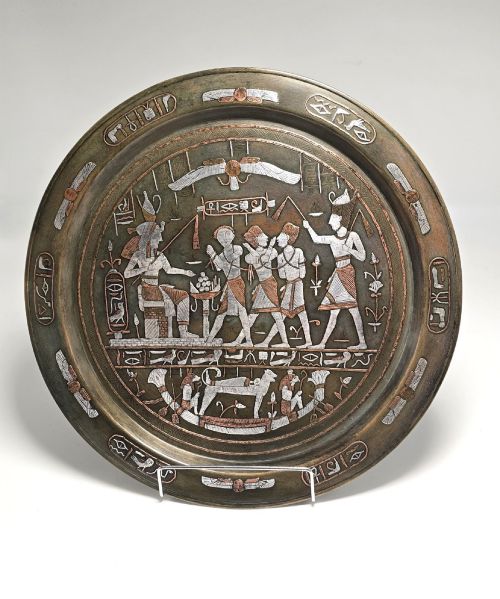
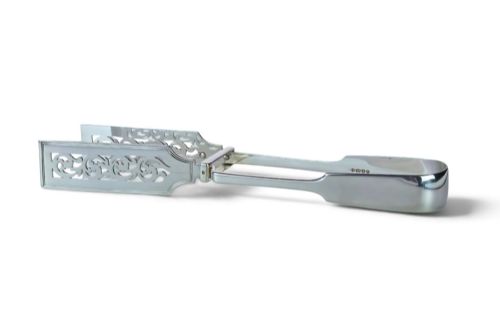
Victorian silver encompasses a wide assortment of household objects, personal accessories and dining table items spanning the nineteenth century and into the early twentieth. Buyers searching for victorian silver typically encounter small functional pieces alongside larger decorative wares, reflecting both utilitarian purposes and ornate social rituals.
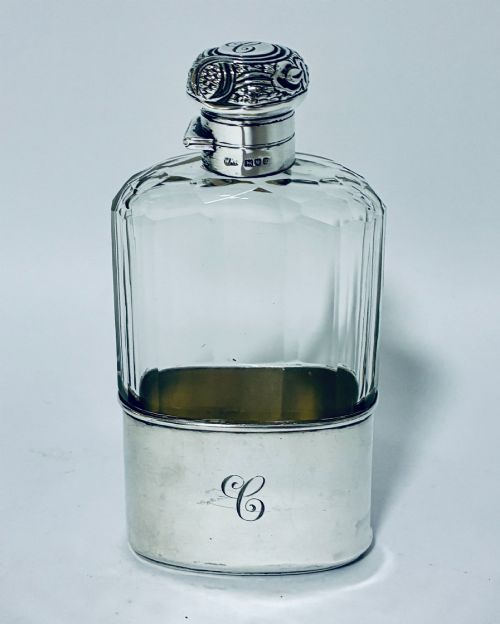
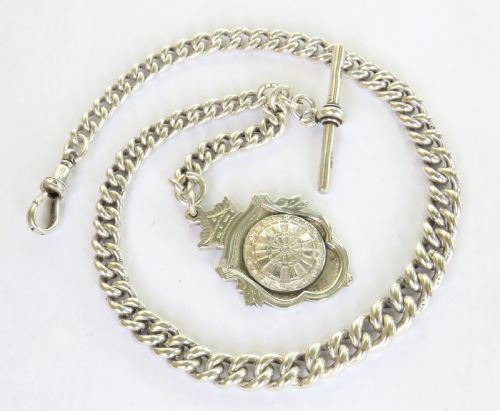
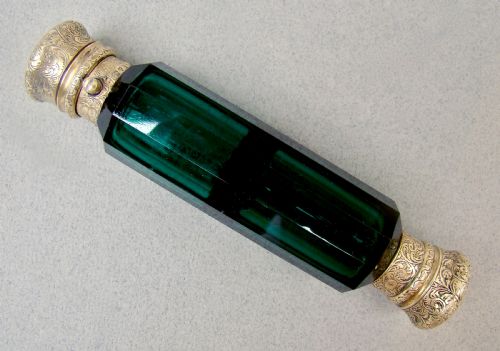
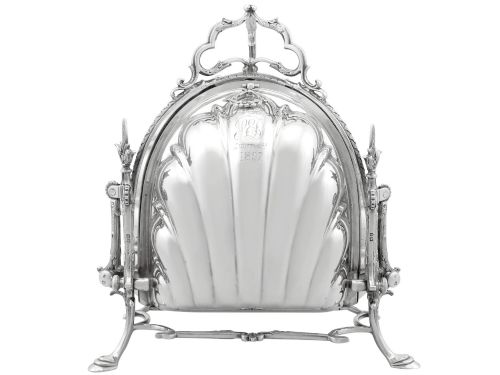
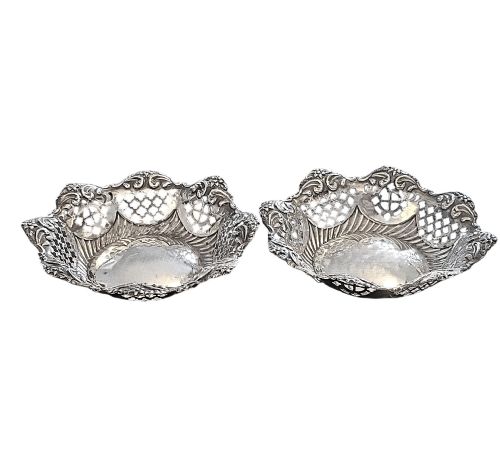
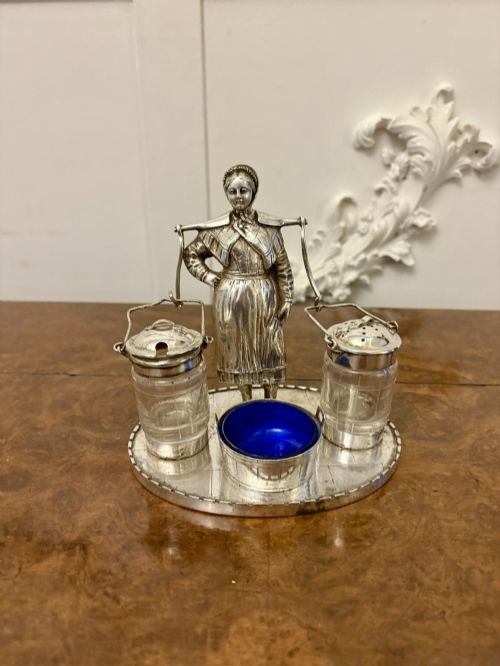
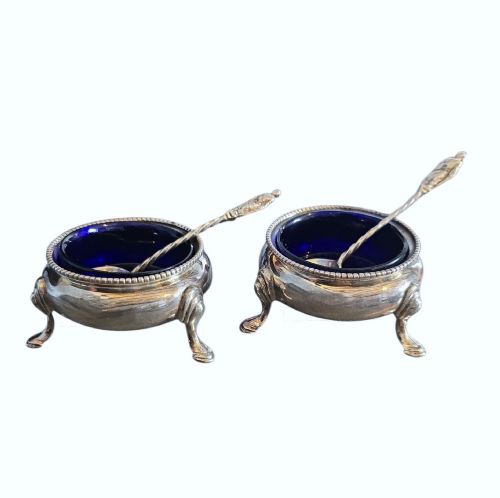
The objects span practical pocket items like sovereign cases, chatelaines and pocket watches, alongside tableware such as claret jugs, salt cellars and biscuit boxes. Many pieces combine sterling silver with secondary materials like glass, enamel and oak.
Most items on this page date from the later decades of the nineteenth century, showing stylistic influences that range from strict Victorian revivalism to the decorative exuberance of the Aesthetic Movement and Dutch Revival.
How victorian silver was made
Silversmiths utilised sterling silver alongside silver plate, working the metal through hammering, casting and repoussé techniques to build relief decoration and structural forms. Many hollowware pieces incorporate cut glass liners, crackle glass bodies or wooden framing in oak and mahogany.
Specialised items integrate contrasting textures, combining polished silver surfaces with enamel painting, velvet linings and burnished steel components. Hallmarks stamped directly into the metal record assay offices, dates and maker's marks.
Listings feature items incorporating sterling silver, silver plate, oak, glass, enamel and velvet across Victorian and Edwardian periods.
What varies in quality
Quality rests in the crispness of the chasing and repoussé work, where deeply struck motifs retain sharp edges rather than softening through wear or excessive polishing. The weight of the metal and the structural integrity of hinged lids, clasps and joints indicate the original maker's investment of time and material.
Design ambition separates standard domestic items from exceptional pieces, particularly when makers incorporate complex mechanisms, hand-painted enamel panels or bespoke family crests. Original matching elements, such as blue glass liners in salt cellars or complete sets of sconces on candelabra, elevate the integrity of the piece.
George William Adams·Mitchell Bosley And Co·Beare Falcke·William Comyns And Sons·Henry Capt·Saunders And Shepherd·Sampson Mordan
The Victorian Silver Glossary
- Repoussé
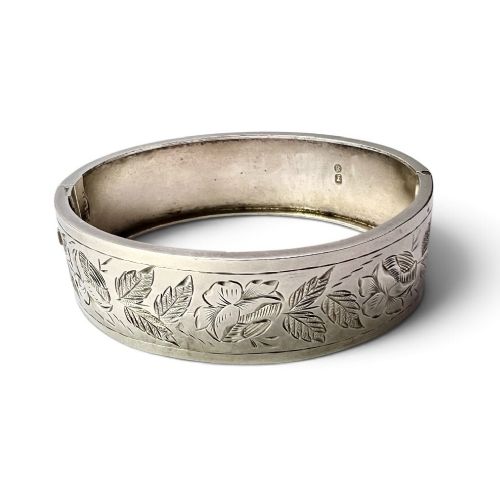
- A metalworking technique where the silversmith hammers the design from the reverse side to raise relief ornament on the front. This method creates tactile surface patterns on boxes, scent bottles and snuff cases.
- Sterling silver
- An alloy consisting of pure silver and other metals to increase durability while maintaining a bright lustre. British items carry official assay marks to confirm this standard.
- Chatelaine
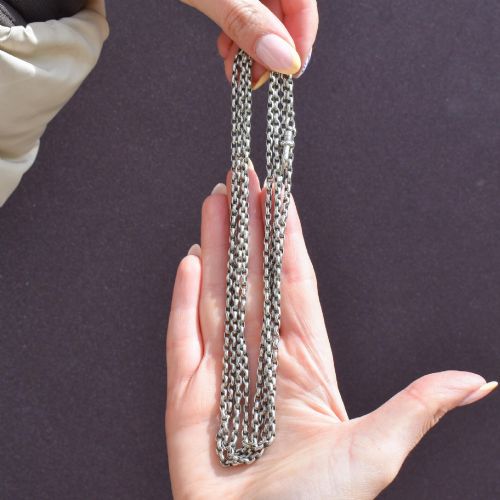
- A decorative belt hook suspended with chains carrying functional household tools such as scent bottles, keys and trinkets. Victorian examples display intricate cast or stamped silver links.
- Tantalus
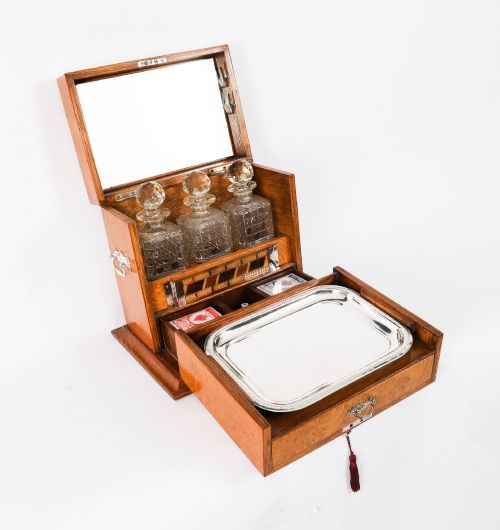
- A locking wooden frame holding decanters securely while displaying their contents through bars. These drinks cabinets prevent unauthorised access to the spirits inside.
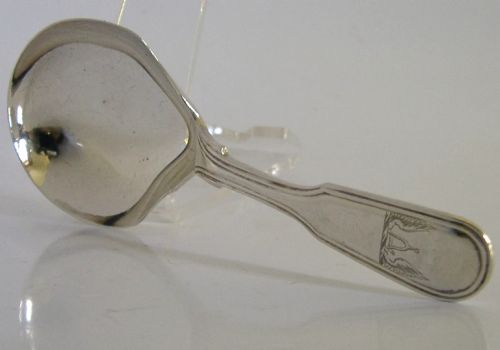
- Caddy spoon
- A short-handled spoon specifically designed for measuring loose tea leaves from a caddy. They frequently feature shell bowls and engraved handle decoration.
Victorian Silver: Frequently Asked Questions
What is victorian silver?
Victorian silver refers to silverware and related metalwork produced during the reign of Queen Victoria, encompassing everything from small pocket accessories to large dining table centrepieces.
These pieces reflect the changing tastes of the nineteenth century, moving from traditional revival styles to intricate aesthetic designs.
How do I read silver hallmarks?
Silver hallmarks typically include a maker's mark, a standard mark indicating sterling quality, an assay office town mark and a date letter.
These tiny stamped symbols allow you to trace the exact year and city where an item was tested and certified.
Can I use antique silver daily?
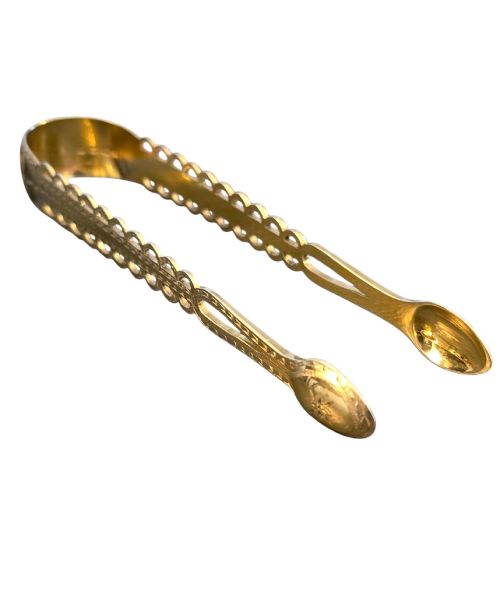
Many Victorian silver items, such as tea caddy spoons, sugar tongs and card cases, remain entirely practical for modern use with careful handling.
Gentle washing by hand without harsh abrasives preserves the finish and structural integrity of the metal.