



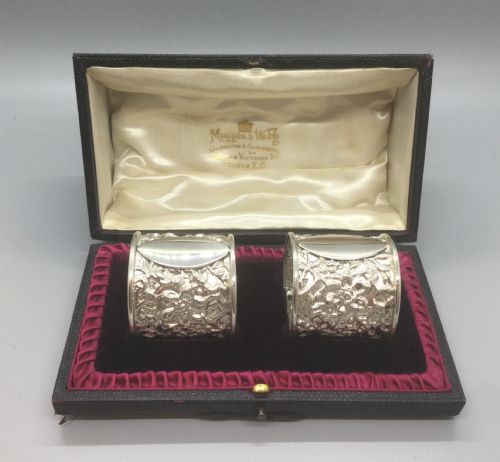


Victorian Silver Serviette Rings
Victorian silver serviette rings are domestic table accessories designed to hold individual napkins, bringing matching metalwork to the formal dining table.
Victorian Silver Serviette Rings
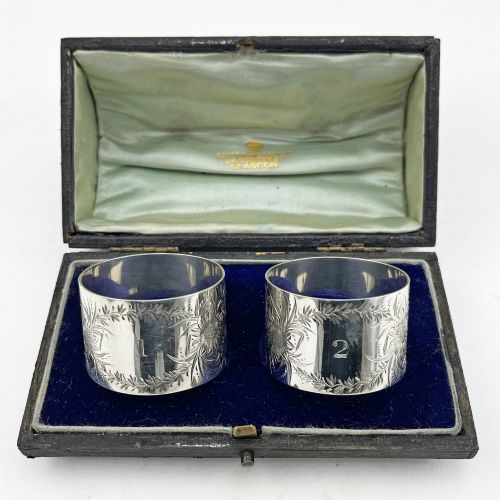
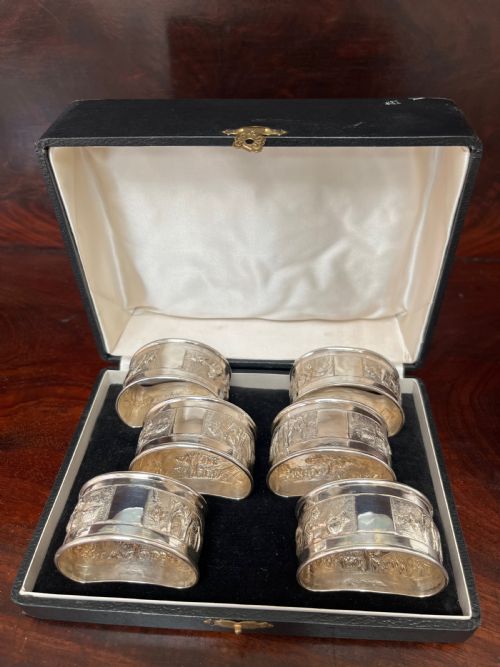
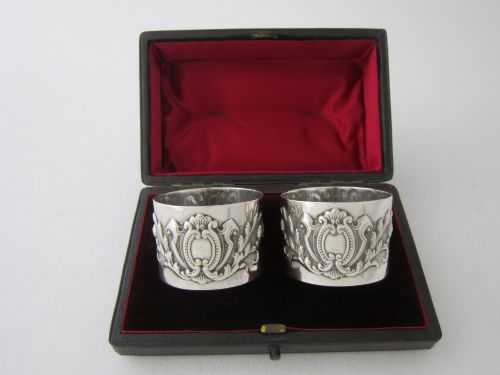
When you search for Victorian silver serviette rings, you encounter small cylindrical bands used at the dining table to identify and hold individual napkins between meals. The pieces on this page span the late nineteenth century and Edwardian period, often appearing in fitted cases as pairs or sets of six.
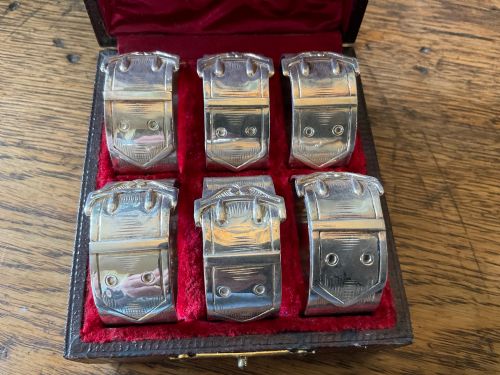
Most examples take the form of simple or chased metal bands, while others adopt specific decorative motifs such as modelled belt buckles. They originate from English assay offices, carrying hallmarks that date their production to the 1890s or slightly later periods.
Makers produced these items in sterling silver and silver plate, frequently housing sets in lined boxes featuring velvet, silk, leatherette, wood, or leather interiors. These cased sets reflect the formal dining customs of the era, where matched groups served households and guests alike.
Materials and construction
Silversmiths utilised solid sterling silver and silver plate to form the circular bands, shaping the metal to create smooth or patterned cylindrical bodies. Many designs incorporate surface decoration such as chased foliage or structural alterations like the belt buckle motif.
Presentation packaging played a significant role in production, with manufacturers housing pairs and sets in rigid cases lined with velvet, silk, or leatherette. These fitted boxes often featured wooden carcasses covered in leather, protecting the metalwork during storage and display.
Victorian Silver Serviette Rings Retail Price Guide 2026
Typical asking prices for victorian silver serviette rings among the pieces listed under this phrase on Sellingantiques today, from the lower quarter to the upper quarter. They describe what is for sale here now, not the wider market.
Some serviette rings are cleverly modelled to look like tiny belt buckles, letting your napkins wear their own miniature leather-style waistbands at dinner.
Assessing quality and craftsmanship
Completeness alters the character of a collection, particularly where matching sets of six retain their original fitted presentation cases lined with silk or velvet. Single items and pairs demonstrate similar metalworking standards, but complete cased sets represent more ambitious retail packages from the period.
The Victorian Silver Serviette Rings Glossary
- Sterling silver
- A silver alloy containing 92.5 percent pure silver by mass, representing the standard metal used for quality tableware and serviette rings of this period.
- Hallmark
- An official stamp applied by an assay office to indicate the metal purity, year of testing, and origin of the silver piece.
- Chased
- Decorated by hammering metal from the front to create raised patterns without removing material from the surface.
- Cased set
- A group of matching items housed together in a specially fitted protective box lined with fabrics such as silk or velvet.
Victorian Silver Serviette Rings: Frequently Asked Questions
What are victorian silver serviette rings?
These items are small metal bands used at the dining table to keep individual napkins tidy and identifiable between meals. They were produced primarily in the nineteenth and early twentieth centuries.
Many examples survive in matching pairs or sets of six, frequently accompanied by their original fitted presentation cases lined with silk and velvet.
How were they used?
Households utilised these rings during formal and daily meals to hold folded napkins for individual family members or guests. Each person's napkin remained in its designated ring throughout the week.
This practice kept the dining table organised and reduced the frequency of laundering household linens during the Victorian era.
How do I date these pieces?
Dating relies upon the hallmarks stamped directly into the metal by official assay offices, which indicate specific years of manufacture during the Victorian and Edwardian periods. Stylistic details also provide chronological clues.
For instance, pieces bearing Chester or London assay marks from the 1890s reflect the design preferences and regulatory standards of that specific decade.
Are they sold in sets?
Listings include both individual pairs and larger sets containing six matching rings housed in dedicated presentation boxes. These larger groups were often given as wedding or household gifts.
The presence of an original fitted case adds context to how the items were retailed and stored by their original owners.