

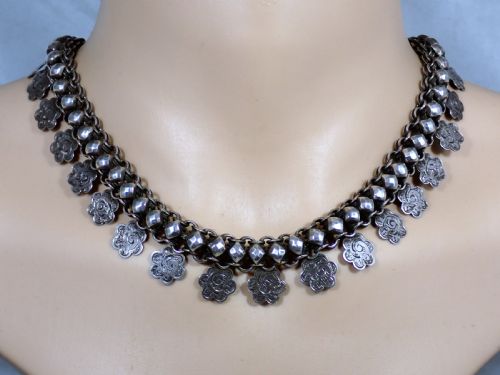
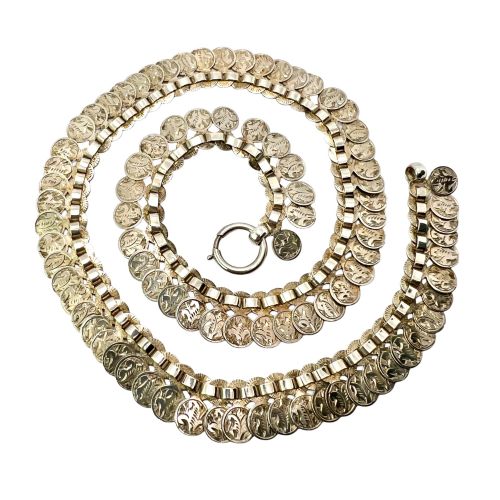


Victorian Silver Drop Necklace
A victorian silver drop necklace brings together period metalwork and stones, offering a distinctive pendant silhouette that collectors prize for its authentic nineteenth-century character.
Victorian Silver Drop Necklace
When you search for a victorian silver drop necklace, you encounter nineteenth-century pieces that range from simple engraved coin pendants to elaborate multi-gem creations. The selection here spans the Victorian era, including specific dates such as eighteen-eighty and eighteen-ninety alongside broader nineteenth-century examples.
You are most likely to meet pendant and necklace combinations featuring silver, sterling silver, or gold mounts holding pearls, paste, diamonds, emeralds, and enamel. Styles draw upon Renaissance Revival and Austro-Hungarian traditions, alongside distinct Arts and Crafts influences within the nineteenth-century period.
How they were made
Craftsmen of the period utilised silver and sterling silver as the primary structural metal, frequently combining it with gold for specific mounts and chains. Metalwork often involved detailed engraving, as seen on coin necklaces and collar chains.
Gemstones and decorative elements including diamonds, opals, emeralds, pearls, baroque pearls, paste, and enamel were hand-set into these silver and gold frameworks. Austro-Hungarian pieces additionally incorporated colourful enamel work alongside multi-gem settings.
Victorian Silver Drop Necklace Retail Price Guide 2026
Typical asking prices for victorian silver drop necklace among the pieces listed under this phrase on Sellingantiques today, from the lower quarter to the upper quarter. They describe what is for sale here now, not the wider market.
Materials recorded across the archive and current listings include silver, sterling silver, gold, pearls, baroque pearls, diamonds, emeralds, opals, paste, and enamel.
What varies in quality
Quality in a victorian silver drop necklace rests primarily upon the sophistication of the design and the execution of the metalwork. Pieces showing detailed engraving or complex Austro-Hungarian enamel and multi-gem arrangements stand apart from simpler collar chains and single-stone pendants.
The choice and grading of materials also determine distinction, distinguishing standard paste and pearl compositions from substantial diamond, opal, or emerald examples set in silver and gold.
The Victorian Silver Drop Necklace Glossary
- Baroque pearl
- An irregularly shaped pearl valued for its organic and unique silhouette. These stones give nineteenth-century pendants a distinctive asymmetrical character.
- Renaissance Revival
- A nineteenth-century design movement inspired by sixteenth-century art and architecture. It influences the ornate metalwork and heavy stone settings seen in period pendants.
- Austro-Hungarian
- A regional style characterised by vibrant enamel work and multi-gem arrangements. These pieces often combine pearls, emeralds, and coloured stones in elaborate cluster designs.
- Sterling silver
- A silver alloy containing a specific proportion of pure silver and other metals to ensure durability. It provides the bright metallic foundation for many nineteenth-century chains and mounts.
Victorian Silver Drop Necklace: Frequently Asked Questions
How do I wear a period pendant?
Period pendants pair well with modern evening wear or simple necklines that allow the silver metalwork and stones to remain the focal point. Matching the chain length to your preferred collar height ensures the drop sits correctly.
Care should be taken with delicate elements like enamel and pearls when storing or wearing the necklace daily.
How do I date a silver necklace?
Dating relies on stylistic markers such as Renaissance Revival motifs, Austro-Hungarian enamel techniques, and specific material combinations like paste and sterling silver. Reference points within the nineteenth century help narrow down the decade of production.
Examining the construction of the settings and the style of the chain provides further clues to its age.
Are these necklaces made of solid silver?
Many listings specify silver or sterling silver construction, sometimes complemented by gold chain sections or mounts. The metal provides the durable framework necessary to secure stones like diamonds, opals, and emeralds.
Testing or hallmarks generally confirm the specific metal standard used by the nineteenth-century maker.