


Victorian Shell Cameo Pendant
A victorian shell cameo pendant brings classical carving into everyday wear, offering layered relief portraits set in gold or silver.
Victorian Shell Cameo Pendant
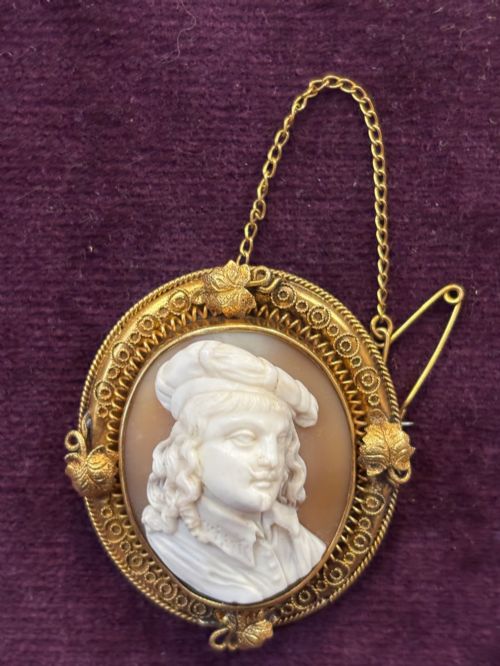
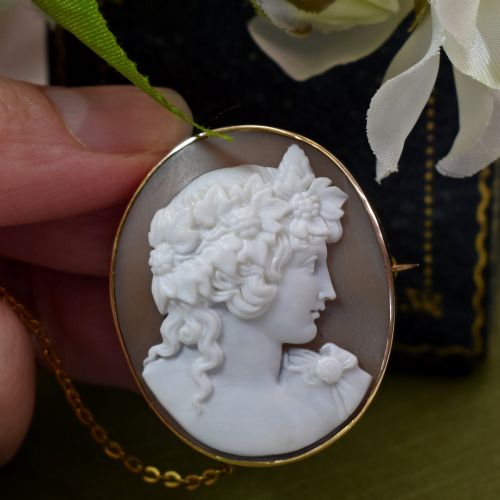
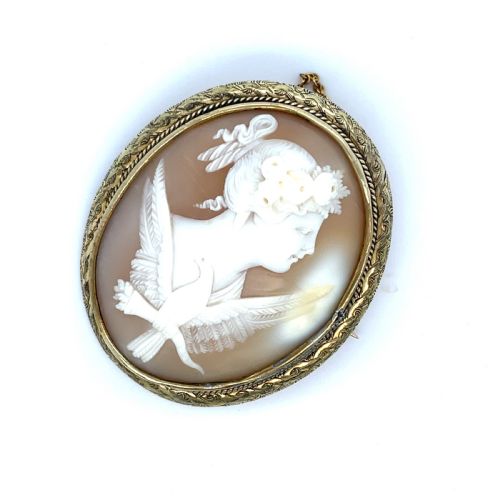
When you search for a victorian shell cameo pendant, you are looking at carved relief ornaments mounted for suspension, often doubling as brooches. These items bring classical subjects into nineteenth-century adornment through portraiture and mythological scenes.
The versions you meet on this page span the Victorian era, alongside related Edwardian and mid-century examples. They frequently employ conch or standard shell materials housed in gold frames, sometimes accompanied by pearl accents.
Forms vary from teardrop earrings and suites to standalone brooches and pendant necklaces. The historical scope stretches from the mid-nineteenth century into later revival periods.
Materials and construction
Carvers utilise shell layers to build contrast, cutting into the lighter upper stratum to leave a darker background exposed. This technique creates the characteristic depth found in classical motifs.
Mounts rely on precious metals including nine-carat and fourteen-carat gold, alongside silver and pinchbeck. Frames often feature detailed wirework or tailored bezels to secure the carved shell safely.
Current listings demonstrate periods spanning the Victorian era, Edwardian years, and the mid-nineteenth century, utilising shell, gold, silver, and pearls.
Assessing quality in the range
Mount construction similarly dictates standard, where substantial gold framing and secure integration with the shell indicate greater workshop care. Simpler alloy settings or cast mounts represent more utilitarian production.
The Victorian Shell Cameo Pendant Glossary
- Shell cameo
- A relief carving executed on the outer layer of a mollusc shell, revealing a contrasting background colour. It relies on natural colour variation to define the subject.
- Pinchbeck
- An alloy of copper and zinc developed to imitate gold, often found in period settings. This material provides a warm yellow tone without precious metal content.
- Conch shell
- A specific material noted for its pink or salmon monochrome ground, sometimes utilised in Victorian and Edwardian carvings. It differs from layered helmet shells by offering a solid tonal body.
- Grand Tour
- A period of continental travel undertaken by nineteenth-century elites, responsible for bringing many Italian carved cameos back to Britain. These pieces frequently depict classical mythology and antiquities.
Victorian Shell Cameo Pendant: Frequently Asked Questions
Can a brooch be worn as a pendant?
Many Victorian pieces feature both a pin and a hidden loop, allowing them to function interchangeably as brooches or necklaces. This dual arrangement was common in nineteenth-century jewellery design.
Buyers often check the reverse for a hinged bail or safety catch before hanging the piece from a chain.
How do I care for shell jewellery?
Shell is a natural organic material that requires gentle handling, avoiding harsh chemical dips or ultrasonic cleaners. Wipe them softly with a dry or slightly damp cloth after wear.
Store them away from harder gems to prevent surface scratching on the delicate relief.
What subjects appear on these cameos?
Classical mythology dominates the imagery, featuring figures such as Aphrodite, Psyche, Cupid, and Antinous. Historical portraits like Bonnie Prince Charlie also appear in specific regional pieces.
These themes reflect a widespread Victorian fascination with classical antiquity and Renaissance art.
How are different periods identified?
Dating relies on mount styles, hinge mechanisms, and gold carat marks rather than the shell carving alone. Mid-Victorian pieces often incorporate heavier frames, while Edwardian examples show lighter, airier metalwork.
Archival comparisons and stylistic traits help narrow the decade of production.