

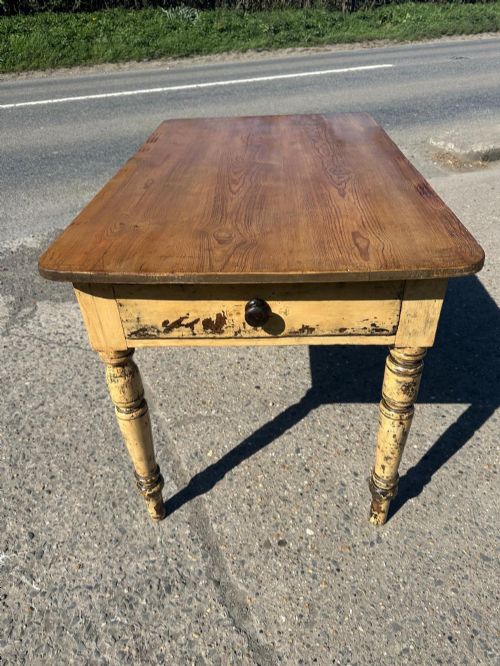
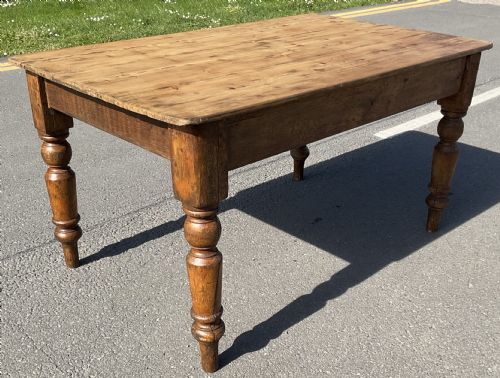


Victorian Scrubbed Table
These robust victorian scrubbed table examples bring honest utility to everyday dining and preparation spaces through generations of hard service.
Victorian Scrubbed Table
A victorian scrubbed table represents the utilitarian heart of the nineteenth-century domestic interior, built primarily for kitchens, dairies, and preparation rooms. These pieces emerged from vernacular traditions across England, Scotland, Wales, and Ireland to handle daily labour without pretence.
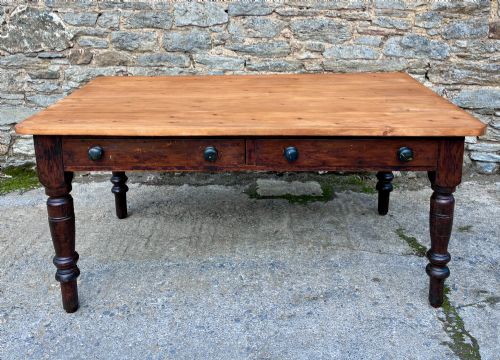
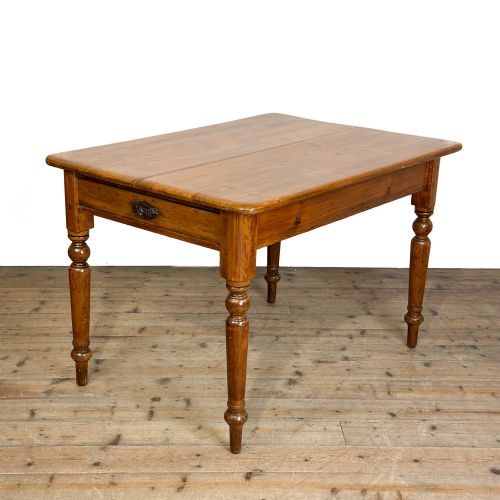
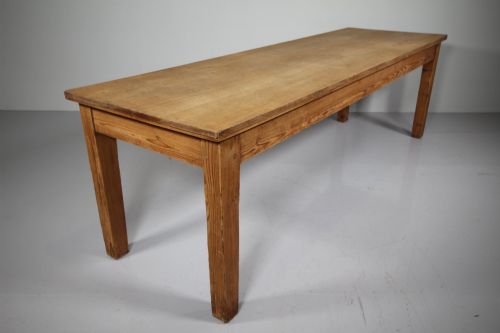
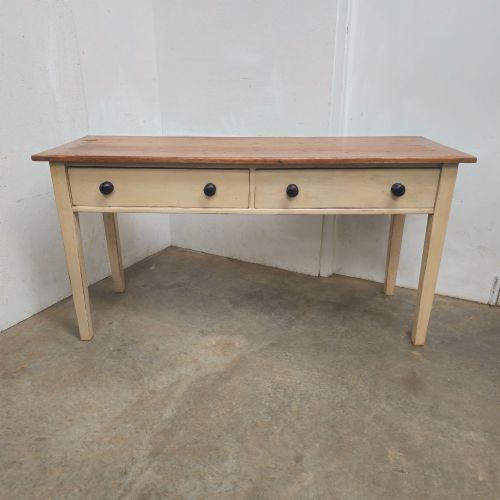
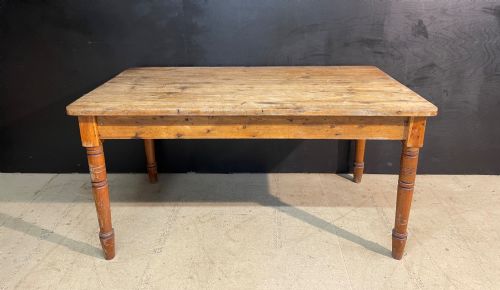
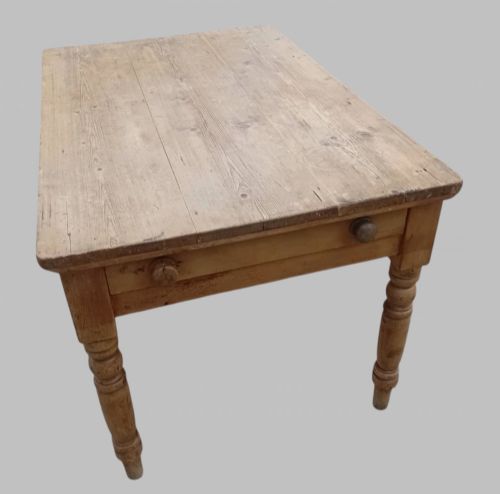
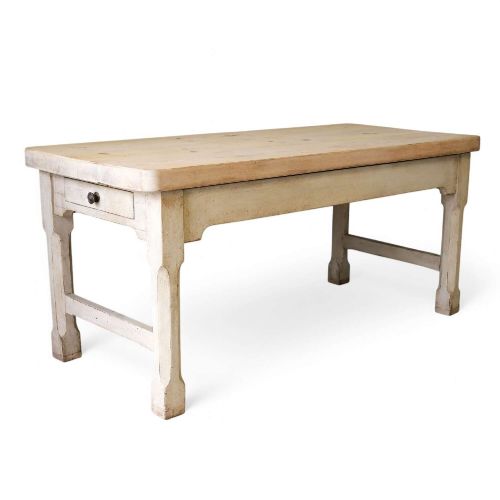
The version most commonly met on this page is the pine farmhouse or kitchen table, often featuring a bare scrubbed top paired with painted timber legs or a drawer. Dimensions range widely from compact side and cricket tables up to substantial eighteen-seat dining pieces and large work surfaces.
Makers constructed these tables from sturdy softwoods and occasional hardwoods like sycamore or mahogany to withstand heavy household tasks. Their styles span rustic country and Victorian farmhouse aesthetics, showing the honest wear of decades of scrubbing.
How they were made
Makers relied heavily on solid pine and timber, frequently combining scrubbed wooden tops with painted wood or metal and brass fittings. Surfaces often received layers of old paint or remained bare, reflecting the practical demands of dairy, kitchen, and prep work.
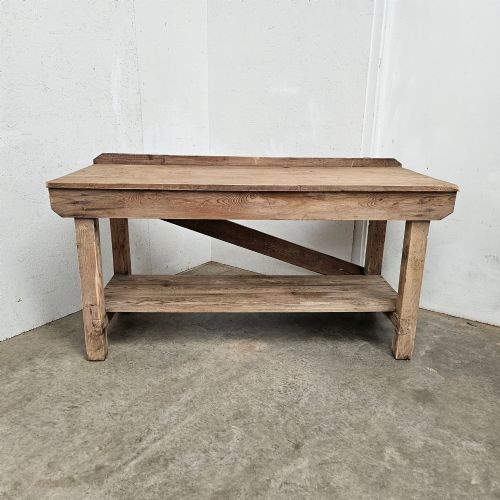
Construction techniques prioritised durability over ornamentation, utilising square section supports, bobbin turned legs, and X frames. Drawers added utility, while drop leaves and circular formats accommodated varying domestic spaces.
Victorian Scrubbed Table Retail Price Guide 2026
Typical asking prices for victorian scrubbed table among the pieces listed under this phrase on Sellingantiques today, from the lower quarter to the upper quarter. They describe what is for sale here now, not the wider market.
One extraordinary eighteen-seat pine farmhouse table stands ready to host the entire village for supper.
What varies in quality
The distinction between ordinary and exceptional pieces lies in the integrity of the timber and the honesty of the surface patination. Tables that retain original painted bases alongside deeply scrubbed tops demonstrate a superior balance of history and use.
Proportion and scale dictate the upper tier of the range, particularly in unusually large formats or regionally distinct forms like Welsh tavern tables and Scottish dairy furniture. Superior examples display thoughtful joinery and sturdy structural framing beneath the working surface.
The Victorian Scrubbed Table Glossary
- Scrub top
- A wooden tabletop cleaned repeatedly with water and a stiff brush, leaving the grain raised and bleached light by soap and elbow grease. This surface defines the utilitarian aesthetic of nineteenth-century workspace furniture.
- Farmhouse table
- A large rectangular timber table intended for domestic food preparation and communal dining. These pieces usually combine sturdy softwood tops with simpler painted or polished bases.
- Cricket table
- A small three-legged occasional table with a round top, traditionally balanced securely on uneven flagstone floors. The design represents an early vernacular English form.
- Pembroke table
- A drop-leaf table with hinged flaps on either side, allowing the surface area to expand or contract. This format often includes a small drawer for storage.
- Dairy table
- A specialised work table used in milk processing, frequently designed with scrubbed wooden surfaces to maintain hygiene. These tables often originate from rural Scottish or English country houses.
Victorian Scrubbed Table: Frequently Asked Questions
How do I care for a scrubbed pine top?
Maintenance involves gentle cleaning with mild soap and water, avoiding harsh chemicals that can discolour the historic timber. Regular use helps the wood maintain its natural, dry texture.
Allowing the surface to age naturally preserves the character built up over the nineteenth century. Minimal intervention keeps the original grain and patination intact.
Where were these tables used?
Nineteenth-century households placed these tables in kitchens, pantries, dairies, and large country house prep rooms. They served as primary surfaces for kneading bread, preparing meat, and folding laundry.
Some examples also appeared in taverns and servant quarters across England, Scotland, Wales, and Ireland. Their sturdy construction suited demanding daily labour.
How can I tell the period?
Dating relies on examining the timber selection, construction methods, and signs of wear accumulated over time. Nineteenth-century pieces often display hand-cut joinery and aged patination on the pine and painted bases.
Comparing structural details like square section supports or turned legs helps distinguish Victorian examples from later reproductions. Original paint layers also offer clues to the age of the base.