
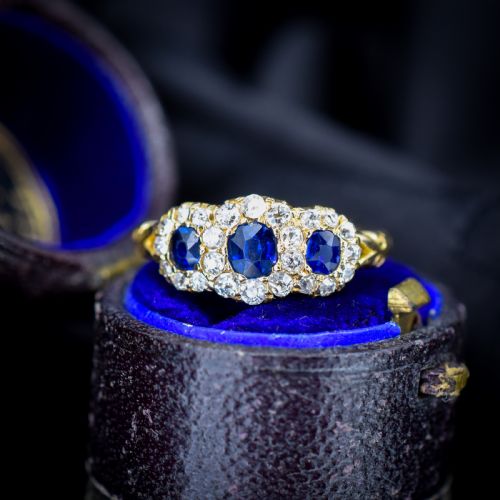
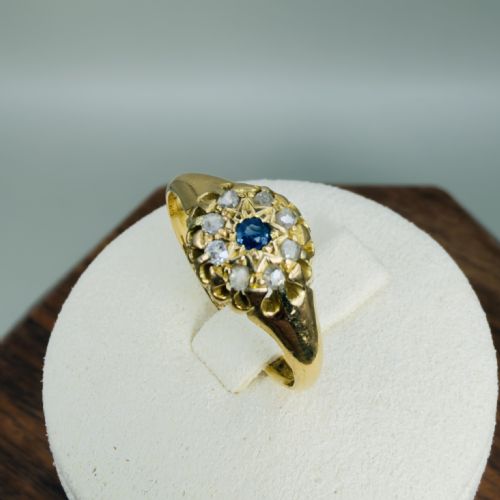
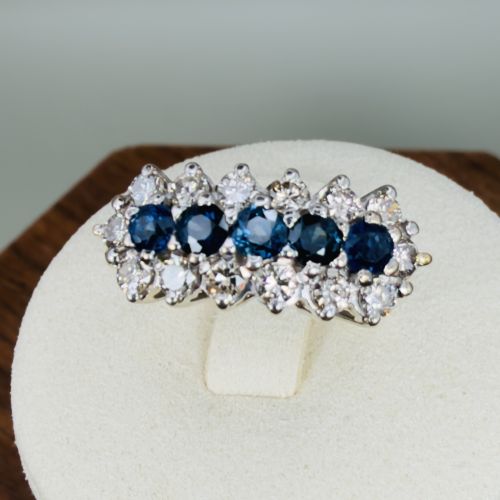
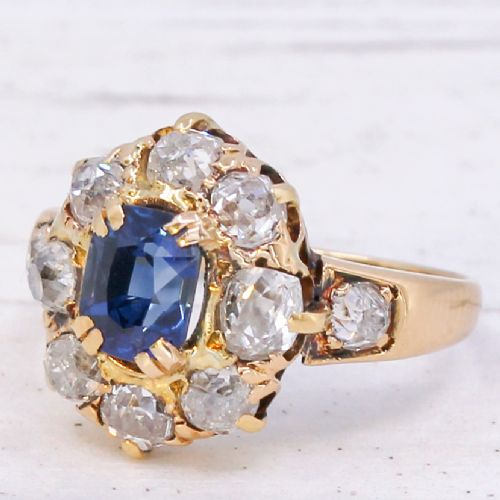




Victorian Sapphire Diamond Ring
A victorian sapphire diamond ring pairs deep blue corundum with hand-cut stones, set in yellow gold to catch the light.
Victorian Sapphire Diamond Ring
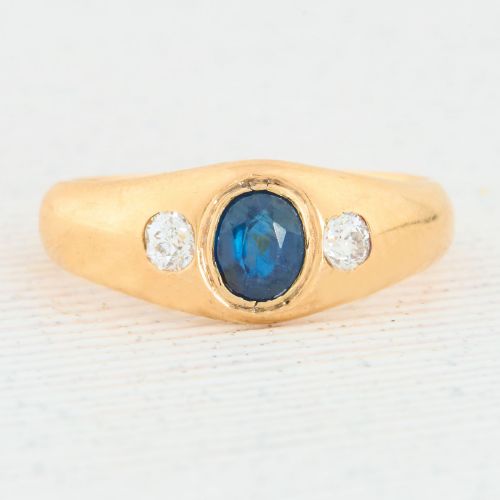
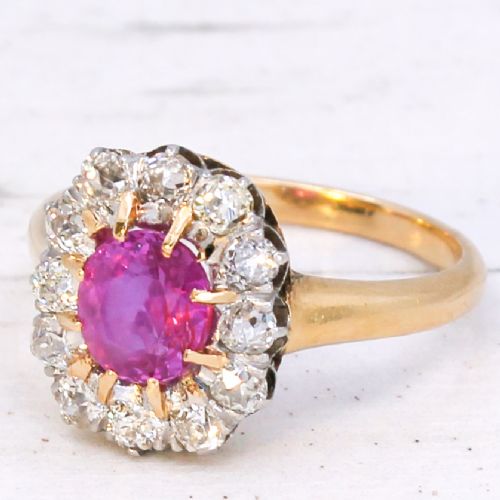
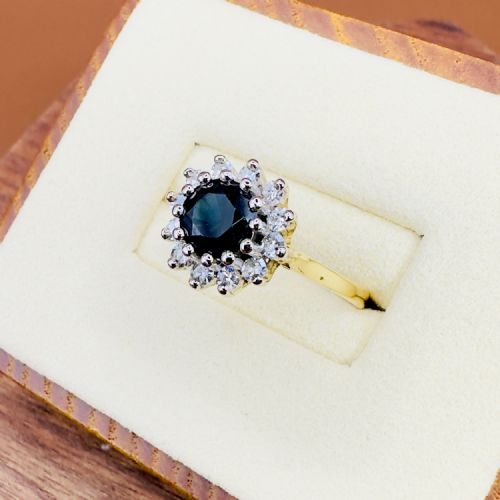
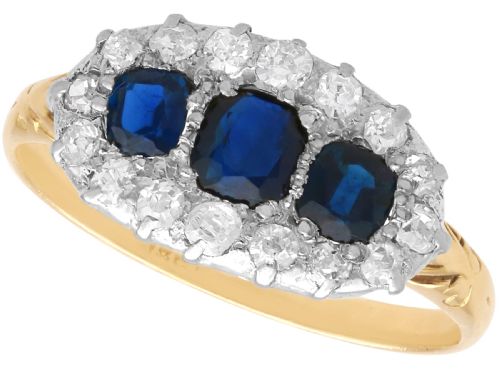
A victorian sapphire diamond ring brings together blue or pink sapphires and old cut diamonds mounted primarily in eighteen carat yellow gold. The configurations span clusters, multi-stone trilogy settings, boat shapes known as bateau or marquise designs, and gypsy settings flush to the band.
Most examples originate from the late nineteenth century, spanning the Victorian and Edwardian periods, though later mid-century reinterpretations also appear. Common variations include snake motifs with entwined serpents holding stones in their heads, alongside traditional five-stone half hoops.
Makers utilised stamped hallmarks from assay offices in towns such as Birmingham, London, and Chester to denote metal fineness and year of creation. These markers help date individual pieces alongside the specific stone-cutting techniques employed by period jewellers.
Materials and construction
Metals are predominantly eighteen carat yellow gold, occasionally accompanied by silver and platinum depending on the specific decade of production. Stones are secured in hand-fabricated settings utilising old mined cut diamonds, rose cut diamonds, and baguettes alongside natural unheated or basaltic sapphires.
Goldsmiths shaped bands manually, incorporating chased details, double serpent coils, and starburst engravings around the gemstone clusters. Stones were individually hand-set into collets or claw mounts designed to maximise the light refraction of antique diamond facets.
Victorian Sapphire Diamond Ring Retail Price Guide 2026
Typical asking prices for victorian sapphire diamond ring among the pieces listed under this phrase on Sellingantiques today, from the lower quarter to the upper quarter. They describe what is for sale here now, not the wider market.
Object forms span multi-stone clusters, boat configurations, gypsy bands, and entwined double serpent rings.
Evaluating the standard
Quality rests upon the natural origin and saturation of the sapphire, combined with the integrity of the period diamond cuts. Unheated stones and Ceylon origins command distinct attention compared to basaltic variants.
The precision of the hand-carved goldwork, such as detailed scales on snake rings or balanced proportions in cluster and boat layouts, separates standard production from finer artisan output. Crisp, legible hallmarks preserved on the inner shank further indicate a well-maintained provenance.
The Victorian Sapphire Diamond Ring Glossary
- Old mined cut
- A vintage diamond cutting style featuring a smaller table, higher crown, and large culet facet designed under candlelight. This facet arrangement yields a softer, warmer scintillation than modern brilliant cuts.
- Boat ring
- A horizontal navette or bateau mounting shaped like a small boat, often holding a graduated line of stones across the finger. This configuration was widely favoured during the late Victorian era for engagement jewellery.
- Gypsy ring
- A band where gemstones are flush-set directly into the thick gold metal rather than held by raised claws. The surrounding gold is frequently starburst-engraved.
- Trilogy ring
- A three-stone setting representing past, present, and future, typically featuring a central sapphire flanked by two diamonds or vice versa. The stones are usually graduated in size to follow the curve of the finger.
- Basaltic sapphire
- A sapphire originating from alkaline basaltic rock sources, known for intense colour saturation. These stones often display distinct zoning under magnification.
Victorian Sapphire Diamond Ring: Frequently Asked Questions
How do I wear an antique ring safely?
Wear your ring with care during daily activities, removing it before heavy lifting, gardening, or swimming. The gold claws and settings benefit from periodic checks by a specialist to ensure stones remain secure.
Store the piece individually in a lined box to prevent scratching against other jewellery. Regular cleaning with warm soapy water and a soft brush maintains the sparkle of the diamond facets.
Are these sapphires treated?
Many period sapphires are entirely natural and unheated, while others possess geological characteristics typical of nineteenth-century mines. Gemmological reports often accompany specific unheated Burmese or Ceylon stones.
Natural inclusions within the sapphire crystal help differentiate antique gems from modern synthetic alternatives. Examination under a loupe reveals native crystal growth lines and internal silk.
How can I date my ring accurately?
Examine the inner band for British hallmarking stamps, which indicate the assay office, metal purity, and a specific date letter. Chester, Birmingham, and London marks provide precise years of creation.
Consider the mounting style, such as a boat shape or a serpent motif, alongside the diamond cutting style. Old mined cuts and rose cuts point directly to Victorian and Edwardian manufacturing periods.
Can these rings be resized easily?
Resizing depends on the construction of the band, particularly whether engravings, gypsy-set stones, or patterned shoulders run around the entire circumference. A skilled jeweller can usually alter plain shank sections without disturbing the settings.
Consult a specialist experienced in antique restorations to preserve any historical hallmarks located near the back of the band. Alterations should maintain the structural integrity of the gold ring.