



Victorian Ruby Gold Ring
A victorian ruby gold ring brings together rich red gems and warm yellow or rose metal in designs shaped by nineteenth-century jewellers.
Victorian Ruby Gold Ring
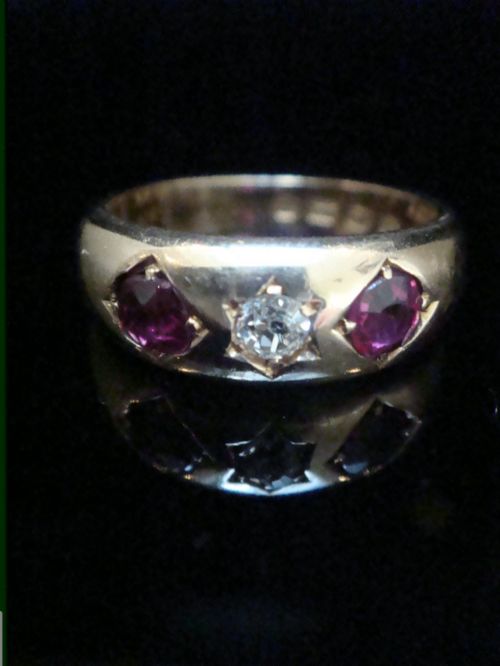
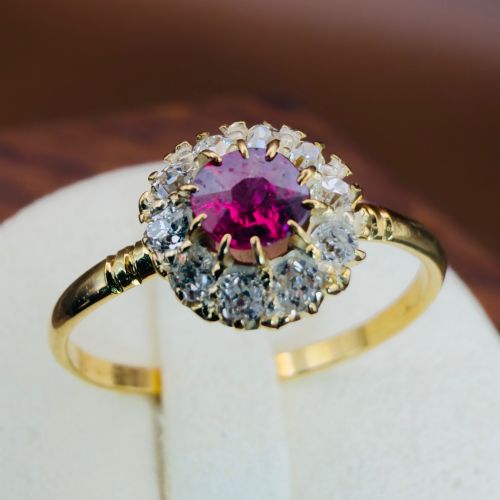
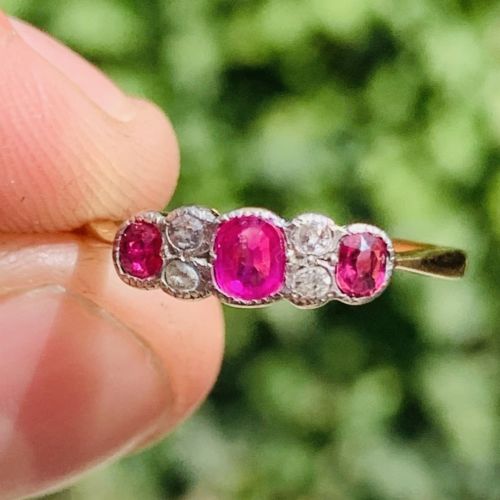
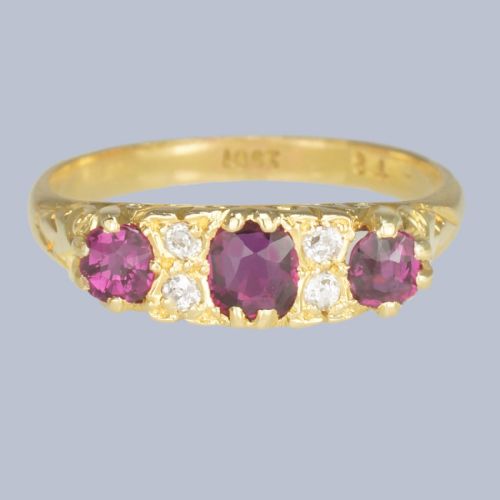
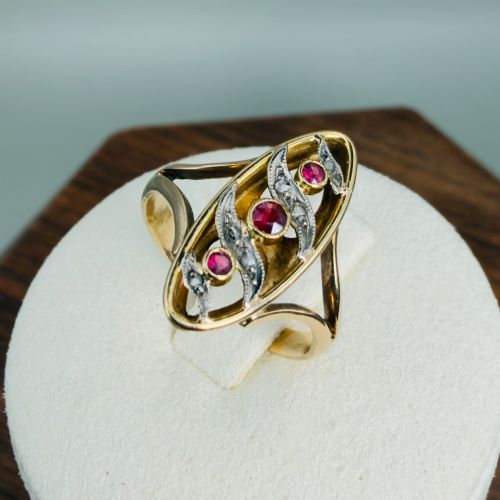
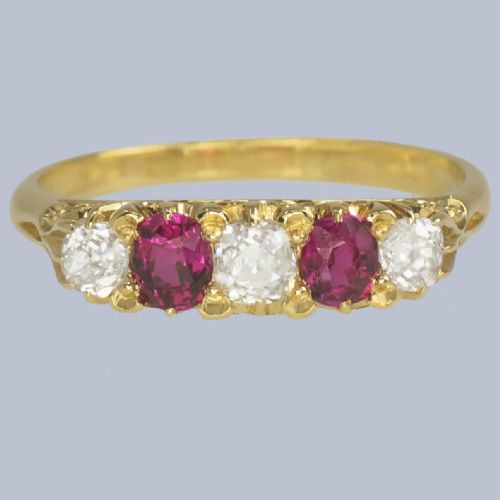
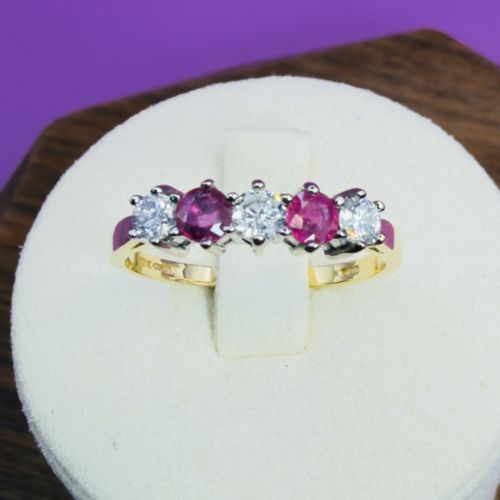
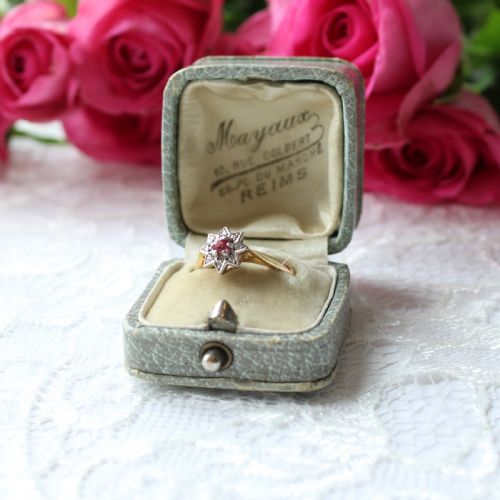
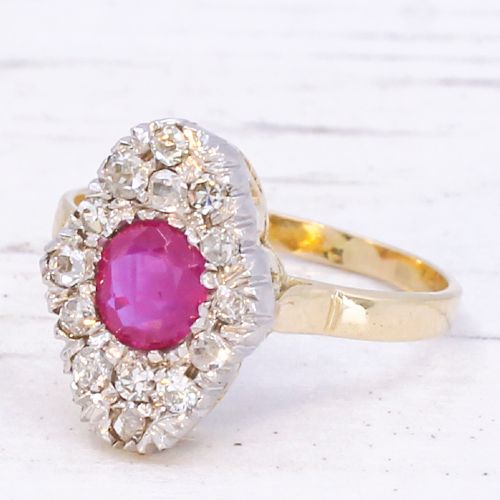
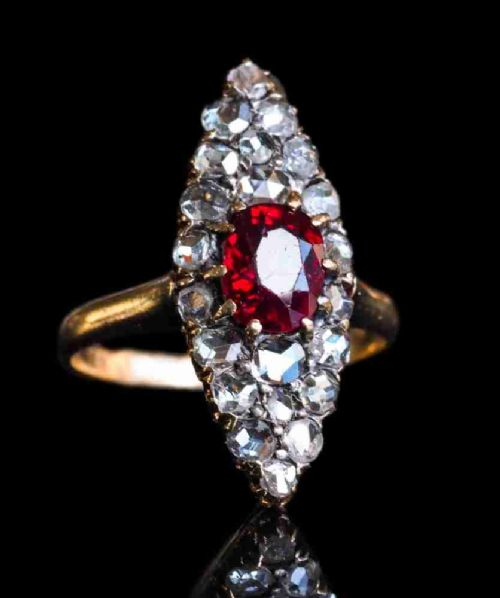
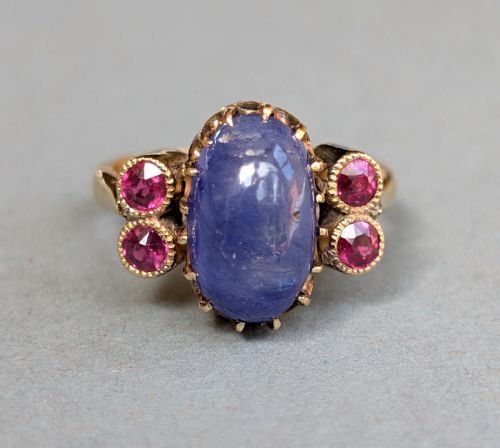
A victorian ruby gold ring comprises fine jewellery pieces created during the nineteenth century and the early Edwardian era, featuring natural rubies set alongside diamonds, pearls, or other gemstones. Buyers encounter styles ranging from simple five-stone band configurations to intricate cluster, navette, and starburst designs.
The materials span 18ct yellow gold, 15ct gold, and occasional rose gold or platinum accents, reflecting the manufacturing standards of period workshops. Many surviving examples carry hallmarks from assay offices including Birmingham, Chester, and London, confirming their origins.
Cluster configurations and gypsy settings dominate the available selection, often pairing red corundum stones with old mine cut or old rose cut diamonds. These pieces served as dress rings, engagement tokens, and sentimental jewellery incorporating acrostic gemstone spellings like regard or dearest.
How They Were Made
Goldsmiths utilised 18ct and 15ct gold alloys to hand-fabricate bands and mountings, casting or forging the metal before hand-setting each stone. Settings frequently include claw mounts for clusters, flush gypsy star settings cut directly into the heavy gold band, and boat-shaped navette frames.
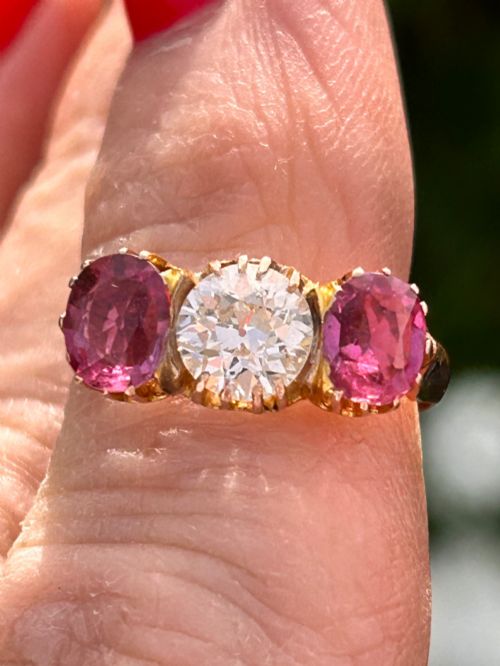
Rubies were secured alongside hand-cut diamonds, including old mine cut and old cut variants shaped before modern faceting standards emerged. Jewellers often added delicate millegrain edges, engraved shoulders, or openwork galleries to enhance the visual depth of the cluster and trilogy designs.
Listings feature 18ct gold, 15ct gold, and yellow gold paired with Burmese rubies, diamonds, pearls, and sapphires across the Victorian and Edwardian eras.
What Varies in Quality
Quality depends upon the origin, colour saturation, and treatment status of the ruby, with Burmese stones and unheated specimens commanding particular attention. The presence of well-matched old cut diamonds and crisp, legible assay hallmarks also elevates a piece.
Mastery of construction separates standard production from finer work, visible in the precision of the claw settings, the symmetry of starburst engravings, and the structural integrity of the gold band over decades of wear.
Deakin & Francis
The Victorian Ruby Gold Ring Glossary
- Gypsy ring
- A style where stones are flush-set directly into a heavy tapered gold band. Jewellers frequently engraved starburst patterns around the flush-mounted gems.
- Old mine cut
- A diamond facet style characterised by a cushion outline, high crown, and large culet facet. These stones were hand-cut during the nineteenth century.
- Trilogy ring
- A three-stone ring arrangement representing past, present, and future. Rubies and diamonds alternate in these sentimental nineteenth-century mounts.
- Hallmark
- Official stamps pressed into precious metal indicating the assay office, metal purity, and date of manufacture. British pieces frequently display city marks and standard crowns.
Victorian Ruby Gold Ring: Frequently Asked Questions
How do I care for a victorian ruby gold ring?
Clean these delicate pieces gently using warm soapy water and a soft brush, avoiding harsh chemical dips or ultrasonic cleaners that can damage pearls or treated stones.
Store the ring in a dedicated velvet compartment or antique box to prevent the harder diamonds from scratching the softer gold band and rubies.
Are these rings suitable for daily wear?
Many people wear them daily, though antique claw settings and lower-carat or hollowed antique bands require mindful handling during heavy manual tasks.
Checking the security of the stone settings with a jeweler periodically helps preserve the structural integrity of older gold mounts.
How can I tell a victorian ring from a later reproduction?
Examine the piece for hand-cut diamonds like old mine cuts and inspect the inner band for clear nineteenth-century assay hallmarks and Chester or Birmingham stamps.
Hand-engraved details and natural inclusions within the ruby under magnification further indicate period authenticity rather than modern casting.
What do acrostic gemstone rings mean?
Victorian jewellers spelled out sentimental words by setting sequence stones whose initial letters formed a message, such as regard or dearest.
Ruby, emerald, garnet, amethyst, diamond, and sapphire combinations functioned as secret romantic tokens exchanged among Victorians.