








Victorian Revolving Book Table
A victorian revolving book table brings books to hand with a spin, solving the crowded desk.
Victorian Revolving Book Table
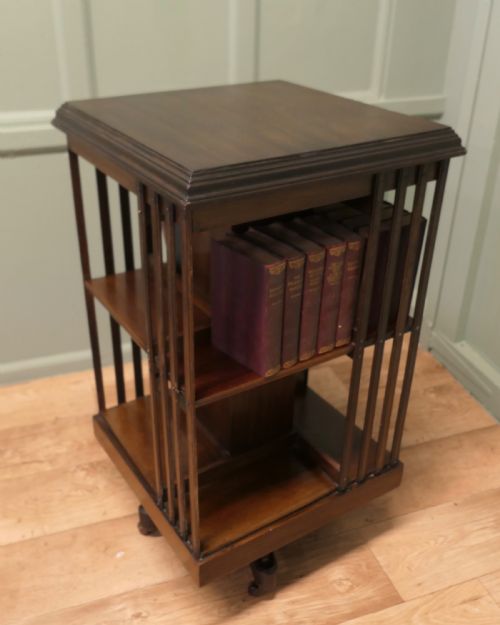
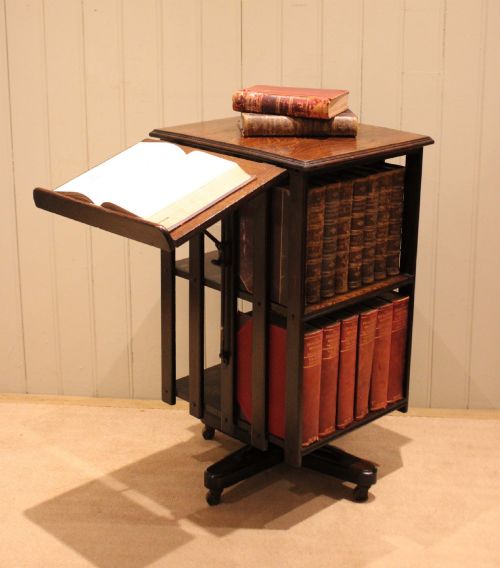
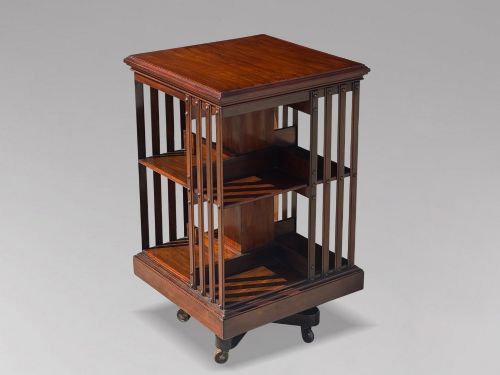
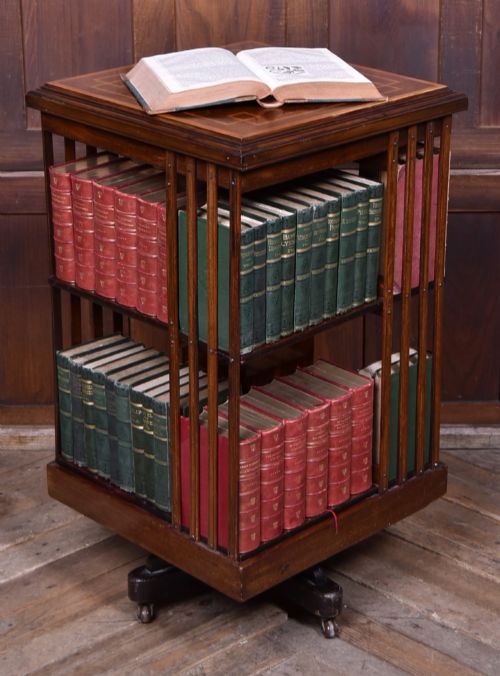
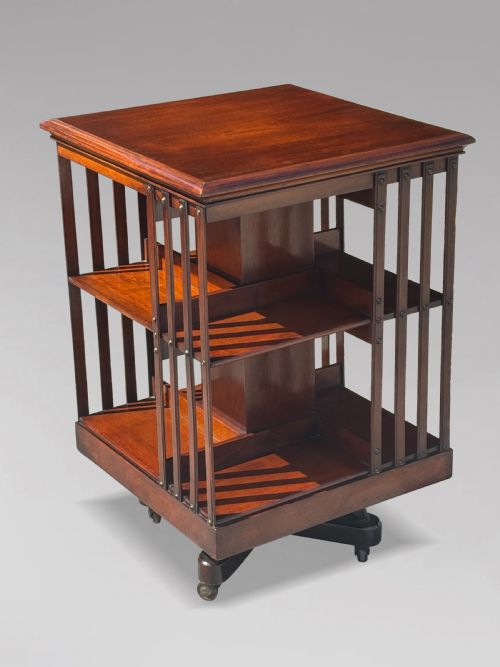
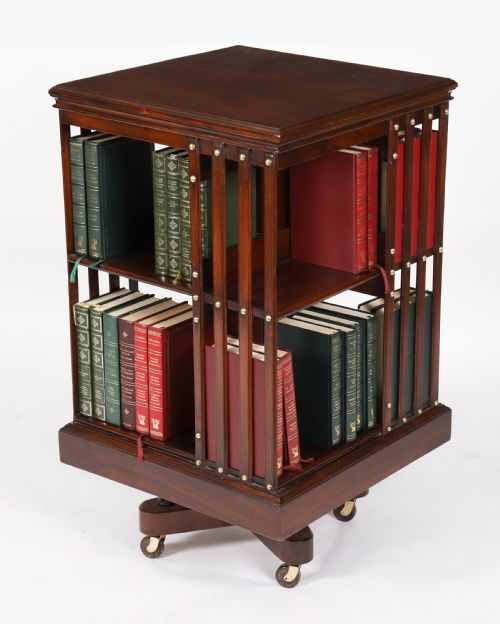
A victorian revolving book table sits upon a pedestal base with a mechanism that turns the surface above, allowing a reader to reach multiple volumes without shifting position. Most examples encountered here are small enough for an armchair side, constructed in mahogany, walnut, or burr walnut.
The form developed from standard bookcases and reading stands to serve the Victorian library or drawing room. Alongside traditional square book cabinets, variations include two-tier models, occasional tables, wine tables, and low table formats with brass inlay or galleries.
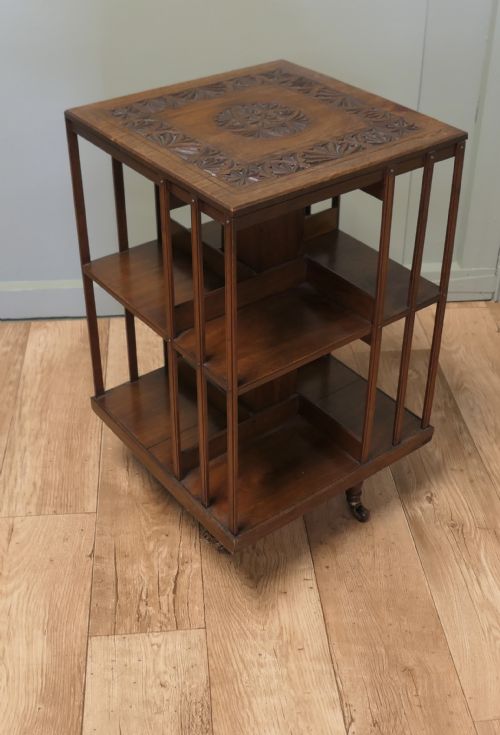
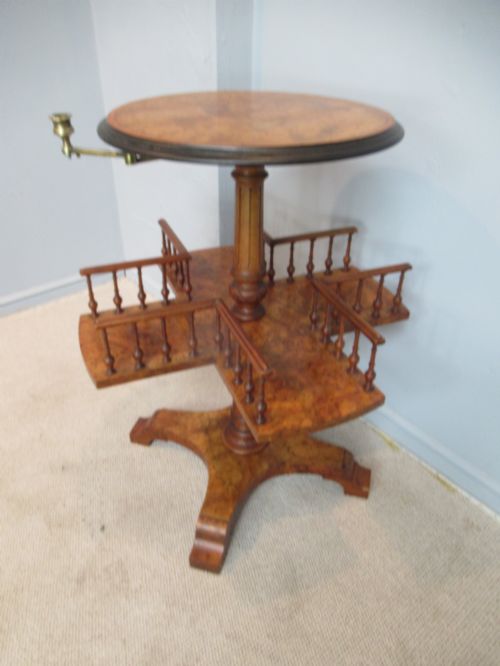
Origins span the nineteenth and early twentieth centuries, drawing on Victorian and Edwardian periods as well as Georgian and Regency revival styles. Pieces range from plain mahogany stands to burr walnut tables featuring inlaid tops and candle sconces.
Materials and Construction
Cabinet makers utilised dense hardwoods such as mahogany and walnut, frequently applying burr walnut or satinwood veneers to the visible surfaces to create figured grain patterns. Oak and rosewood also appear, supported by internal framing and joined with traditional cabinet joints.
Mechanical function relies on iron and brass components hidden beneath the top, allowing the upper tiers to spin smoothly on a central spindle. Brass inlay, cast iron bases, and leather top inserts are integrated into more decorative or specialised examples.
Victorian Revolving Book Table Retail Price Guide 2026
Typical asking prices for victorian revolving book table among the pieces listed under this phrase on Sellingantiques today, from the lower quarter to the upper quarter. They describe what is for sale here now, not the wider market.
One unusual survivor includes a candle sconce, proving that Victorians intended for readers to stay up late.
Assessing Quality
Quality rests in the choice of timber figure, such as richly patterned burr walnut or flame mahogany, paired with crispness in any inlay or brass work. The timber selection dictates the visual weight and presence of the piece in a room.
The turning mechanism defines daily utility. A well-adjusted spindle and bearing system allows the tiers to revolve evenly without wobble or friction, demonstrating the original mechanical precision of the workshop.
Maple & Co
The Victorian Revolving Book Table Glossary
- Revolving bookcase
- A freestanding piece with shelving on multiple sides designed to turn on a central base. It keeps volumes accessible from a seated position.
- Burr walnut
- Timber taken from the growth excrescence of a walnut tree, yielding complex, swirling grain patterns. It was favoured for high-status Victorian cabinet work.
- Bird cage table
- A small occasional table featuring a pivoting wooden frame beneath the top. This allows the surface to tilt or rotate independently of the column.
- Lazy waiter
- A revolving tray or tier attached to a table base. It permitted diners or readers to access items without passing them across the surface.
- Satinwood
- A pale, hard timber from tropical trees with a lustrous sheen. It was used for banding, inlay, or entire tabletops in decorative pieces.
Victorian Revolving Book Table: Frequently Asked Questions
How do these tables work?
A concealed central spindle and bearing system allows the upper tiers to rotate independently of the heavy pillar base.
This mechanism lets a reader spin the shelves to locate a specific volume without moving the entire piece of furniture.
Where were they used?
These tables served primarily in Victorian libraries, studies, and drawing rooms where books needed to be close to an armchair.
They also functioned as occasional tables or wine stands next to seating areas in larger homes.
How do I care for the wood?
Keep the timber away from direct heat sources and strong sunlight to prevent the veneers from drying and lifting.
Apply a traditional beeswax polish occasionally to maintain the lustre of the mahogany or walnut surfaces.
How do I date a piece?
Examine the secondary woods, the construction of the revolving mechanism, and the style of the timber veneers.
Victorian pieces often feature solid mahogany or burr walnut, while later Edwardian examples may show lighter construction and satinwood details.