


Victorian Pitch Pine Desk
These robust victorian pitch pine desk examples bring honest nineteenth-century utility and strong timber grain into a room.
Victorian Pitch Pine Desk
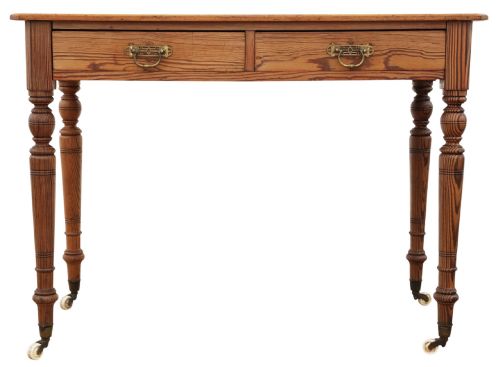
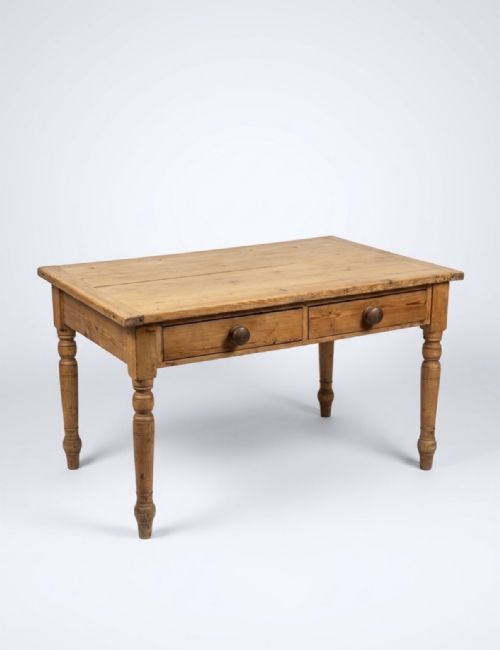
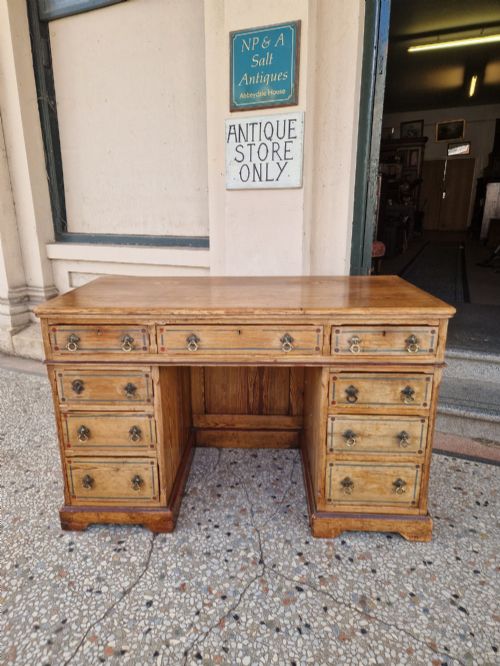
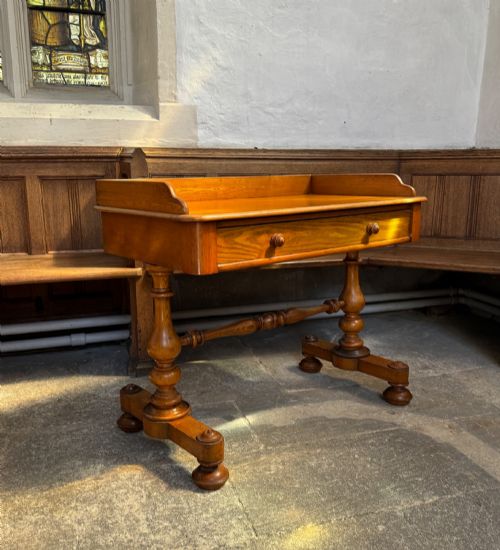
When you search for a victorian pitch pine desk, you encounter heavy nineteenth-century utilitarian furniture built from resinous softwood. The pieces on this page range from modest writing tables and school master pieces to substantial pedestal and kneehole desks.
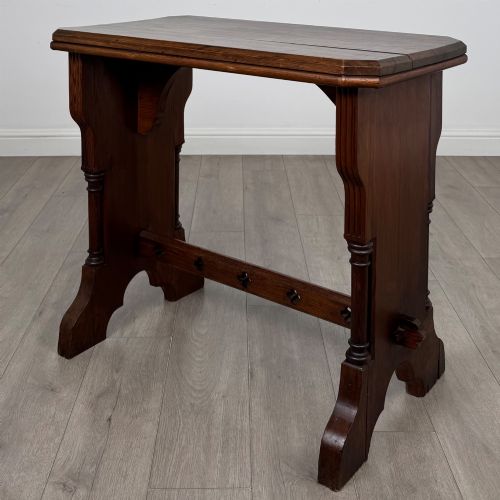
You are most likely to meet straightforward twin pedestal formats or simpler writing tables dating from around eighteen-fifty to nineteen-hundred. Stylistic variations span from plain Victorian country workshops to Gothic Revival and Arts and Crafts interpretations.
Makers such as Heals and designers linked to Pugin influenced the heavier architectural forms seen in ecclesiastical and institutional contexts. Smaller domestic variations function equally well as writing surfaces or side tables in contemporary interiors.
Materials and Construction
Carpenters utilised dense pitch pine for its characteristic high resin content and pronounced grain pattern. Secondary timbers such as oak occasionally appear in internal framing or school desk compartments.
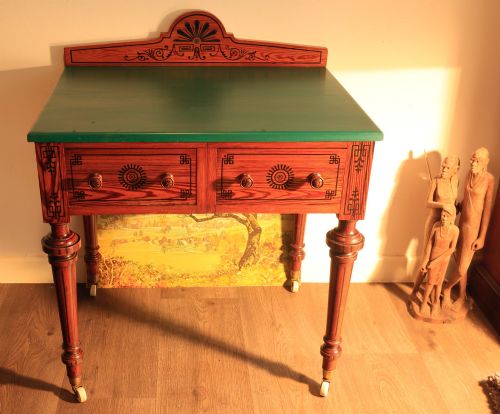
Metal hardware in brass and iron provides structural reinforcement and drawer pulls, while ceramic elements sometimes feature on washstand iterations. Green tooled leather surfaces appear on the top panels of formal library and pedestal writing desks.
Joinery techniques rely on sturdy panelled construction and dovetailed drawers designed to withstand heavy daily administration or school room use.
Some school teachers' desks retain deep ink stains from nineteenth-century pen nibs.
Judging Quality
Quality rests primarily on the density and figure of the pitch pine grain, alongside the integrity of the original surface finish and construction. Heavy pedestal formats with fitted drawers command attention through their substantial architectural proportions.
Design ambition separates standard institutional pieces from sophisticated Gothic Revival or Aesthetic Movement variations featuring inlaid details or specialised hardware. The presence of makers' marks or institutional provenance elevates specific examples above anonymous utility furniture.
Heals·Pugin
The Victorian Pitch Pine Desk Glossary
- Pitch Pine
- A dense, durable softwood containing high amounts of natural resin, prized for its distinct orange-brown colour and prominent grain patterns. Nineteenth-century cabinet makers selected this timber for heavy-duty institutional and domestic furniture.
- Pedestal Desk
- A large freestanding writing table supported by two banks of drawers rather than simple legs. These configurations provide substantial storage beneath the main writing surface.
- Kneehole Desk
- A writing table featuring a central recess for the user's legs, flanked by one or two banks of drawers. This form allows comfortable seated writing.
- Gothic Revival
- An architectural and decorative style popular during the Victorian period, drawing inspiration from medieval forms. Characteristics include pointed arches, heavy chamfering, and ecclesiastical detailing.
- Aesthetic Movement
- A late nineteenth-century design philosophy emphasising visual and material beauty over narrative or moral function. Furniture from this movement often displays cleaner lines and simpler geometric forms.
Victorian Pitch Pine Desk: Frequently Asked Questions
How do I identify pitch pine?
Pitch pine displays a heavy, resinous grain with strong contrast between the amber heartwood and paler rings. The timber feels noticeably heavier and harder than standard softwoods.
Over time, the resin rises slightly to create a warm, deep surface patina that resists standard wear.
Were these desks used in schools?
Many surviving examples served in school rooms, headmasters' offices, and ecclesiastical buildings. School teachers' desks often incorporated slanted tops and specialised inkwell compartments.
Their robust construction allowed them to endure decades of institutional administration and daily instruction.
How do I care for the wood?
Maintain the surface by applying traditional beeswax sparingly to nourish the dry pine grain. Avoid placing desks near direct heat sources that might cause the resinous timber to split.
Clean surfaces with a soft, dry cloth rather than harsh modern chemical cleaning agents.
How do Gothic Revival desks differ?
Gothic Revival pieces incorporate medieval architectural motifs such as pointed arches, quatrefoils, and heavy chamfered framing. These desks were often built for ecclesiastical settings or progressive Victorian libraries.
Their substantial physical weight distinguishes them from lighter domestic country pine furniture.