

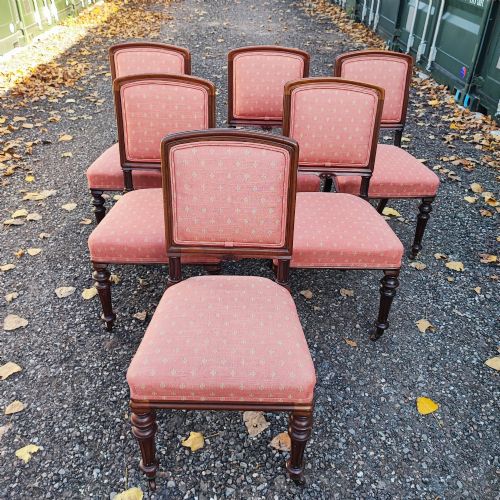
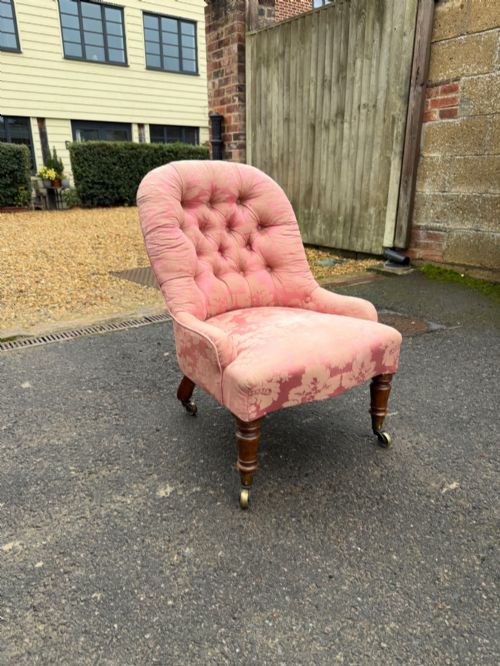
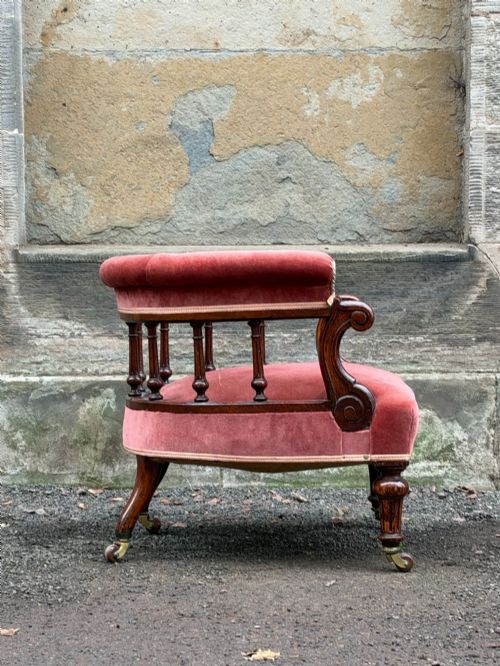
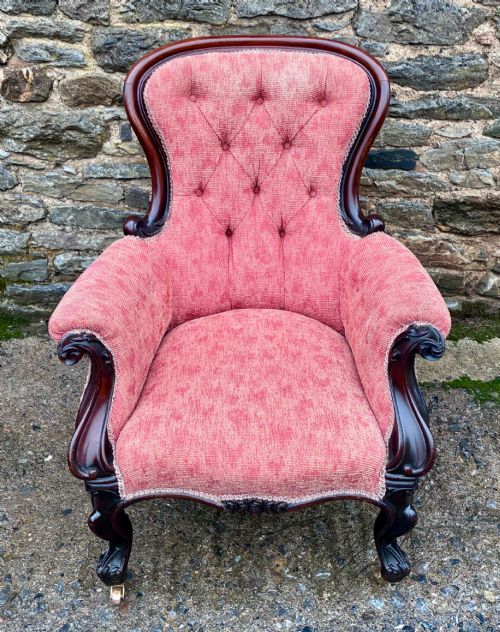
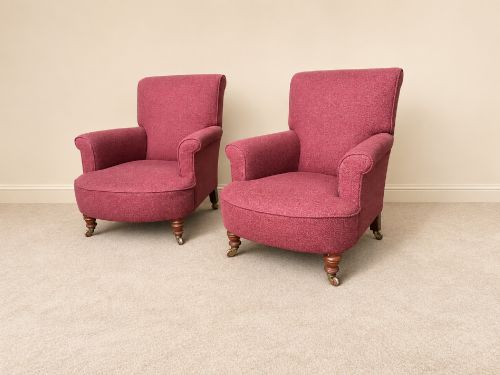
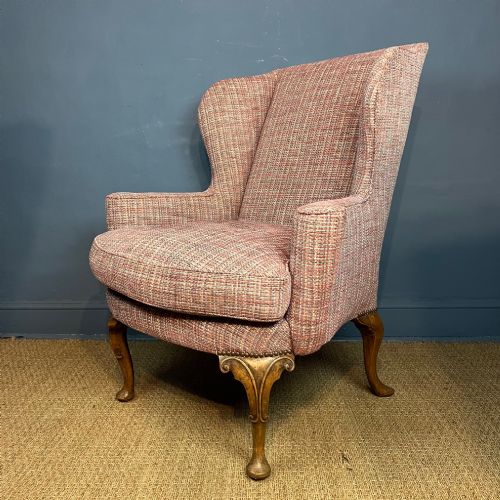
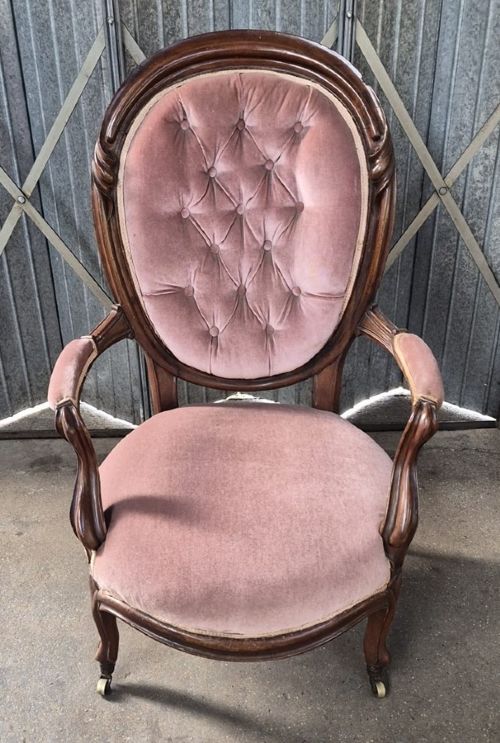
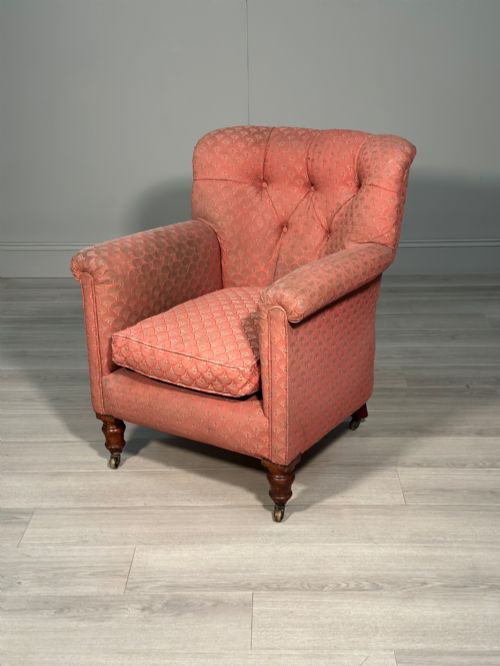

Victorian Pink Chair
A victorian pink chair brings nineteenth-century comfort and upholstery charm into a modern room through low seats, carved woodwork and plush textiles.
Victorian Pink Chair
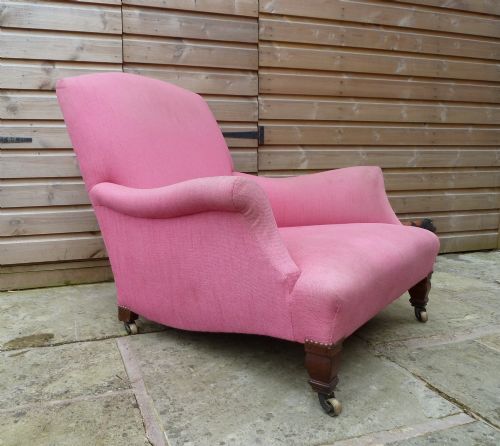
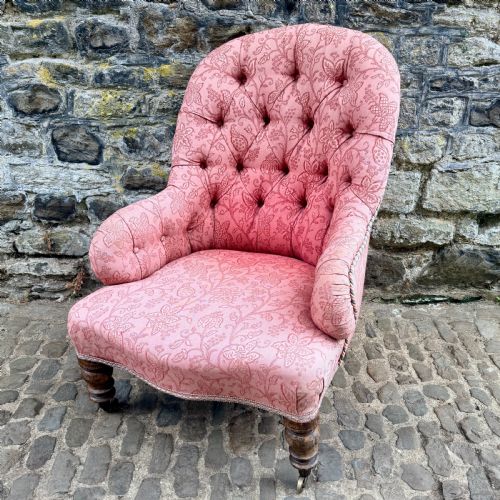
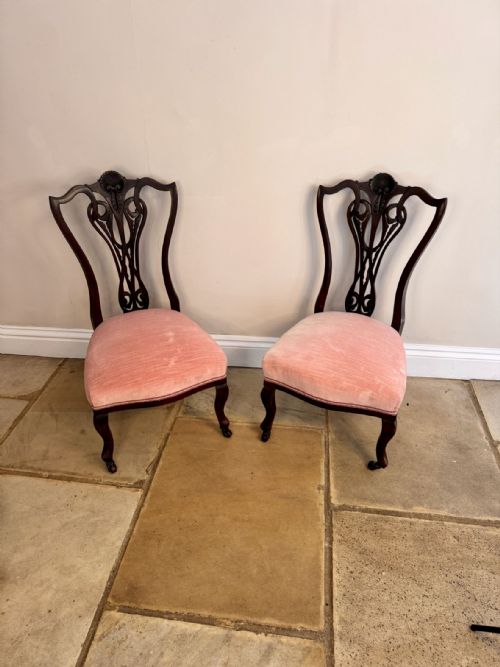
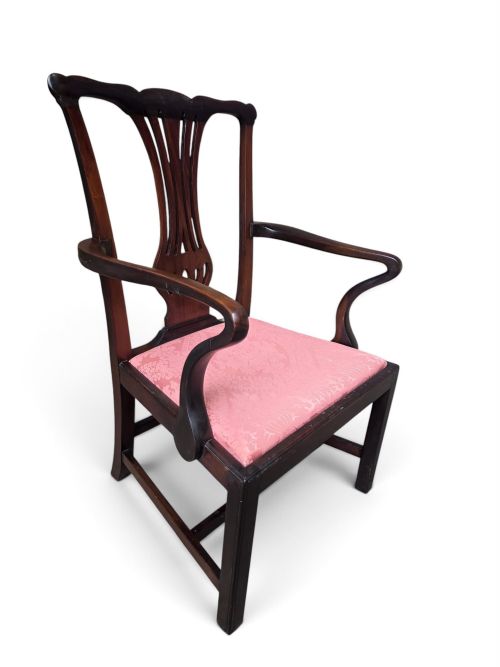
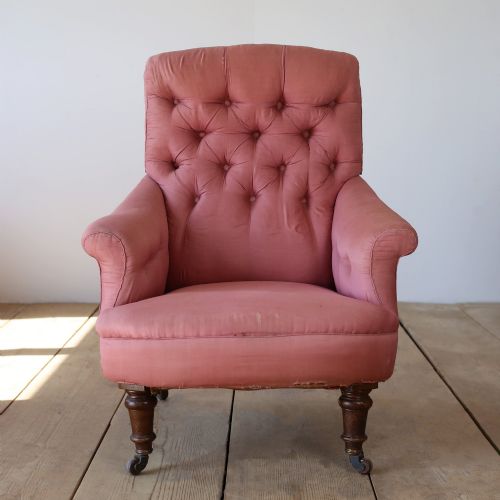
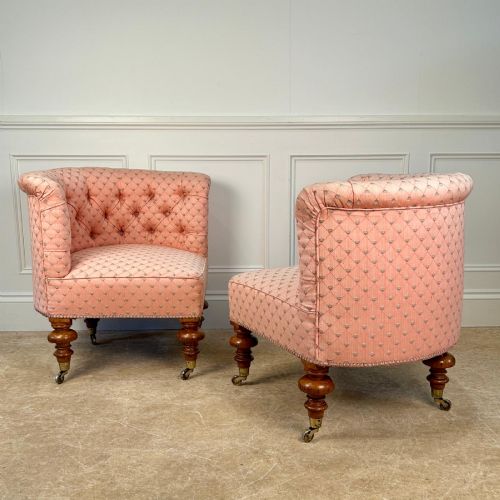
A victorian pink chair encompasses low-slung nursing chairs, bedroom chairs, slipper chairs and button-back armchairs originating across the nineteenth century. These seating forms were designed for specific domestic rooms, offering low profiles for dressing or fireside repose.
The pieces appearing on this page span the Victorian era alongside related nineteenth-century styles such as Arts and Crafts, Aesthetic Movement, and Chippendale Revival. Walnut, mahogany and rosewood frames provide the structural foundation for the textile upholstery.
Buyers will find individual chairs, pairs and larger suites, often defined by low seats, carved wooden details and traditional sprung foundations. The selection reflects diverse nineteenth-century cabinet-making traditions, from French mid-century designs to Anglo-Indian padauk and English country house seating.
Materials and construction
Frames are constructed from dense timbers including mahogany, walnut, oak, padauk and rosewood, frequently shaped with hand-carved details, barley twist turnings or gilt highlights. Cabinet makers joined these hardwoods using traditional joinery to support the weight and tension of sprung upholstery.
Upholstery relied on textile coverings such as velvet and various fabrics stretched over webbed bases and metal coil springs. Button-backed tufting, fringing and brass castors completed the construction, combining rigid timber frames with soft padding.
Victorian Pink Chair Retail Price Guide 2026
Typical asking prices for victorian pink chair among the pieces listed under this phrase on Sellingantiques today, from the lower quarter to the upper quarter. They describe what is for sale here now, not the wider market.
Listings feature nineteenth-century furniture utilising walnut, mahogany, brass, fabric and velvet across diverse forms from armchairs to daybeds.
Assessing quality and execution
Quality rests in the crispness of the timber carving and the architectural integrity of the wooden frame beneath the textile. Superior examples exhibit tightly figured walnut or mahogany, balanced proportions and robust joinery that withstands daily use.
The standard of upholstery work and the selection of textile distinguish finer pieces from simpler domestic seating. Original maker stamps, refined turnings and intricate frame details elevate individual pieces within the nineteenth-century range.
Howard and Sons·George Jack for Morris and Co·Gillows·Holland and Sons·Hindley and Sons
The Victorian Pink Chair Glossary
- Nursing chair
- A low-seated Victorian chair originally designed for nurseries or dressing rooms, allowing a person to sit comfortably while tending to children or clothing.
- Slipper chair
- An upholstered chair with short legs that sits close to the floor, traditionally used in bedrooms for putting on shoes.
- Button back
- An upholstery style where buttons are pulled deep into the padding in a diamond pattern, creating distinct tufts.
- Balloon-back
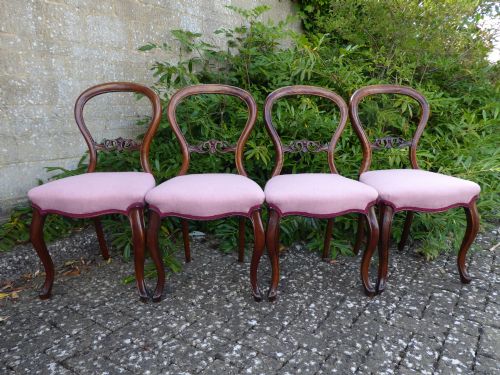
- A dining or side chair back shaped in a continuous oval curve resembling a balloon, popular during the nineteenth century.
- Padauk
- A dense tropical hardwood with a rich reddish tone, utilised in nineteenth-century Anglo-Indian furniture production.
Victorian Pink Chair: Frequently Asked Questions
What is a nursing chair?
A nursing chair is a low-seated nineteenth-century chair originally designed for comfortable seating in bedrooms or nurseries. The lower height made them practical for nursing infants or assisting with Victorian dress.
Today, these pieces function well as accent seating in living rooms or dressing areas, offering compact dimensions and upholstered comfort.
How do I identify a Victorian chair?
Victorian chairs are identified by their characteristic timber frames, nineteenth-century joinery techniques, and specific upholstery styles like button-backing or balloon backs. Materials such as walnut and mahogany are common.
Examining the underside and frame construction helps confirm the nineteenth-century origin, alongside stylistic cues from periods like the Aesthetic Movement or Arts and Crafts.
Are these chairs comfortable for daily use?
Many nineteenth-century armchairs and nursing chairs were built with robust coil springs and padded upholstery designed for long-term domestic comfort. Their ergonomic low profiles suit relaxed seating.
Depending on the age of the padding, some pieces may benefit from reupholstery or restringing to ensure optimal support for everyday living.
How should I care for antique upholstery?
Protecting textile upholstery involves gentle vacuuming with a soft brush attachment and keeping the fabric away from direct sunlight to prevent fading. Professional cleaning helps preserve delicate velvet and woven materials.
Wooden frames benefit from occasional dusting and the avoidance of harsh chemical polishes to maintain the natural finish of the timber.