

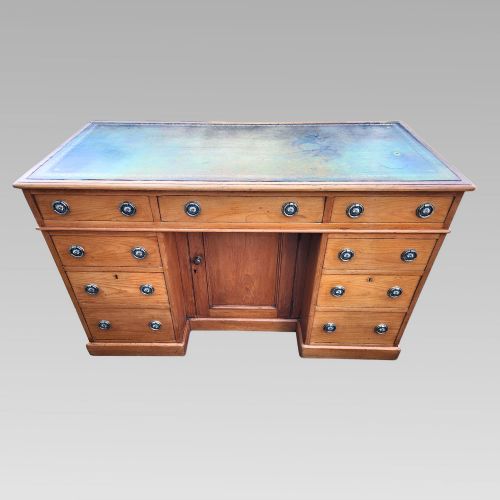


Victorian Pine Study Desk
A victorian pine study desk brings working utility and honest grain into a room, offering sturdy writing surfaces built from resilient softwood.
Victorian Pine Study Desk
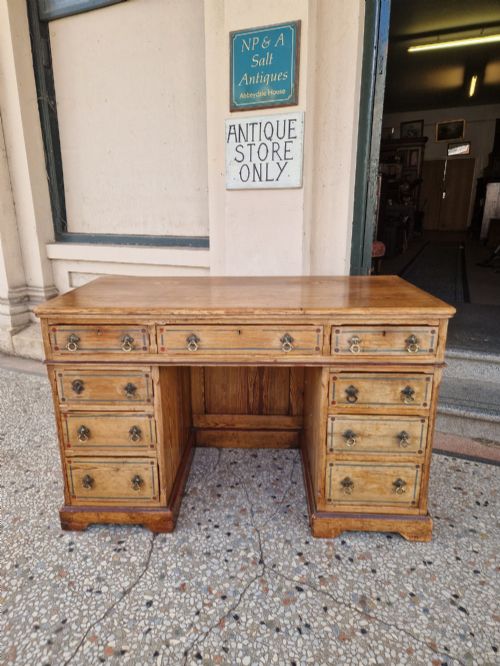
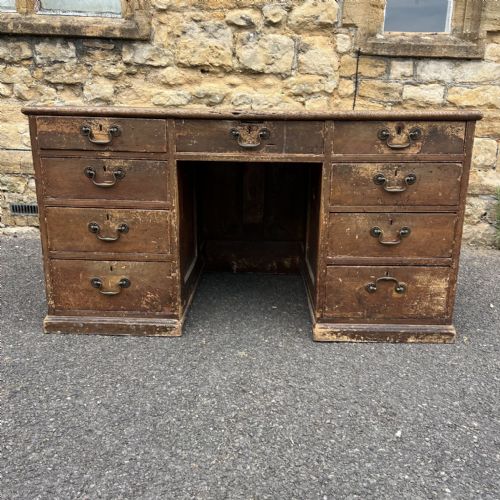
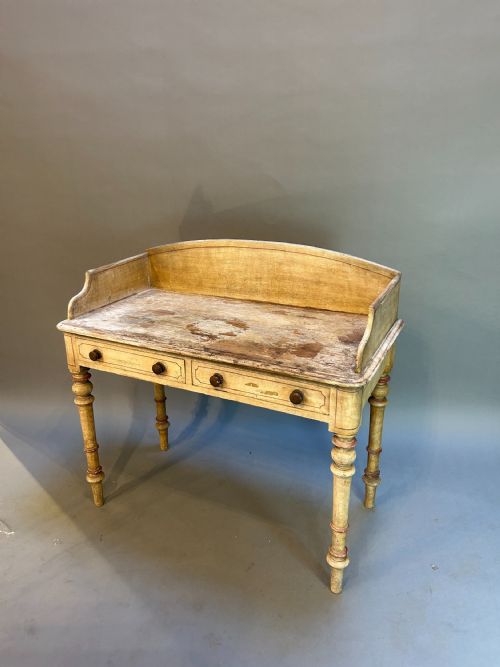
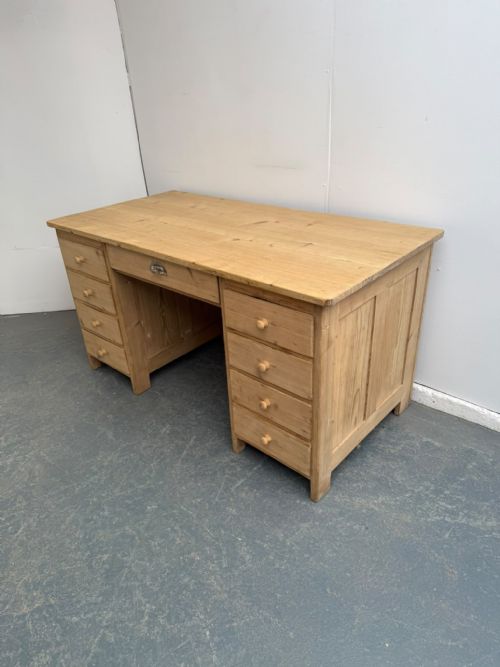
A victorian pine study desk takes many forms across the nineteenth century, ranging from compact side writing tables to large multi-drawer office pedestals. You encounter vernacular pieces like school teacher's tables alongside grander estate desks, secretary bureaux, and partners' setups.
Most examples rely on durable pitch pine or standard softwood timbers, sometimes treated with early paint finishes or leather inserts. The designs span simple rustic farmhouse pieces to more formal Victorian Gothic and Arts and Crafts interpretations.
Materials and construction methods
Makers utilised solid pine and dense pitch pine for frames, drawers, and writing surfaces, often pairing the softwood with oak for structural reinforcement or drawer linings. Heavy iron and brass fittings such as drop handles, key escutcheons, and hinges secure the cabinetry.
Joinery techniques include traditional dovetailing for the drawer boxes and panelled construction for pedestal sides and backs. Many surfaces were left plain for waxing, though some received layers of paint or inset leather writing tops.
Victorian Pine Study Desk Retail Price Guide 2026
Typical asking prices for victorian pine study desk among the pieces listed under this phrase on Sellingantiques today, from the lower quarter to the upper quarter. They describe what is for sale here now, not the wider market.
An ink stain inside a drawer tells you exactly what kind of work happened here long before your morning emails.
Distinguishing quality in timber and structure
The choice between standard softwood and dense pitch pine alters the weight, durability, and visual grain pattern of a desk. Superior pieces display tight growth rings, thick plank construction, and substantial drawer configurations rather than thin, light boards.
Hardware integrity and structural joinery differentiate utilitarian school or estate furniture from finer office partners' desks. Original brass fittings, well-fitted drawers, and intact leather surfaces elevate an example above basic utilitarian builds.
The Victorian Pine Study Desk Glossary
- Pitch pine
- A resinous North American pine species prized for its durability and distinct figured grain. It appears frequently in late nineteenth-century desk construction.
- Kneehole desk
- A freestanding desk featuring a central recess for the user's legs, flanked by banks of drawers on one or both sides. This layout maximises storage without sacrificing seating comfort.
- Partners desk
- A large double-sided desk designed for two people to work opposite one another, featuring drawers and cupboards accessible from both faces. These are among the largest formats found in pine.
- Secretaire
- A cabinet or desk incorporating a pull-out writing flap or drop-front drawer that conceals a fitted interior of small compartments and pigeonholes. It merges storage cabinetry with a dedicated writing surface.
- Escutcheon
- A protective plate surrounding a keyhole, usually made of brass or iron. It prevents the surrounding softwood from splintering under repeated use.
Victorian Pine Study Desk: Frequently Asked Questions
How do I care for a pine desk?
Feed the timber periodically with a traditional beeswax polish to protect the surface and maintain a healthy sheen. Avoid placing the desk in direct sunlight or near heat sources to prevent the pine from drying out and splitting.
Keep writing surfaces clear of standing moisture by using coasters and blotters, wiping any spills immediately with a dry cloth.
Were these desks painted originally?
Many utility and school tables received protective coats of paint during their working lives, while domestic pieces were often waxed to highlight the natural grain. Some buyers choose to strip old paint layers, while others preserve the historic surface patination.
Examine the edges and interior corners to see whether traces of early colour survive beneath later finishes.
What is the difference between pine and pitch pine?
Standard pine refers to homegrown or European softwoods that offer a paler tone and lighter weight. Pitch pine contains a higher resin content, resulting in a heavier, harder timber with a pronounced reddish-brown striped grain.
Desks built from pitch pine generally withstand heavier daily use and resist dents more effectively than their standard softwood counterparts.
Can I use a vintage pine desk for daily computer work?
Most nineteenth-century writing tables and pedestals accommodate modern laptops easily, provided the keyboard height aligns comfortably with your chair. Deeper pedestal desks offer ample surface area for screens and paperwork simultaneously.
Check the kneehole height and width dimensions carefully to ensure your legs and chair fit comfortably underneath.