



Victorian Pine Pedestal Desk
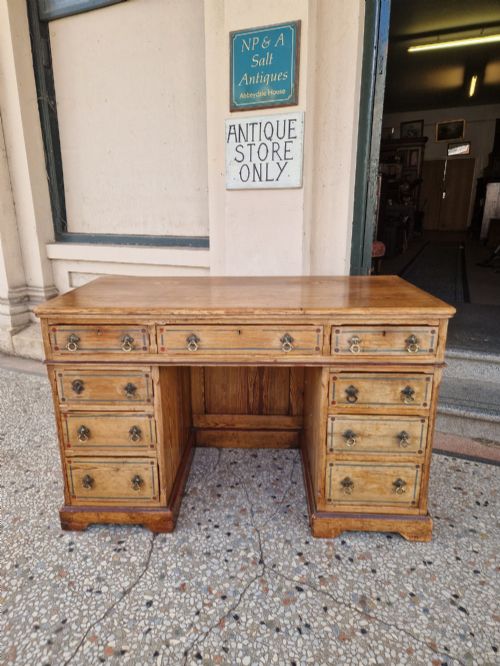
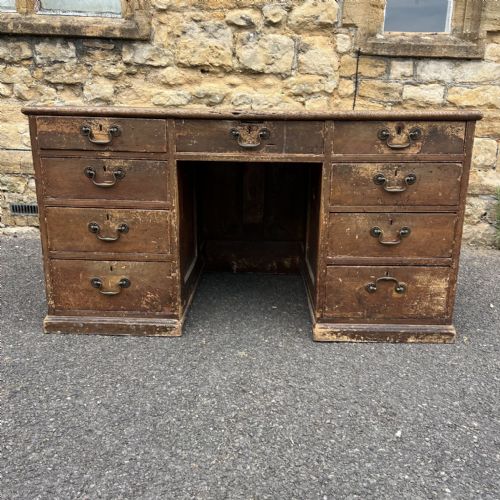
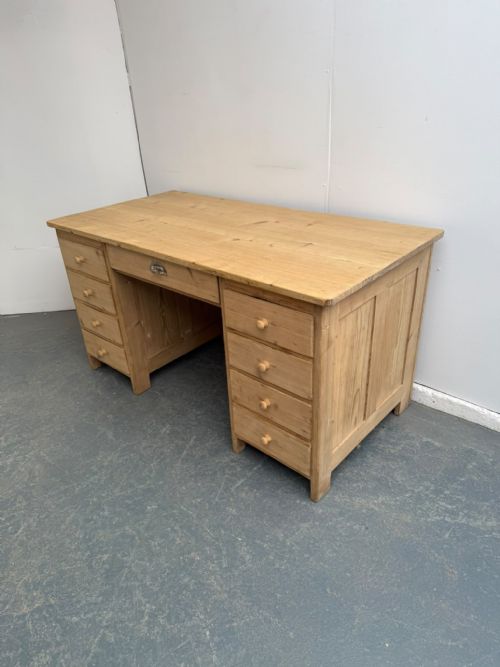
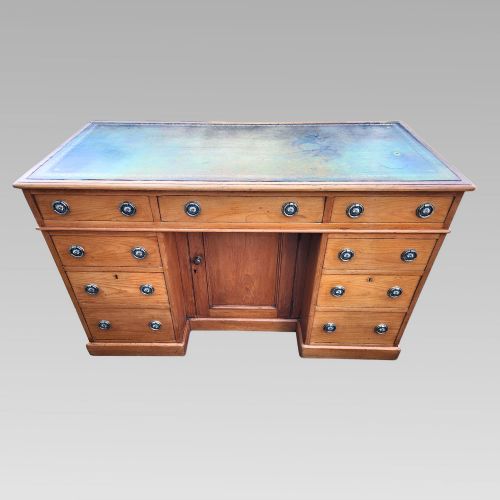
These Victorian pine pedestal desk pieces are substantial working furniture built to anchor a study or office.
Victorian Pine Pedestal Desk
When you search for a victorian pine pedestal desk, you encounter heavy functional furniture designed for writing and storage in nineteenth-century offices and estates. The examples gathered here span the Victorian era, reaching into the turn of the twentieth century with Arts and Crafts influences.
Most pieces follow a pedestal format, pairing flanking banks of drawers with a central writing surface. Variations include kneehole desks and large partners configurations, sometimes constructed from pitch pine or incorporating oak elements.
Beyond standard office forms, related items on this page occasionally include painted finishes, side writing tables, or dressing table variants with stencilled decoration. These utilitarian objects reflect both rural country house settings and more formal Victorian workspaces.
Materials and construction
Makers utilised solid pine and dense pitch pine for the primary framework, often combining oak for internal components or drawer linings. Heavy panelled construction ensured durability for daily administrative work in estate offices and studies.
Surfaces were frequently left bare for finishing with wax or paint according to preference, while other examples retained original painted decoration or stenciling. Brass hardware and inset leather writing surfaces completed the functional design of these working desks.
Victorian Pine Pedestal Desk Retail Price Guide 2026
Typical asking prices for victorian pine pedestal desk among the pieces listed under this phrase on Sellingantiques today, from the lower quarter to the upper quarter. They describe what is for sale here now, not the wider market.
Some desks arrive ready to paint or wax, leaving the final colourful chapter of the timber's long life entirely up to you.
Assessing quality and character
Quality in a victorian pine pedestal desk rests on the weight of the timber and the integrity of the structural joinery. Dense pitch pine and substantial nine-drawer configurations represent the heavier end of the range, built to withstand demanding office use.
Subtleties such as original stencilled decoration or Arts and Crafts detailing elevate certain examples above standard utility pieces. The choice between plain waxed pine and painted finishes introduces stylistic variety rather than a simple hierarchy of value.
The Victorian Pine Pedestal Desk Glossary
- Pedestal desk
- A freestanding writing table supported by two vertical banks of drawers. This configuration provides ample storage flanking a central leg space.
- Pitch pine
- A heavy, durable resinous softwood utilised for robust Victorian furniture. It offers distinct grain patterns and greater weight than standard pine.
- Partners desk
- A large double-sided desk designed for two people to work opposite one another. These incorporate drawers or cupboards on both faces.
- Kneehole
- A recessed space beneath the desktop designed to accommodate the user's legs. Desks of this form place drawers solely in the side pedestals.
Victorian Pine Pedestal Desk: Frequently Asked Questions
What is a pedestal desk?
A pedestal desk is a large freestanding writing table with two supporting columns of drawers beneath the top. It provides substantial surface area and storage space.
In nineteenth-century settings, these pieces served as the central workspace for estate management, writing, and administrative tasks.
How do I date these desks?
Dating relies on construction methods, timber choices, and stylistic markers recorded across the Victorian period and up to nineteen hundred. Details like panel construction and hardware offer reliable chronological clues.
Arts and Crafts influences point towards the later boundary of the era, around the turn of the twentieth century.
How do I care for pine furniture?
Waxed pine surfaces benefit from occasional nourishing with traditional beeswax to maintain the finish and protect the timber. Avoiding direct heat sources prevents the wood from drying out or splitting.
Painted or stencilled examples require gentle dusting with a dry cloth to preserve original decorative layers.
Where were these desks used?
These pieces originated in Victorian offices, country houses, and estate administration rooms where heavy daily work took place. Their robust construction suited practical environments.
Today, they adapt easily to modern home studies or living spaces as substantial working desks.