


Victorian Pine Farmhouse Dining Table
These robust victorian pine farmhouse dining table examples anchor the heart of the country kitchen, built for decades of daily service and family life.
Victorian Pine Farmhouse Dining Table
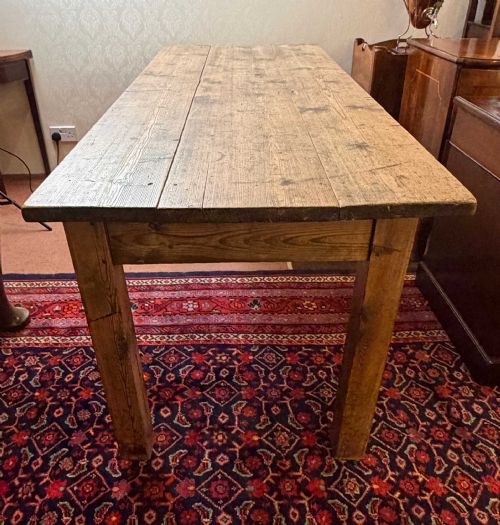
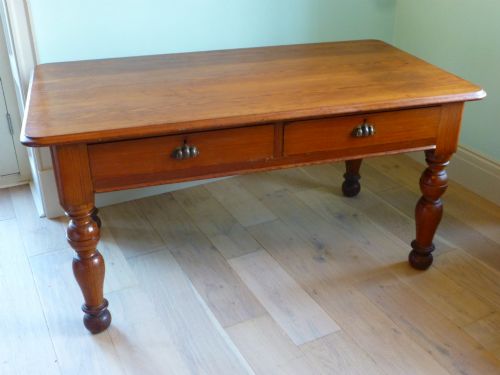
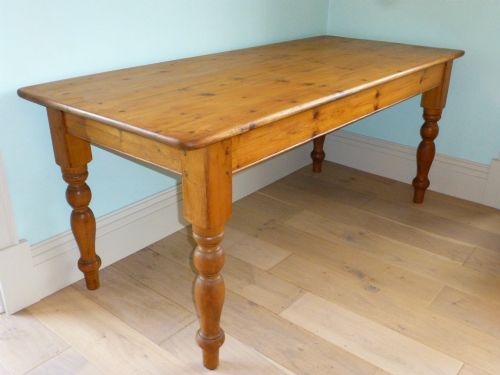
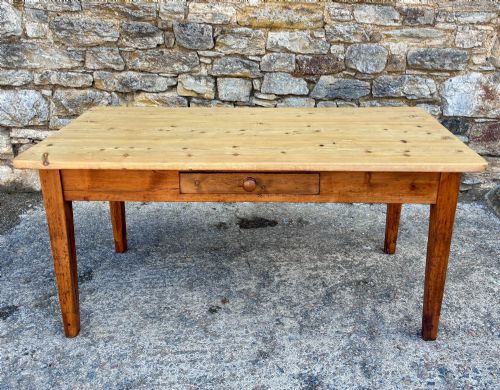
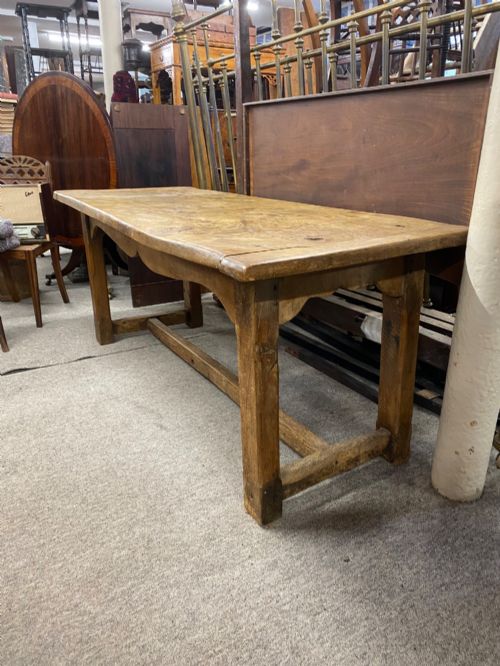
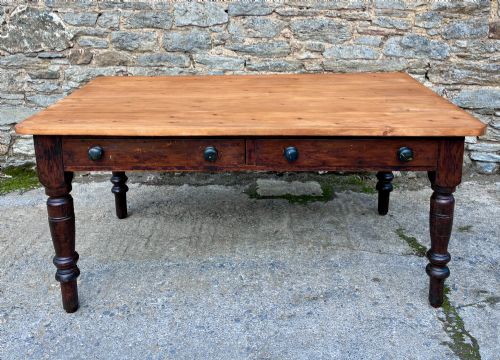
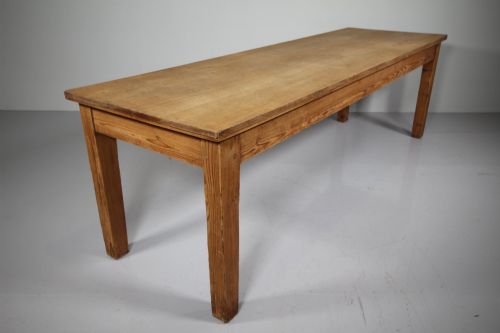
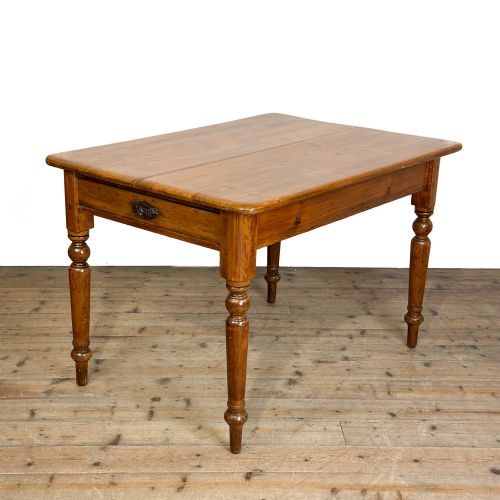
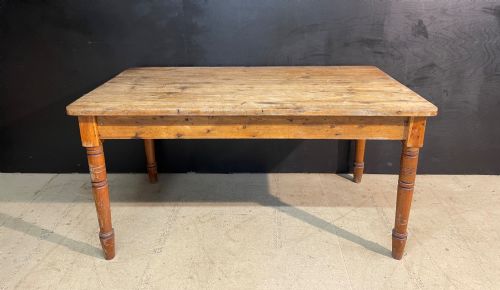
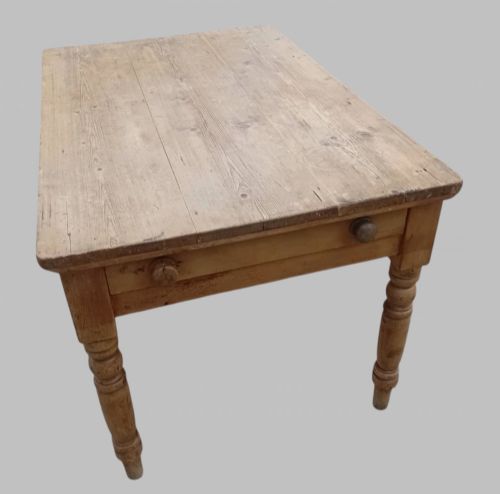
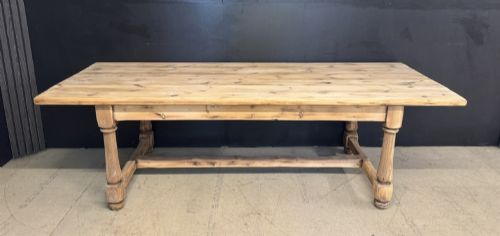
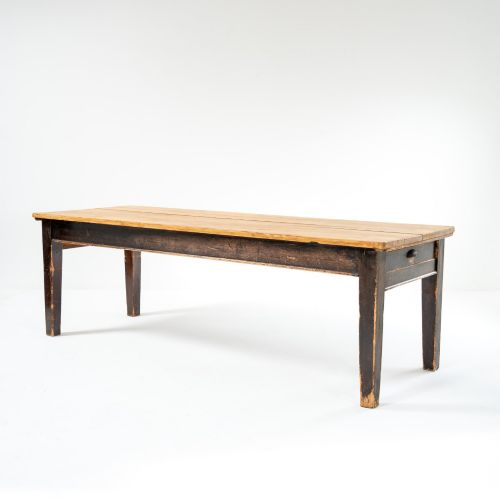
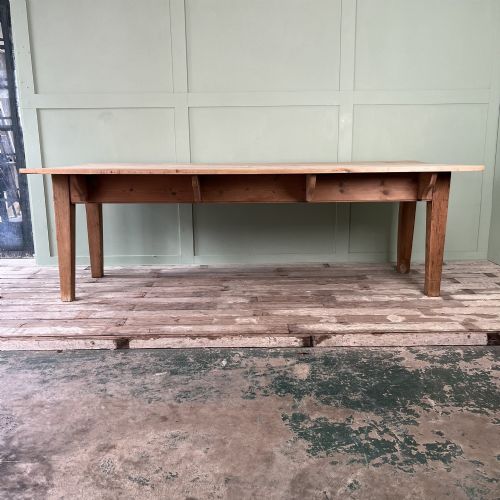
A victorian pine farmhouse dining table serves as the primary workspace and gathering place in nineteenth-century domestic interiors. You will most frequently encounter sturdy rectangular boards resting on straightforward legs, often incorporating a functional drawer for household implements. The pieces span from the mid-nineteenth century through to the early decades of the twentieth, reflecting practical utility rather than formal parlour display.
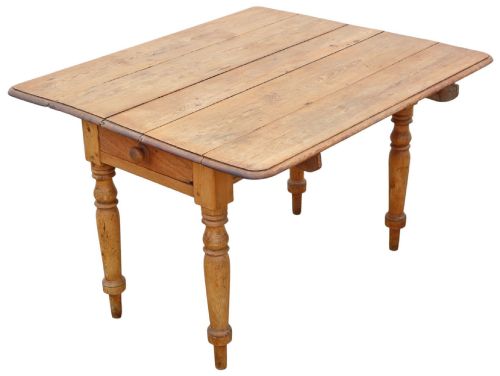
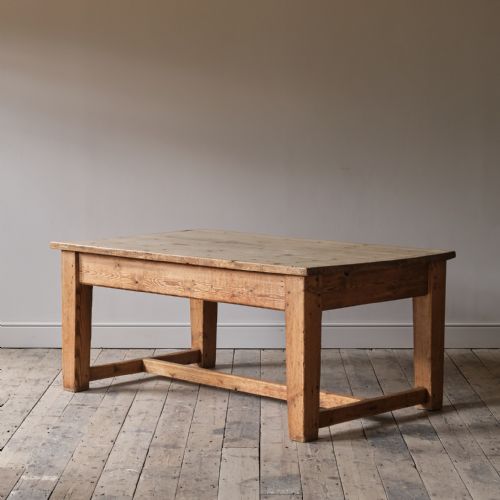
Regional variations shape these forms, including longer refectory styles suited to larger Welsh vernacular settings alongside compact drop-leaf formats designed for restricted spaces. Woods primarily comprise standard domestic pine and pitch pine, occasionally paired with oak or finished with original layers of paint. These tables range from intimate four-seater formats to expansive boards capable of seating eighteen guests.
Surfaces demonstrate the marks of actual use, shifting from scrubbed clean timber tops to timeworn painted bases. The overall aesthetic remains rooted in rustic country and Victorian domestic traditions, avoiding excessive ornamentation in favour of honest structural integrity.
Materials and construction methods
Carpenters constructed these tables using solid timber boards joined to robust supporting frames. Pine and pitch pine provide the primary structural substance, selected for availability and workability, while occasional examples incorporate secondary woods like oak.
Makers utilised straightforward joinery techniques to ensure stability under heavy daily loads. Legs often take square section forms, and some iterations include folding drop-leaf mechanisms or integrated drawers secured with traditional framing.
Victorian Pine Farmhouse Dining Table Retail Price Guide 2026
Typical asking prices for victorian pine farmhouse dining table among the pieces listed under this phrase on Sellingantiques today, from the lower quarter to the upper quarter. They describe what is for sale here now, not the wider market.
Current listings demonstrate a prevalence of Victorian and early twentieth-century dates, utilising solid pine, pitch pine, and painted wood in rustic farmhouse forms.
Distinctions in craftsmanship and preservation
Superior examples exhibit thoughtful proportions and substantial timber thickness that withstands generations of use. The handling of the top surface dictates much of the character, whether retained with layers of historic paint or scrubbed down to the warm grain of the wood.
Structural honesty and original components elevate certain tables above standard utility pieces. Elements like well-integrated drawers, unusual hardware such as brass bases, and untouched regional characteristics separate exceptional vernacular furniture from ordinary workshop output.
The Victorian Pine Farmhouse Dining Table Glossary
- Scrub top
- A tabletop finished by vigorous washing and scrubbing rather than heavy varnishing. This process leaves the pine pale, clean and tactile.
- Refectory table
- A long narrow dining table traditionally used for communal meals. Nineteenth-century pine versions adapt this monastic format for large domestic kitchens.
- Drop leaf
- A table design featuring hinged flaps that fold down to save floor space. These prove particularly useful in smaller rooms.
- Pitch pine
- A dense, resinous variety of pine timber. It provides exceptional durability and a pronounced grain pattern compared to standard softwoods.
- Vernacular furniture
- Domestic pieces made by local craftspeople using regional traditions and readily available materials. These items prioritise local utility over metropolitan fashion.
Victorian Pine Farmhouse Dining Table: Frequently Asked Questions
How do I clean a scrubbed pine table?
Maintenance requires only warm water and mild soap applied with a soft brush along the grain. Avoid harsh chemical sealants that alter the natural texture of the historic timber.
Allow the wood to dry naturally away from direct heat sources to prevent warping. Regular gentle cleaning preserves the pale, historic finish achieved through generations of domestic use.
Were these tables used only in kitchens?
While primarily associated with food preparation and scullery work, large examples served family dining needs. Their robust build suited multi-purpose domestic environments.
Country houses and farmhouses relied on these surfaces for everything from baking bread to mending household goods. The lack of delicate ornamentation made them suitable for relentless daily activity.
How can I tell the age of a pine table?
Dating relies on examining construction marks, timber characteristics and hardware. Hand-sawn boards and traditional joinery point toward nineteenth-century production methods.
Layers of old paint or surface wear also provide clues regarding the timeline of use. Subtle shifts in leg profiles and apron design help distinguish mid-Victorian pieces from later Edwardian examples.
What is the difference between standard pine and pitch pine?
Pitch pine contains higher resin content and exhibits a denser, heavier feel than ordinary softwood pine. This resin provides natural resilience against moisture and heavy wear.
Tables built from pitch pine often display a darker, more figured grain pattern. Carpenters selected this material when constructing surfaces intended for severe, sustained workloads.