

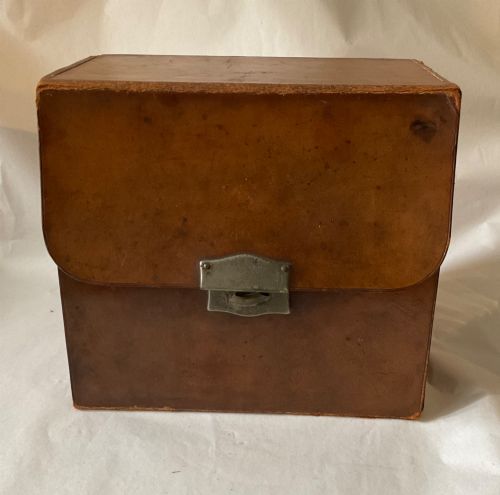


Victorian Pharmacy Box
These robust containers, commonly traded as a victorian pharmacy box, served households and practitioners in dispensing medicines safely across the nineteenth century.
Victorian Pharmacy Box
When you search for a victorian pharmacy box, you are looking at utilitarian containers designed to store medicines, remedies, and compounding tools securely. These pieces originate primarily from the nineteenth century, encompassing Georgian transitions through to the early twentieth century.
The versions most commonly met on this page take the form of fitted mahogany chests, leather-cased apothecary cases, and miniature campaign boxes. Many retain internal storage compartments alongside original glass bottles.
Such objects reflect the domestic and professional medical practices of their era, combining secure cabinetry with specialised internal arrangements. They survive in various formats, from countertop display cabinets to portable veterinary chests.
What varies in quality
The distinction between standard examples and superior specimens rests on the completeness of their original contents and internal fittings. Boxes retaining their full complement of marked glass bottles and specialised tools command greater interest.
Superior construction involves fine timber selection, robust dovetail joinery, and intact leather or velvet linings. The precision of the internal dividers and the quality of the brass hardware indicate the original maker's investment in the piece.
Victorian Pharmacy Box Retail Price Guide 2026
Typical asking prices for victorian pharmacy box among the pieces listed under this phrase on Sellingantiques today, from the lower quarter to the upper quarter. They describe what is for sale here now, not the wider market.
Listings on this page span the nineteenth century, featuring mahogany and boxwood alongside fitted glass bottles and brass hardware.
The Victorian Pharmacy Box Glossary
- Apothecary box
- A fitted container designed to hold medical ingredients, scales, and compounding equipment. These boxes often feature secure locking lids and pigeonhole storage for glass vials.
- Pill rounder
- A wooden or metal tool used by practitioners to shape pharmaceutical pastes into uniform pills. Examples in the evidence are fashioned from boxwood.
- Campaign box
- A portable chest built for travel, featuring recessed brass handles and reinforced corners to withstand frequent movement. These pieces were utilised by practitioners on the move.
- Chemist jars
- Glass or wooden vessels manufactured to store dry or liquid medicinal substances on dispensary shelves. They form part of the internal equipment found in surviving cabinets.
Victorian Pharmacy Box: Frequently Asked Questions
What did a victorian pharmacy box hold?
These boxes held a range of medicinal ingredients, scales, measures, and glass bottles for compounding remedies at home or on travels. Many included specialised tools like pill rounders for preparing treatments.
Interior layouts were carefully partitioned to keep fragile glass containers secure and separate from dry ingredients or powders.
How do I identify a period piece?
Look at the construction materials, such as solid mahogany or boxwood, combined with period brass hardware and hand-cut dovetail joints. The presence of traditional glass bottles and period finishes offers further confirmation of age.
Stylistic cues link these items to nineteenth-century manufacturing methods before mass production altered box construction.
Were these boxes used by doctors?
Yes, many were utilised by physicians, apothecaries, and veterinary practitioners who needed to transport remedies to patients. Portable campaign variants were specifically designed for travel.
Other examples remained static in domestic settings or chemist shops for household healthcare management.
How should I clean the wood and brass?
Maintain the timber surfaces with appropriate wax polish applied sparingly to preserve the natural grain and age. Avoid harsh chemical cleaners that strip the original patina from the wood and metal.
Brass hardware responds well to gentle wiping, retaining its aged appearance without aggressive polishing.