

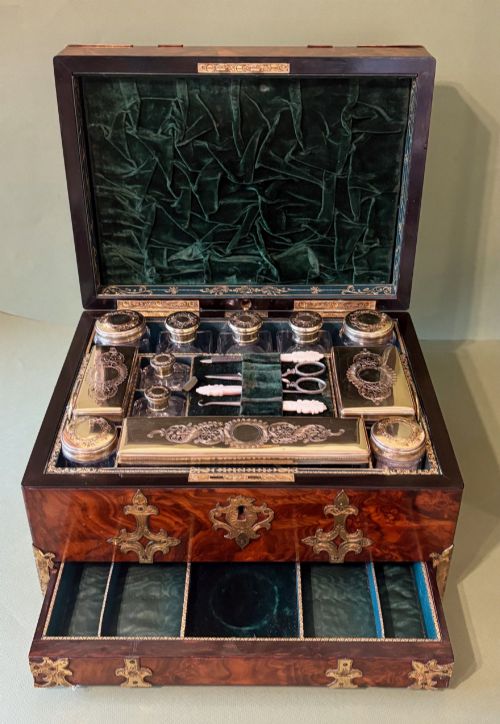
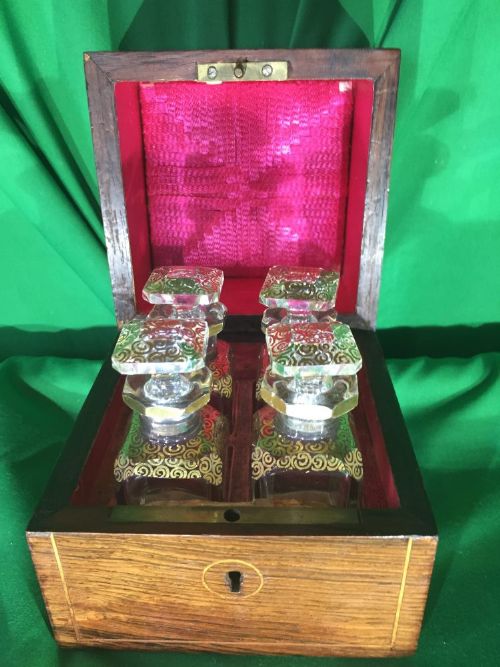


Victorian Perfume Casket
These Victorian perfume caskets are fitted boxes designed to hold precious scent bottles, offering a glimpse into nineteenth-century dressing habits that every collector appreciates.
Victorian Perfume Casket
A victorian perfume casket is a dedicated box designed to protect glass scent bottles, frequently encountered as fitted dressing cases or specialised travelling sets. These pieces date across the nineteenth century, including specific decades such as eighteen sixty, eighteen seventy, and eighteen eighty.
The selection here encompasses various forms, from brass and leather boxes to burl walnut and coromandel caskets housing cut glass bottles. Many examples reflect French nineteenth-century and Napoleon III influences alongside domestic Victorian design.
Buyers will find dual-purpose items such as combination jewellery cases and tantalus boxes alongside traditional scent caskets. Each piece demonstrates the period requirement for secure, portable luxury on the dressing table.
Materials and construction
Carinthian and exotic timbers like walnut, coromandel, and fruitwood form the structural foundation of these boxes, frequently mounted with brass or ormolu hardware. Interiors are lined with silk and velvet to cradle the delicate glass vessels safely.
The glass scent bottles contained within these caskets are typically cut glass, with certain French examples featuring Baccarat crystal. Exterior decoration involves detailed embossing on leather, pietra dura panels, and precise carved woodwork.
Victorian Perfume Casket Retail Price Guide 2026
Typical asking prices for victorian perfume casket among the pieces listed under this phrase on Sellingantiques today, from the lower quarter to the upper quarter. They describe what is for sale here now, not the wider market.
Current listings feature nineteenth-century materials including cut glass, silk, velvet, brass, leather, burr walnut, coromandel, and pietra dura.
Judging quality in caskets
Superior examples distinguish themselves through the integration of original, matching scent bottles rather than replacement glassware. The precision of the internal compartments and the quality of the silk and velvet linings heavily influence the standing of a piece.
External cabinet work demonstrates craftsmanship through the selection of figured woods like burr walnut or coromandel, combined with heavy ormolu or brass mountings. Complete travelling sets with fully operational locks and keys command greater interest among collectors.
The Victorian Perfume Casket Glossary
- Ormolu
- Gilded bronze mounts applied to the exterior of furniture and boxes for decorative effect. This technique was widely utilised in French nineteenth-century and Napoleon III cabinet making.
- Coromandel
- A dense, dark brown timber with contrasting black streaks imported from Asia. It was favoured for high-end Victorian luxury boxes and dressing cases.
- Pietra dura
- An inlay technique using cut and fitted polished coloured stones to create pictorial designs. It appears on the lids of select nineteenth-century decorative caskets.
- Tantalus
- A locking drink or scent decanter frame that displays the bottles while preventing unauthorised removal. In nineteenth-century boxes, this mechanism secures the glassware during travel.
- Baccarat
- A renowned French crystal manufacturer whose stamped bottles occasionally appear in nineteenth-century caskets. Their presence indicates high production quality.
Victorian Perfume Casket: Frequently Asked Questions
What is inside a perfume casket?
These caskets typically contain a set of matching cut glass or crystal scent bottles nestled inside fitted silk and velvet compartments. Some examples also incorporate secret drawers or space for jewellery.
Many of the bottles retain their original stoppers, which is an important consideration for completeness.
How were these boxes used?
Victorians used these caskets on dressing tables to store everyday fragrances securely at home. They were also constructed as travelling sets for journeys by carriage or train.
The sturdy brass or leather exteriors protected the delicate glass vessels while moving between residences.
How do I date a casket?
Dating relies on timber choices such as coromandel or burr walnut, alongside hardware styles from the nineteenth century. Design influences like Napoleon III or specific French work provide further chronological clues.
Construction methods within the internal lining and bottle shapes also help narrow down the decade.
Are the scent bottles original?
Many caskets retain their matching set of original cut glass bottles, though some have accumulated replacements over time. Examining the fit within the velvet lining helps determine if the glassware belongs to the box.
Makers such as Baccarat sometimes signed their glass, providing a definitive link to the original manufacture.