

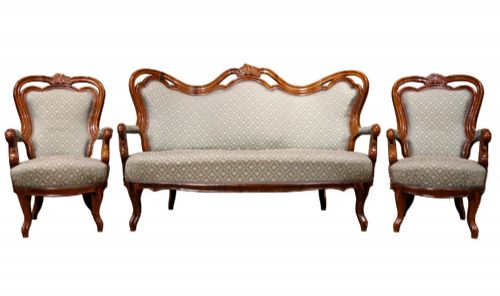
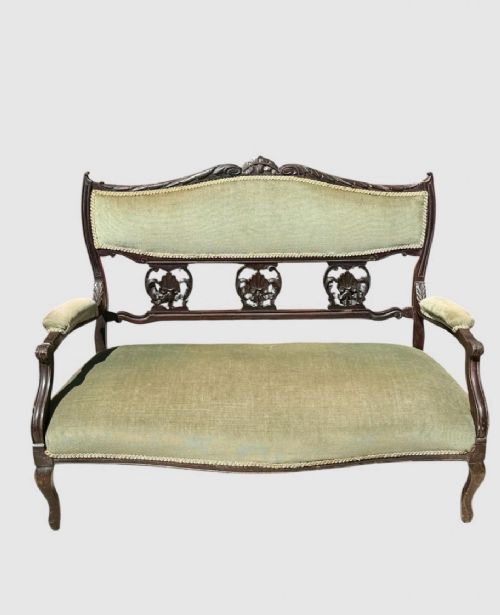

Victorian Parlor Settee
A victorian parlor settee brings formal nineteenth-century reception rooms to life, offering carved wooden frames and plush upholstery for sophisticated seating.
Victorian Parlor Settee
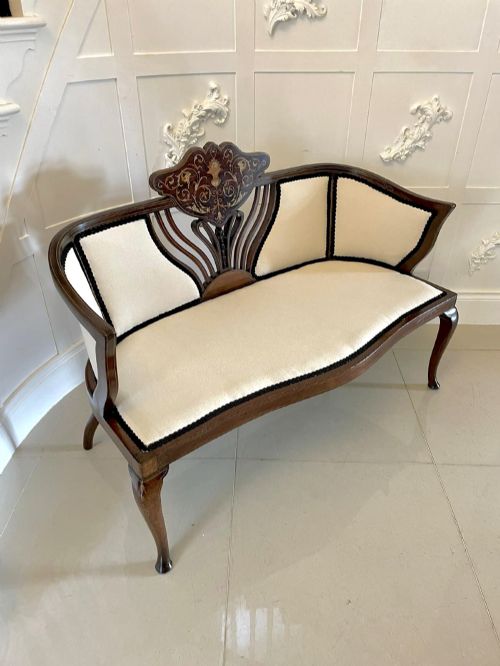
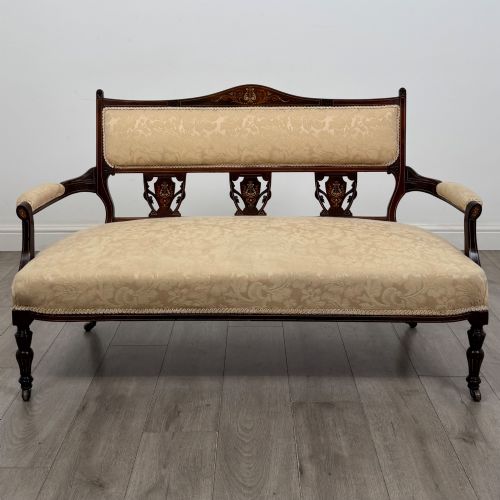
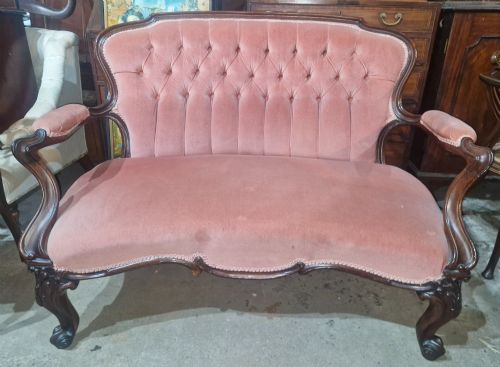
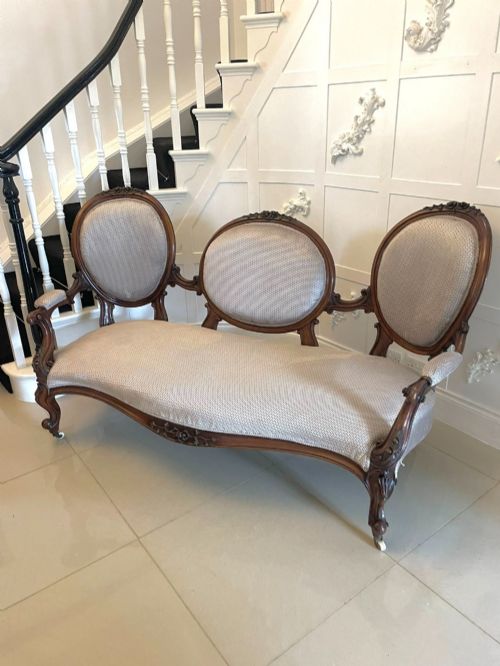
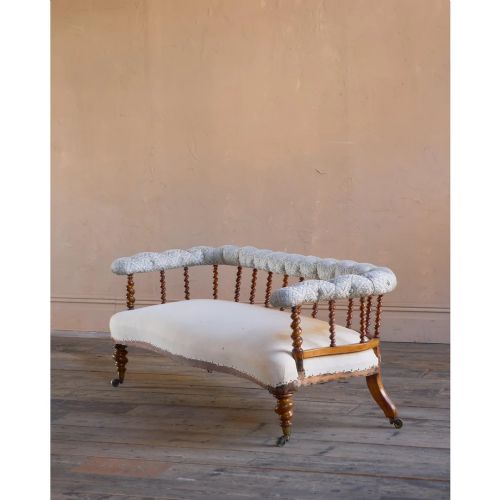
A victorian parlor settee is a upholstered seating piece designed for nineteenth-century reception rooms and drawing rooms. These forms emerge across the Victorian period, including mid-Victorian and late Victorian phases, alongside related salon suites.
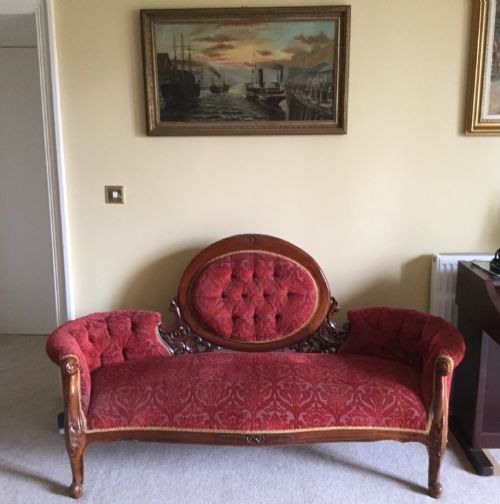
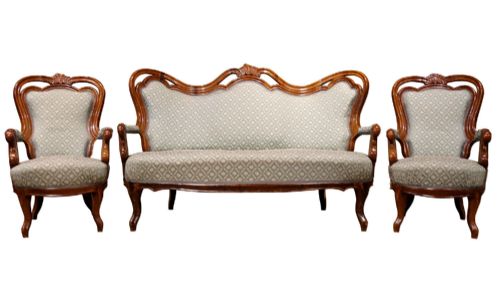
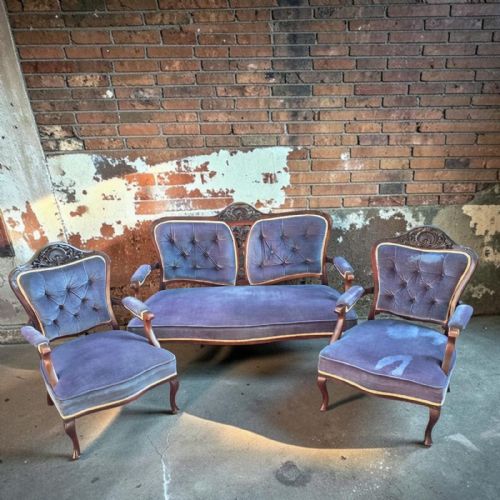
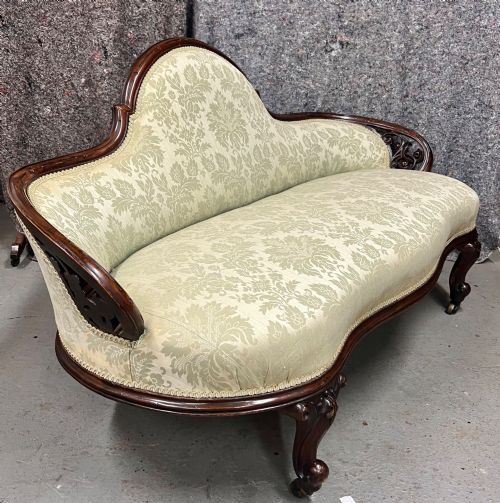
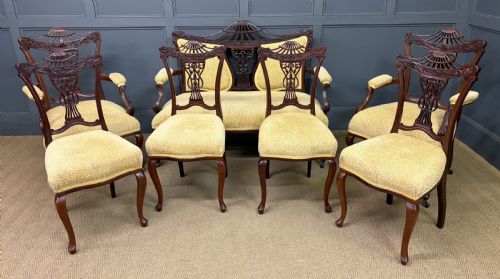
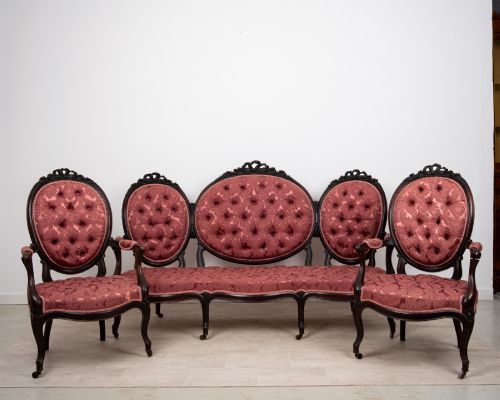
The selections span distinct silhouettes such as cameo backs, double spoon backs, and double-ended sofas. Many arrive paired with matching armchairs or side chairs as part of larger salon suites.
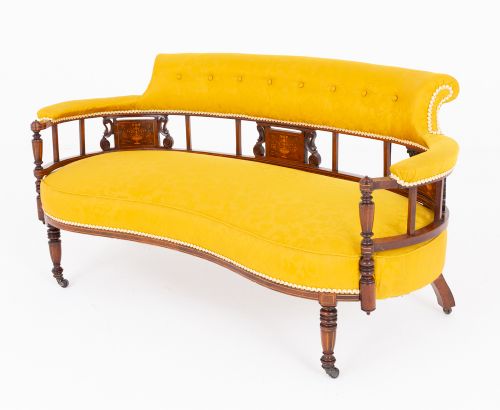
Makers utilised various regional aesthetics, yielding pieces ranging from heavy mahogany and walnut frames to lighter inlaid rosewood and ebonised aesthetic designs.
Materials and Construction
Frames rely on dense timbers like mahogany, walnut, and rosewood, often shaped through carving or augmented with delicate wood inlay and brass details. Some specimens adopt giltwood or ebonised finishes.
Upholstery historically involves textiles such as velvet, damask upholstery, and deep-pile brocade, frequently finished with deep buttoning and supported by traditional sprung settee bases.
Several settees hide their sturdy frames beneath layers of burgundy brocade, ready for another century of afternoon tea.
Evaluating Quality
Quality rests in the crispness of the timber carving and the sophistication of any marquetry or inlay work integrated into the rosewood and mahogany frames. Substantial walnut and rosewood structures indicate higher status production.
The integrity of the original framing, the depth of the woodwork, and the execution of reupholstery using sympathetic fabrics like burgundy brocade or velvet separate standard seating from exceptional examples.
C. Hindley and Sons·Jas James Shoolbred
The Victorian Parlor Settee Glossary
- Cameo back
- A chair or settee back shaped like an oval cameo brooch, surrounded by carved wooden framing.
- Spoon back
- An upholstered back shaped like the bowl of a spoon, seen frequently in early Victorian seating.
- Salon suite
- A matching set of seating furniture comprising a settee and companion armchairs or side chairs.
- Inlay
- Contrasting woods or materials embedded into the surface of the primary timber frame for decoration.
- Ebonised
- Wood finished to resemble ebony, popular during the later nineteenth century aesthetic movement.
Victorian Parlor Settee: Frequently Asked Questions
What is a victorian parlor settee?
A victorian parlor settee is a nineteenth-century upholstered two-seater or three-seater sofa designed for formal entertaining in a drawing room or parlor.
These pieces typically feature exposed wooden frames in mahogany, walnut, or rosewood, paired with soft textile coverings.
How do I date a settee?
Dating relies on examining the timber species, framing style, and decorative motifs present on the wooden structure. Early examples lean towards heavy mahogany with spoon backs, while late Victorian items often incorporate rosewood inlay.
Cabinetmakers also referenced specific revivals, such as Rococo Revival or Sheraton Revival, which provide clear chronological markers for the piece.
Were these settees part of larger sets?
Many nineteenth-century settees originated as components of larger salon suites that included matching armchairs, side chairs, and footstools.
These coordinated suites furnished the primary reception rooms of substantial houses, ensuring a unified decorative scheme.
How should I care for antique upholstery?
Preservation involves gentle vacuuming with a soft attachment to remove dust from delicate textiles like velvet, damask, or brocade. Direct sunlight should be avoided to prevent fading the original or replacement fabric.