

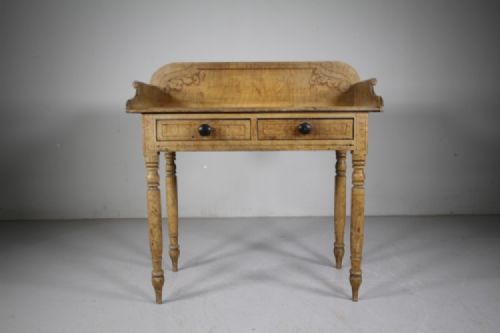


Victorian Painted Dressing Table
A victorian painted dressing table brings colourful character and practical surface space to a bedroom through traditional nineteenth-century craftsmanship.
Victorian Painted Dressing Table
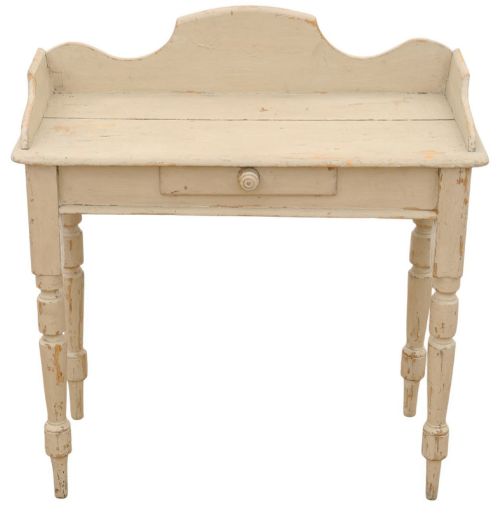
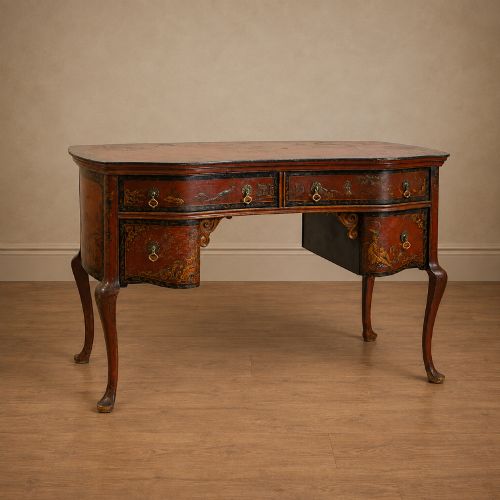
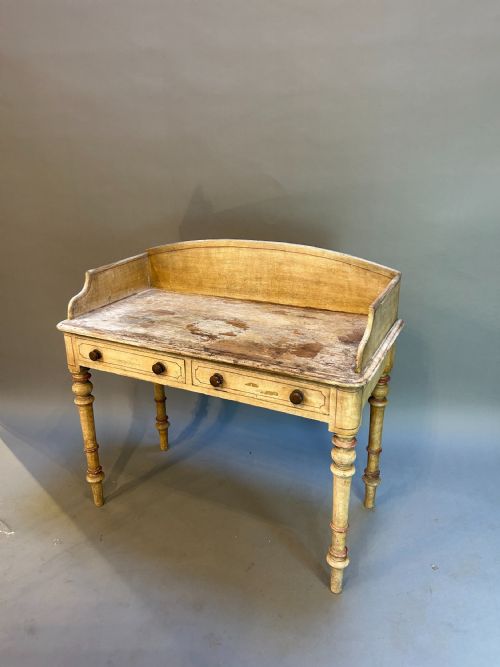
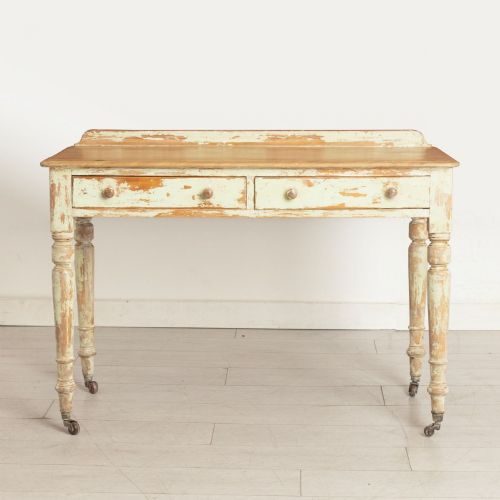
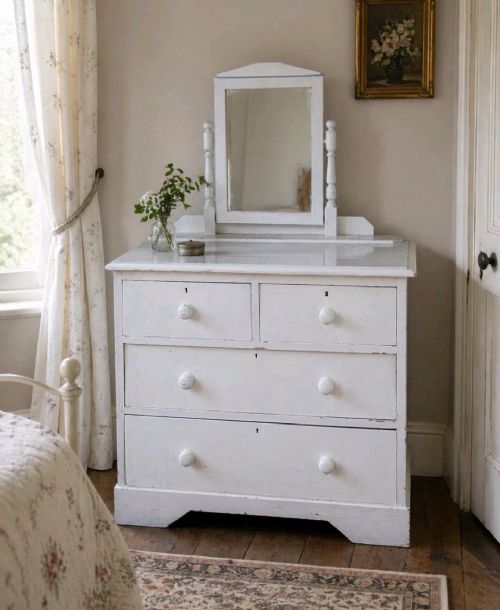
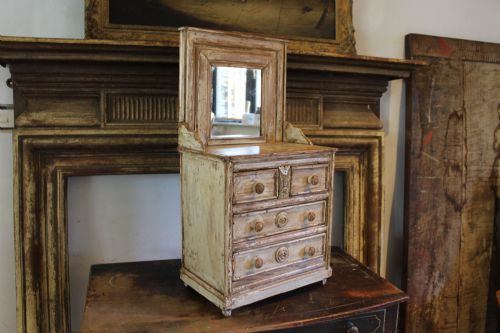
A victorian painted dressing table combines functional nineteenth-century furniture with decorative surface finishes, ranging from simple country pine to sophisticated kidney-shaped desks. Buyers encounter various forms on this page, including larger duchesse styles and compact pieces with integrated swing mirrors.
How they were made
Carpenters constructed the structural frames primarily using solid pine, birch, walnut, and mahogany, often pairing softer woods with applied decorative surfaces. Brass hardware, glass mirrors, and forged iron elements completed the assembly of these functional bedroom pieces.
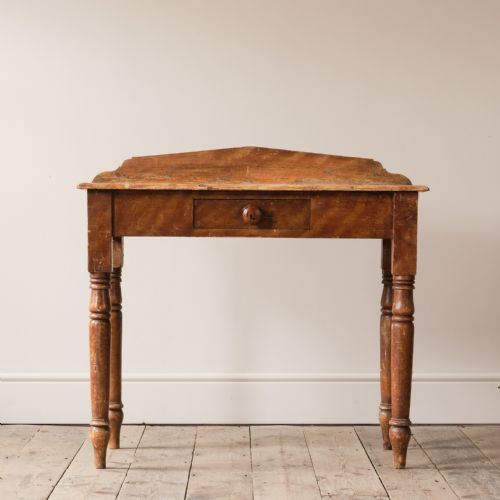
Artisans applied paint, lacquer, and stencils directly to the wood, sometimes employing scumble glazing to simulate more expensive timbers or adding detailed Chinoiserie motifs. Original brushwork and hand-decoration remain visible on many surviving examples from the period.
Listed forms range from kidney-shaped desks and washstands to compact shaving mirrors and duchesse dressing tables.
What varies in quality
The survival of original surface decoration dictates much of the distinction between pieces, as untouched paint finishes hold greater authenticity than later overpainting. The subtlety of hand-painted details and the crispness of stencilled motifs separate standard utility pieces from finer decorative examples.
Structural integrity and the quality of secondary timbers used in drawers and carcases influence overall value. Pieces retaining matching adjustable mirrors and original brass or metal fittings demonstrate superior original completeness.
Jennens & Bettridge·Jacob Petit·Joseph Meissonnier·Royal Worcester
The Victorian Painted Dressing Table Glossary
- Scumble glaze
- A translucent decorative paint layer manipulated with combs or rags to simulate the grain of exotic woods. This technique was popular in nineteenth-century workshops to elevate ordinary pine furniture.
- Chinoiserie
- European interpretations of Chinese decorative arts, featuring painted or lacquered motifs of figures and landscapes. This style appeared on high-end Victorian desks and dressing tables.
- Duchesse dressing table
- A grand nineteenth-century dressing table format typically incorporating a large central mirror flanked by smaller drawers or tiered surfaces. These substantial pieces often sat within larger Victorian bedrooms.
- Swing mirror
- A pivoting glass plate mounted within a frame that tilts between upright supports on a dressing table or chest. Many Victorian examples feature adjustable brass pivots.
Victorian Painted Dressing Table: Frequently Asked Questions
How do I clean a painted surface?
Dust gently with a dry microfibre cloth to remove everyday particles without disturbing the historic finish.
Avoid liquid cleaners, chemical solvents, and abrasive pads, which easily strip original nineteenth-century paintwork and glazes.
Are the mirrors original to the tables?
Many dressing tables retain their period swing mirrors, fixed securely to the original supporting brackets on the top surface.
Some pieces show evidence of mirror replacements over time, so checking the glass silvering and frame construction helps determine period authenticity.
Can I use these as modern desks?
Knee-hole desks and kidney-shaped dressing tables offer comfortable sitting space for writing and everyday laptop use.
Their shallow nineteenth-century drawer arrangements require careful measurement of knee clearance before daily workspace adoption.
How do I identify original nineteenth-century paint?
Original finishes often exhibit fine craquelure, subtle fading, and wear patterns consistent with age and domestic use.
Under magnification, historic paint layers show distinct buildup and mineral pigments quite unlike modern synthetic emulsions.