




Victorian Oval Work Table
These Victorian oval work table examples combine practical sewing storage with refined nineteenth-century craftsmanship, offering collectors both versatility and period elegance.
Victorian Oval Work Table
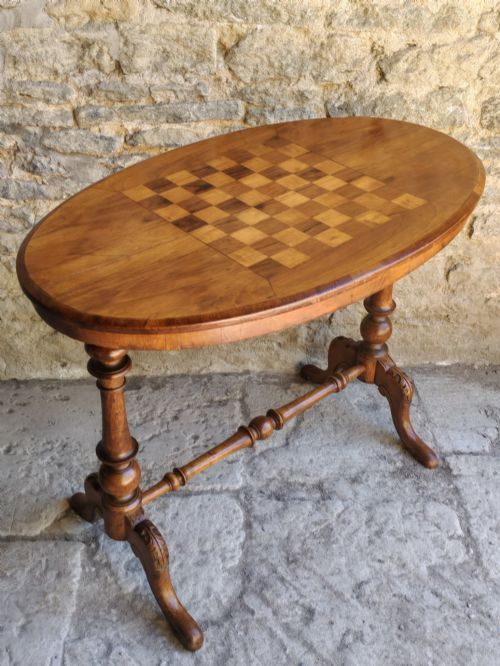
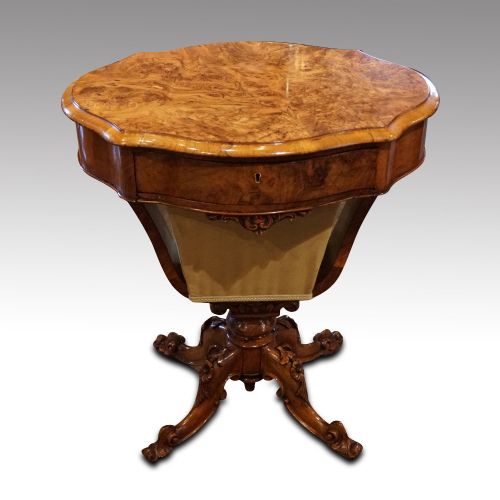
A Victorian oval work table typically serves as a dedicated sewing or occasional piece, housing fitted interiors beneath a hinged top for needlework and small crafts. Collectors searching for a victorian oval work table will frequently encounter variants fashioned from burr walnut and plain walnut, often featuring inlaid details across the surface.
The form developed significantly through the nineteenth century, spanning decades from 1860 to 1890 with occasional nods to earlier Regency or French Louis XV Revival motifs. Alongside purpose-built sewing variants, related forms include writing tables, chess-topped centre tables, and side tables sharing the characteristic rounded silhouette.
Materials and construction
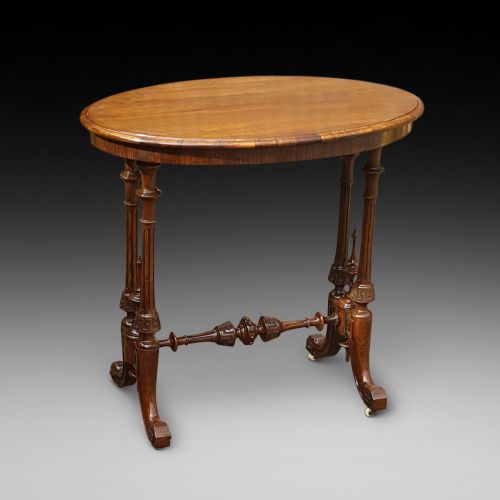
Cabinetmakers utilised rich timber veneers such as burr walnut, rosewood, and satinwood applied over solid wood carcases, frequently enhancing the tops with delicate wood inlay. Interior compartments were constructed to organise sewing implements, whilst structural supports incorporated turned pedestals, carved legs, and occasional brass fittings.
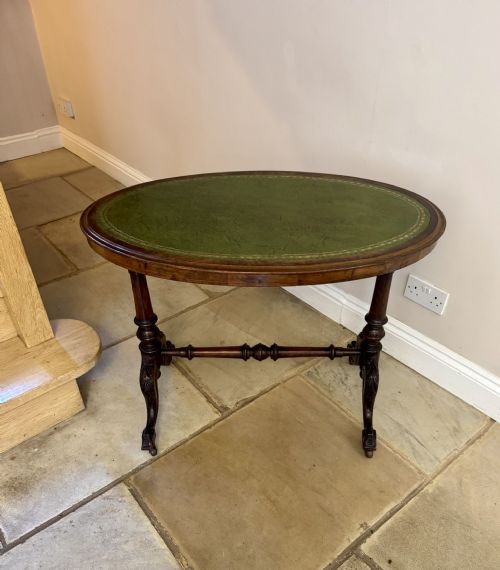
Surface decoration relied heavily on precision marquetry and natural timber figuring, complemented by fitted leather writing inserts or textile panels. The combination of figured grain and intricate inlay defined the high standard of joinery practiced during the period.
Victorian Oval Work Table Retail Price Guide 2026
Typical asking prices for victorian oval work table among the pieces listed under this phrase on Sellingantiques today, from the lower quarter to the upper quarter. They describe what is for sale here now, not the wider market.
The recorded pieces span the nineteenth century, with walnut emerging as the dominant primary wood alongside decorative fabric and leather inserts.
Judging quality and execution
Superior examples distinguish themselves through the choice of timber veneer, where deeply figured burr walnut displays rich, symmetrical patterns across the oval top. The complexity and precision of the wood inlay further separate standard production pieces from finer commission work.
The integrity of the internal fittings and the crispness of any carved wooden elements dictate the overall standard of manufacture. Well-executed joinery ensures the hinged compartments and pedestal bases remain stable and balanced over generations.
William Comyns
The Victorian Oval Work Table Glossary
- Burr walnut
- A highly figured timber veneer harvested from the growths of walnut trees, prized for its swirling, decorative grain patterns on table tops.
- Work table
- A specialised nineteenth-century piece designed for needlework, featuring an internal compartment or suspended bag for sewing materials beneath the surface.
- Inlay
- A decorative technique where contrasting woods or other materials are inserted into recessed portions of a timber base to create ornamental patterns.
- Pedestal table
- A freestanding table supported by a central pillar rising from a stable base, commonly featuring carved or splayed legs.
- Marquetry
- The art of applying pieces of veneer to a structure to form decorative patterns, frequently utilised on nineteenth-century surfaces.
Victorian Oval Work Table: Frequently Asked Questions
What is a Victorian oval work table used for?
These pieces were originally designed for domestic needlework, providing a stable top surface for sewing or writing alongside concealed internal storage for threads, needles, and small tools.
Over time, their decorative oval proportions made them equally popular as occasional tables or lamp stands in nineteenth-century sitting rooms.
How do you identify burr walnut?
Burr walnut is characterised by highly complex, swirling grain patterns filled with small knot clusters, harvested from irregular growths on the tree.
Cabinetmakers utilised this timber for its dramatic visual impact, particularly on the prominent top surfaces of tables and cabinets.
What styles influence these tables?
Whilst firmly rooted in the Victorian era, designs often incorporated elements from earlier Regency aesthetics or French Louis XV Revival curves.
Sheraton revival influences also appear, bringing lighter satinwood timbers and refined geometric inlay into late nineteenth-century production.
Are all these tables for sewing?
While many feature the characteristic internal compartments for sewing equipment, the category also encompasses occasional tables, writing surfaces, and chess-topped variants.
Makers adapted the oval format to suit various domestic functions whilst maintaining the distinct nineteenth-century silhouette.