





Victorian Open Etagere
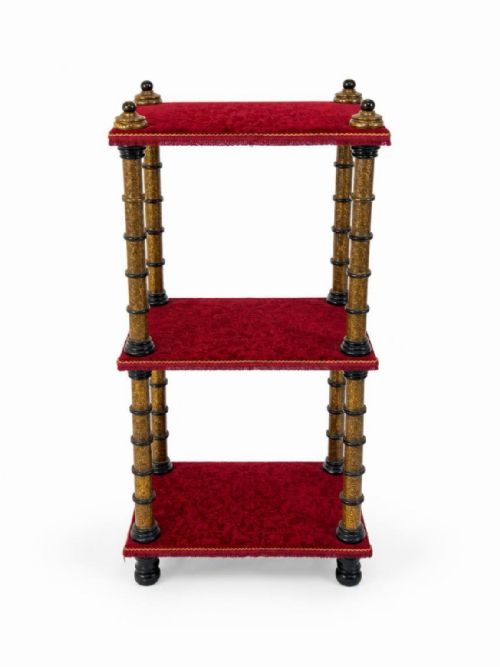
A victorian open etagere brings tiered display space to a room, offering multiple open shelves for books and ornaments with distinct period character.
Victorian Open Etagere
When you search for a victorian open etagere, you encounter tiered open shelving units spanning the nineteenth century, most frequently appearing as multi-tiered mahogany, walnut, or rosewood whatnots and display shelves. These pieces function as freestanding or corner storage furniture designed to hold decorative objects, books, or collections in nineteenth-century interiors.
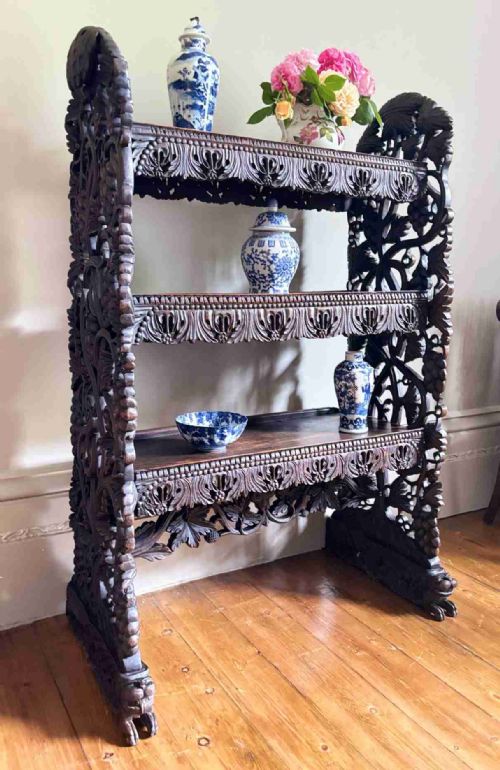
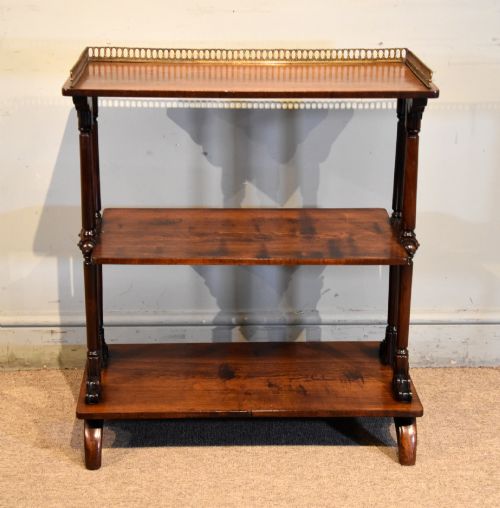
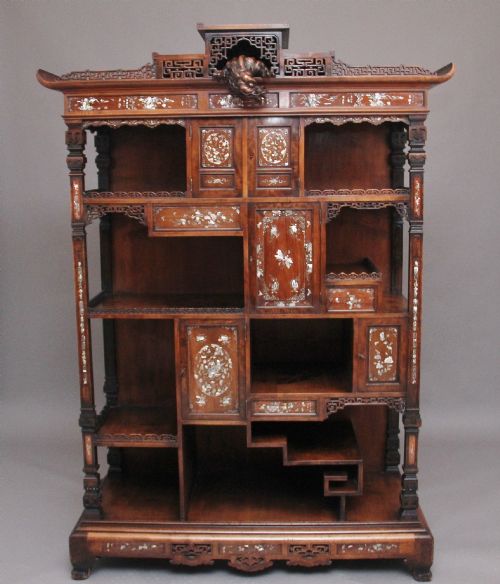
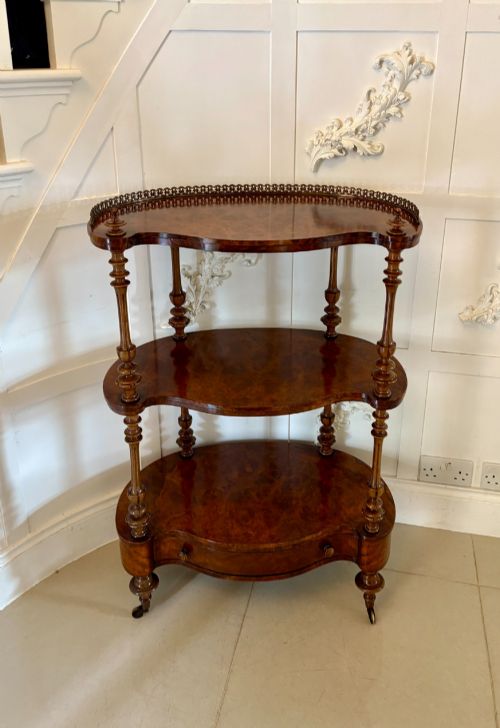
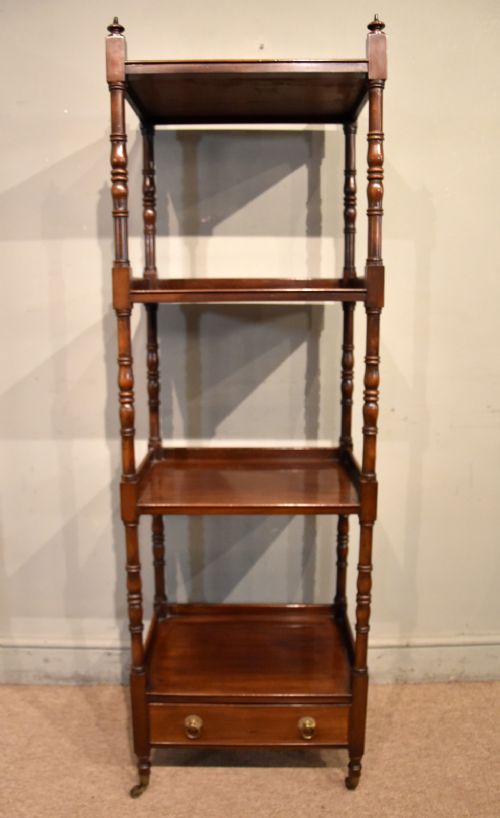
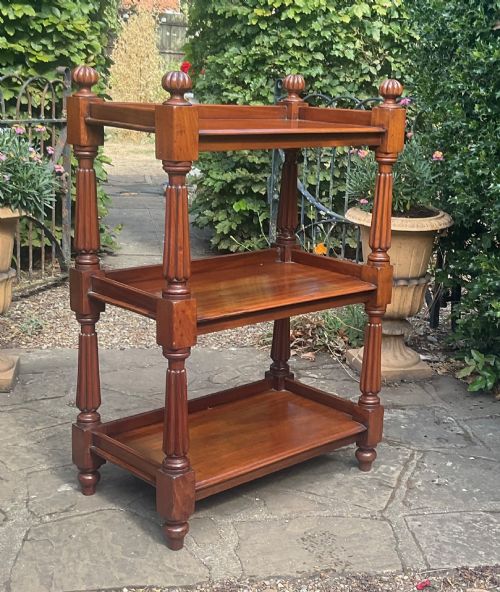
The versions most common on this page include three-tier, four-tier, and six-tier structures in figured woods, alongside corner models and pieces fitted with brass galleries or lower drawers. Makers and makers' workshops produced these upright display stands in various regional interpretations, from English walnut and mahogany to Anglo-Indian carved padauk and Japanese-influenced shodona forms.
Materials and Construction
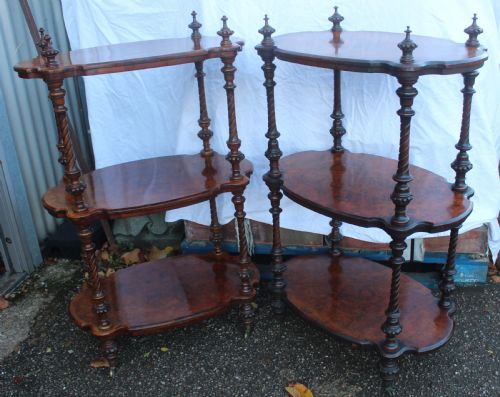
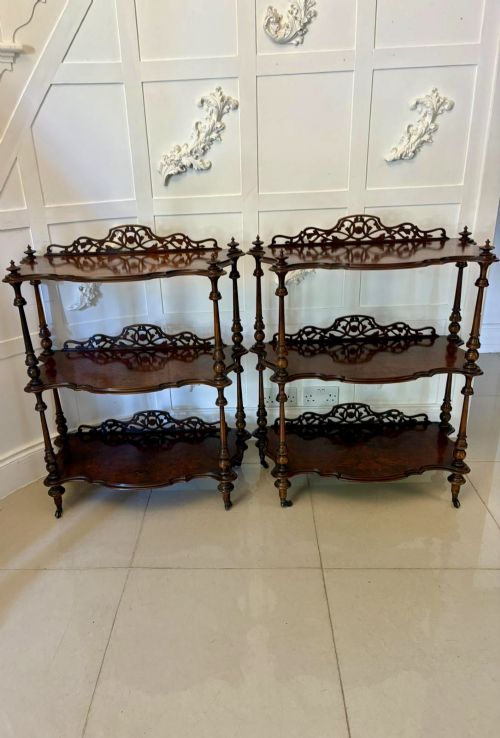
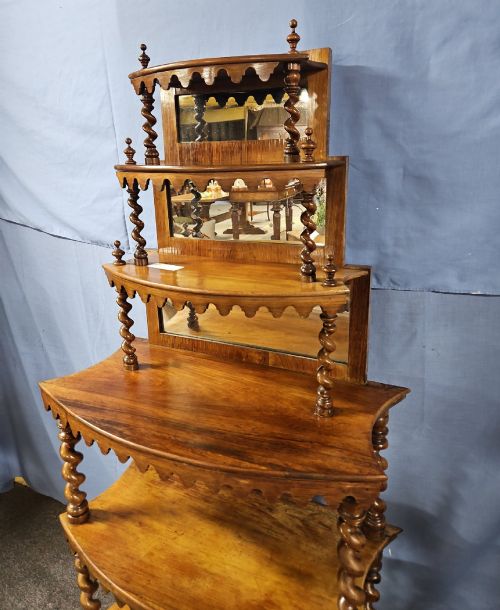
These tiered structures rely primarily on dense timbers such as mahogany, rosewood, and burr walnut, often selected for their striking grain patterns and finished with turned upright supports or slender columns. Cabinet makers integrated secondary elements like brass galleries, gilt metal mounts, pierced fretwork, and mirrored back panels to elevate the visual lightness of the multi-level platforms.
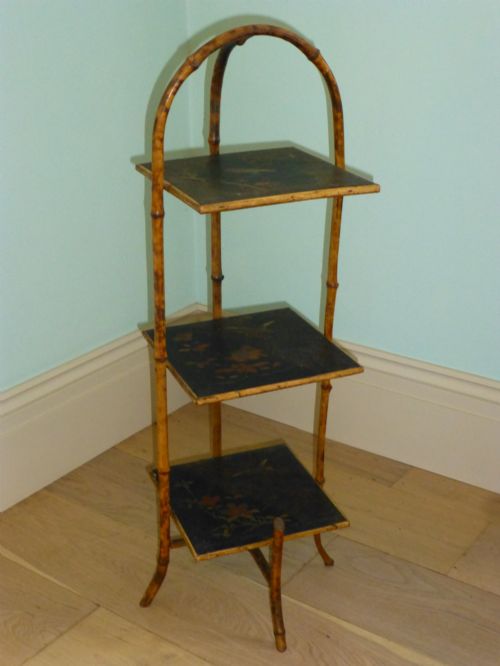
Joinery techniques involve secure upright framing to support multiple stacked platforms, sometimes incorporating single drawers in the lower section or specialised bracket systems for corner placement. Alternative materials such as bamboo, lacquer, teak, and padauk appear across specific geographic styles, demonstrating varied regional approaches to multi-tiered open shelving.
Victorian Open Etagere Retail Price Guide 2026
Typical asking prices for victorian open etagere among the pieces listed under this phrase on Sellingantiques today, from the lower quarter to the upper quarter. They describe what is for sale here now, not the wider market.
Some nineteenth-century makers even adapted the etagere concept for sheet music storage.
Design and Execution
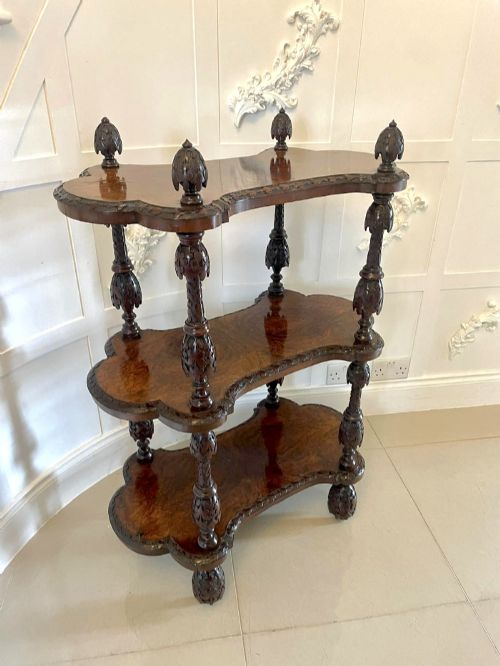
The distinction between standard production and exhibition-grade pieces rests in the choice of timber veneer, such as highly figured burr walnut, and the crispness of carved details like fretwork panels and applied mouldings. Superior examples display refined proportions, balanced serpentine shaping, and integrated decorative elements like brass galleries or finely turned supports that remain structurally rigid across multiple tiers.
Edwards and Roberts·Gabriel Viardot
The Victorian Open Etagere Glossary
- Etagere
- A piece of furniture consisting of a set of open shelves for displaying small objects. These tiered stands developed in France before becoming popular in British Victorian interiors.
- Whatnot
- A multi-tiered shelving unit used for storage and display in the nineteenth century. Similar in function to the etagere, this form often incorporates turned uprights and occasional lower drawers.
- Brass gallery
- A low pierced railing of brass fitted around the edge of a shelf to secure items from sliding off. This metal detail frequently appears on rosewood and walnut etageres.
- Burr walnut
- A wood harvested from the warted excrescence of a walnut tree, yielding highly decorative swirling grain patterns. Cabinet makers utilised this timber for the primary surfaces of high-status Victorian display pieces.
Victorian Open Etagere: Frequently Asked Questions
What is a victorian open etagere used for?
These tiered shelving units serve as display furniture for ceramics, books, and decorative objects in a living space. The multiple open levels allow collectors to arrange items visibly from all sides.
Historically, they occupied drawing rooms and parlours where hosts displayed household ornaments and literature. Today, they function similarly in domestic interiors to hold plants, small sculptures, or book collections.
How do I identify a nineteenth-century whatnot?
Nineteenth-century whatnots typically feature stacked wooden platforms supported by turned columns or upright posts, frequently constructed from mahogany, rosewood, or walnut. Many incorporate architectural details such as pierced fretwork, mirrored backs, or lower drawers.
Examining the timber selection, joinery methods, and hardware helps distinguish period pieces from later reproductions. The presence of dense secondary woods and traditional hand-cut joints points to nineteenth-century manufacture.
Where should I place an etagere in a room?
Freestanding etageres suit central wall placements or library spaces where their multi-tiered display capacity remains fully visible. Corner models fit neatly into unused room angles to maximise vertical display space without blocking pathways.
Because these pieces feature open shelves on all sides, keeping them away from heavy damp or direct sunlight preserves the timber and veneer surfaces. Position them where the grain of the wood and any brass galleries catch ambient light.
Are corner etageres different from standard ones?
Corner etageres feature triangular or wedge-shaped shelves designed specifically to fit into ninety-degree room angles. Standard etageres use rectangular or serpentine footprints intended for flat wall placements.
Both forms offer multiple open tiers for display, but corner models utilise neglected floor space efficiently. They share the same decorative vocabulary, including turned supports, fretwork, and wood veneers like walnut and mahogany.