



Victorian Oil Lamp Base
A victorian oil lamp base brings sculptural weight and period warmth to a room, whether wired for light or kept in original form.
Victorian Oil Lamp Base
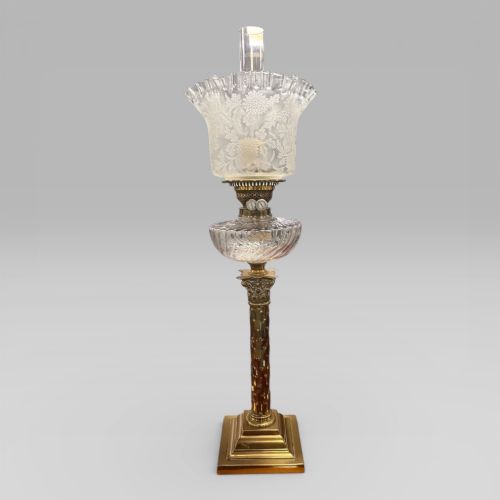
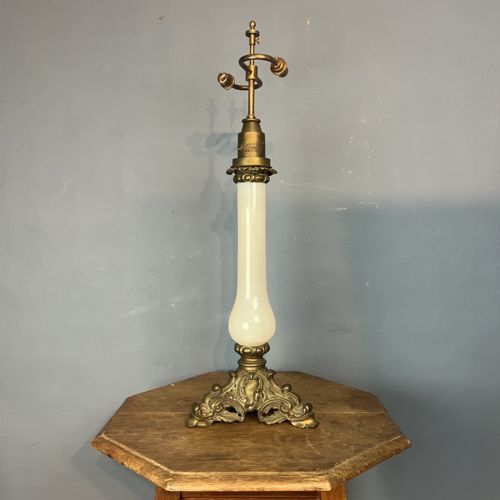
A victorian oil lamp base is a sturdy pedestal or column designed to support a fuel reservoir and burner, surviving today as both table and floor lighting. These pieces emerge primarily from the nineteenth century, spanning various decades of the Victorian era alongside related Edwardian and Art Nouveau examples.
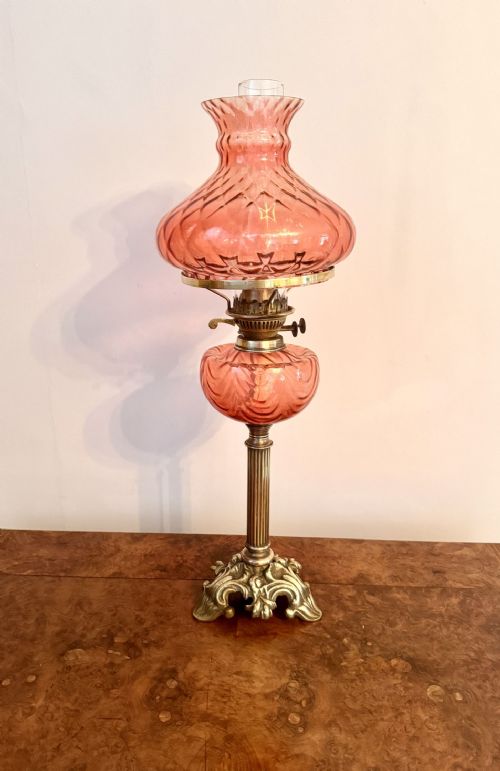
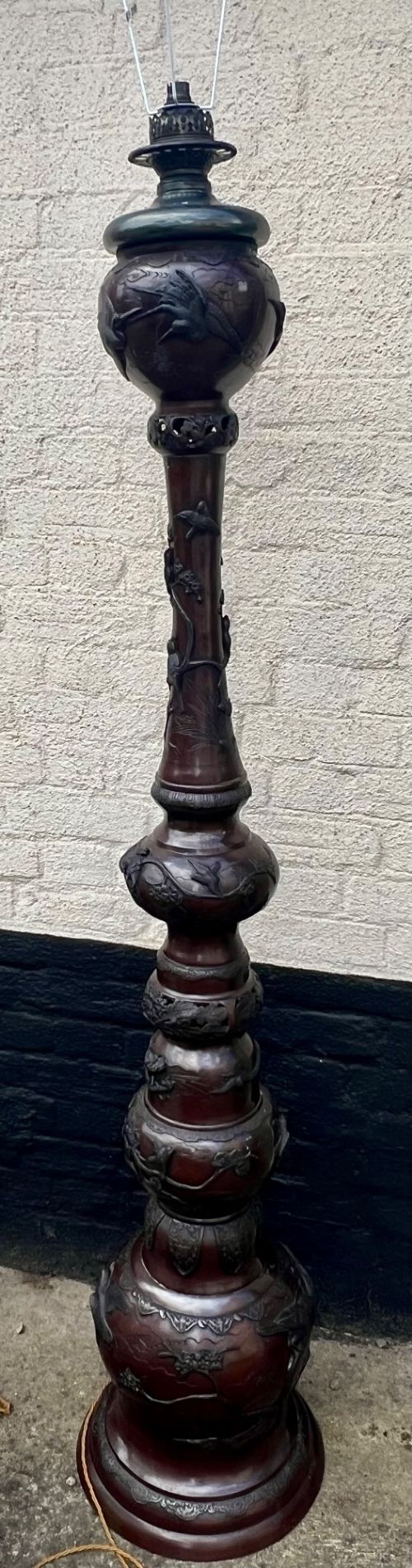
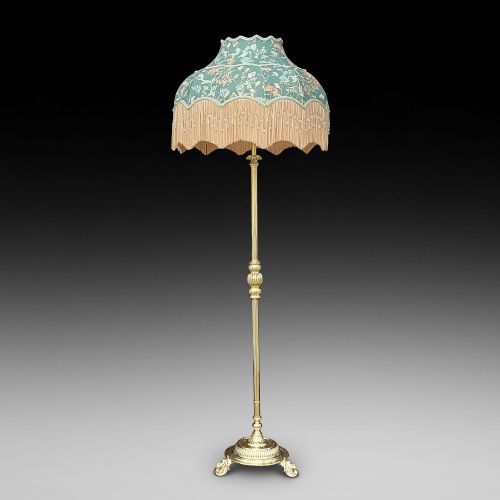
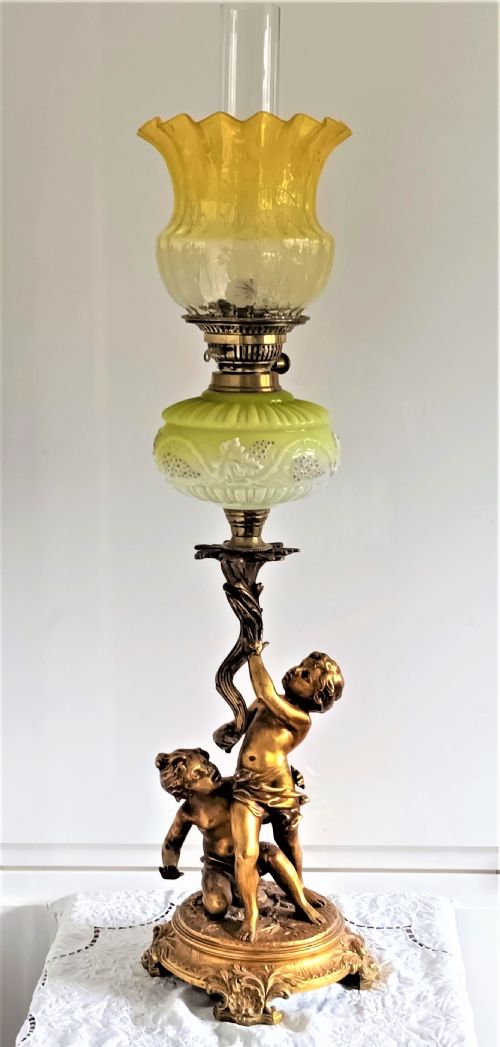
The most common forms on this page include heavy brass standards, fluted columns, and combination pieces pairing ceramic or glass reservoirs with metal feet. Buyers encounter everything from modest cottage table lamps to monumental bronze floor lamps and pulpit heaters.
Origins stretch beyond standard British Victorian production to encompass French glass vessels and Japanese Meiji period bronze works brought into nineteenth-century interiors. Many examples show later conversions to electricity, adapting the historic weight of the base for modern domestic wiring.
Materials and construction methods
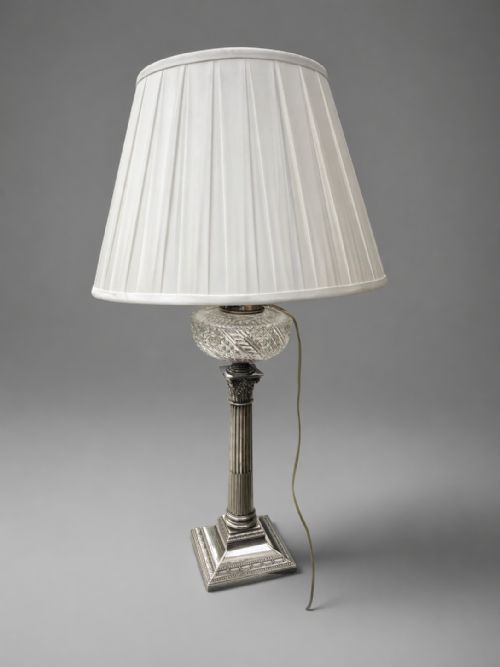
Foundries and workshops cast heavy metals such as brass, bronze, and silver plate to provide a stable centre of gravity for the tall burner assemblies. Brass components frequently feature reeded or Corinthian column detailing, whilst silver-plated examples often employ classical architectural motifs.
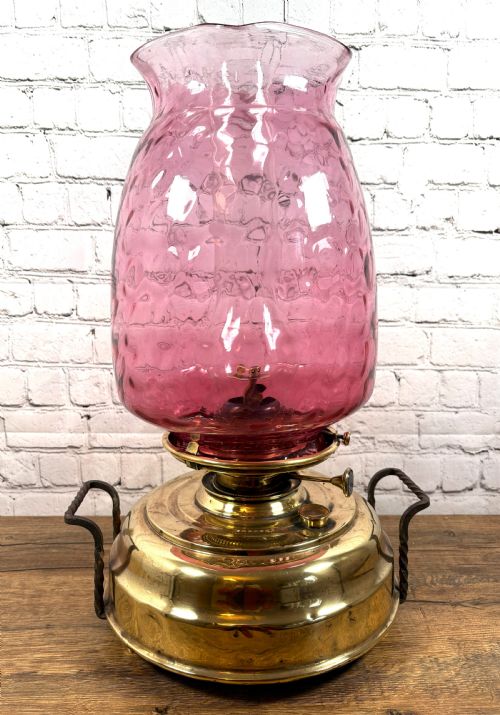
Reservoirs and bodies incorporate blown glass, including cranberry glass, satin glass, opaline glass, and cut glass, sometimes paired with glazed ceramic vessels. These delicate coloured or opaque glass sections contrast against the rigid metallic bases through screw threads or collar mounts.
Victorian Oil Lamp Base Retail Price Guide 2026
Typical asking prices for victorian oil lamp base among the pieces listed under this phrase on Sellingantiques today, from the lower quarter to the upper quarter. They describe what is for sale here now, not the wider market.
Periods represented span from the mid-nineteenth century through the Edwardian era and the Japanese Meiji period.
Distinctions in manufacture and finish
The division between standard production and top-tier work rests on the crispness of the casting and the weight of the materials used. Finer examples display sharp architectural fluting, heavy gauge brass or bronze, and maker stamps or patent marks from established firms.
Artistry in the decorative elements dictates the upper range, such as cold-painted bronze details, hand-enamelled Art Nouveau motifs, or the quality of the cut glass reservoirs. Simpler cottage lamps rely on basic turned brass or straightforward ceramic bodies without complex ornamentation.
Goldsmiths and Silversmiths Company·Mc Gary·Joseph Hinks
The Victorian Oil Lamp Base Glossary
- Peg lamp
- A small oil lamp designed with a tapered lower peg that drops directly into the socket of a separate candlestick or base. This configuration allowed interchangeable vessels.
- Corinthian column
- An architectural column style featuring an ornate capital decorated with acanthus leaves, frequently utilised for formal brass table lamps. Makers adopted this classical form extensively during the nineteenth century.
- Opaline glass
- A pale, translucent white or coloured glass that diffuses light softly and creates a smooth ceramic-like appearance. It appears widely in nineteenth-century lamp bodies and shades.
- Cold-painted bronze
- Bronze sculpture finished with paint applied after casting rather than fired in a kiln. This technique allows for intricate, colourful detailing on decorative figures.
Victorian Oil Lamp Base: Frequently Asked Questions
What is a victorian oil lamp base made of?
These pieces combine cast metals like brass, bronze, and silver plate with glass and ceramic reservoirs. Materials range from heavy reeded brass columns to delicate cranberry and opaline glass vessels.
Makers selected these durable and decorative substances to ensure stability while providing an ornate focal point for nineteenth-century interiors.
How do I identify the period of a lamp base?
Dating relies on stylistic clues such as architectural column designs, classical revival motifs, and specific glass colours popular in the nineteenth century. Maker stamps and patent marks stamped into the metal also help pinpoint the exact era of production.
Later Edwardian and Art Nouveau variations introduce softer organic lines or distinct enamelling that separate them from stricter mid-Victorian forms.
Were these lamps converted to electricity?
Many surviving examples have been adapted for modern domestic lighting by running a cable through the central column where the wick mechanism once sat. This conversion allows historic metal and glass standards to function safely as table or floor lamps.
Original burners and collars are sometimes retained above the converted wiring to preserve the antique silhouette.
How do I live with a heavy brass base?
The substantial weight of cast brass and bronze makes these pieces ideal as stable table lamps or floor standards that resist tipping. Placing them on sturdy sideboards or tables highlights their metallic or glass finishes.
Regular dusting with a soft cloth maintains the polished or patinated surface without requiring abrasive cleaning.