






Victorian Office Seating
These robust victorian office seating pieces offer sturdy support and swivel movement, built for long hours at the desk.
Victorian Office Seating
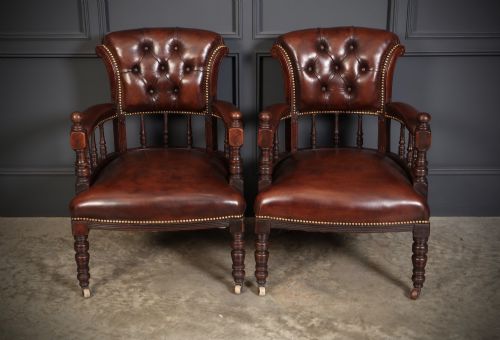
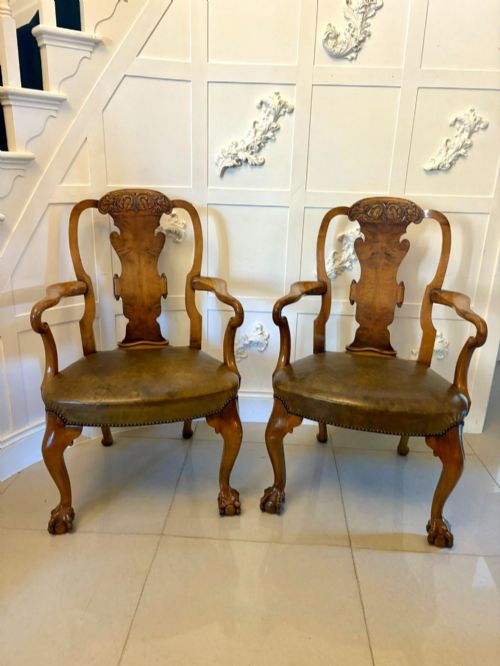
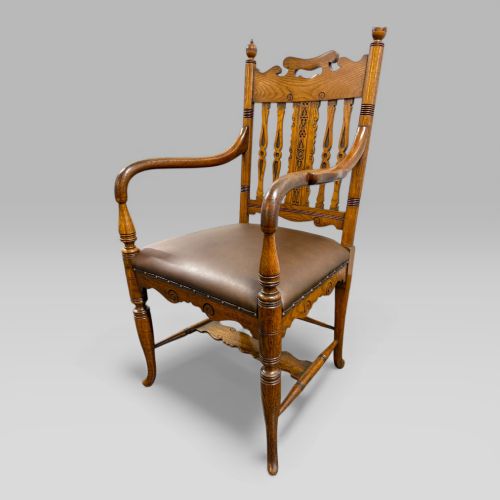
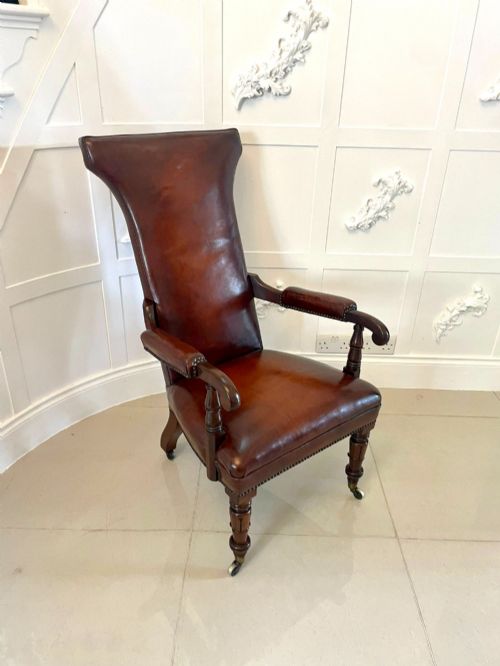
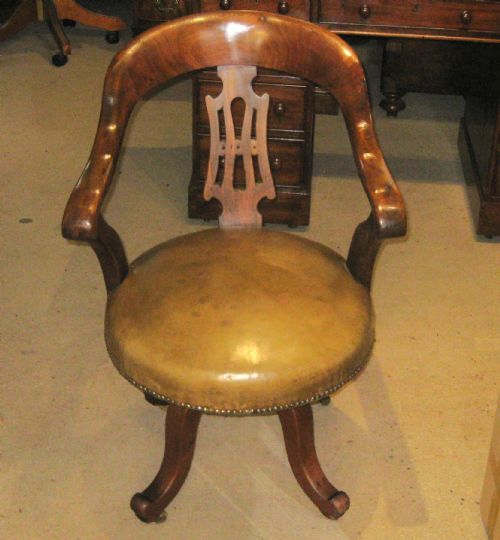
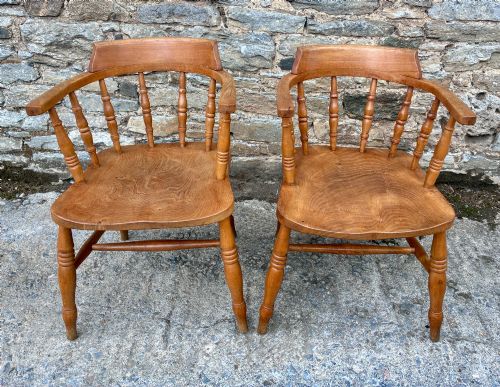
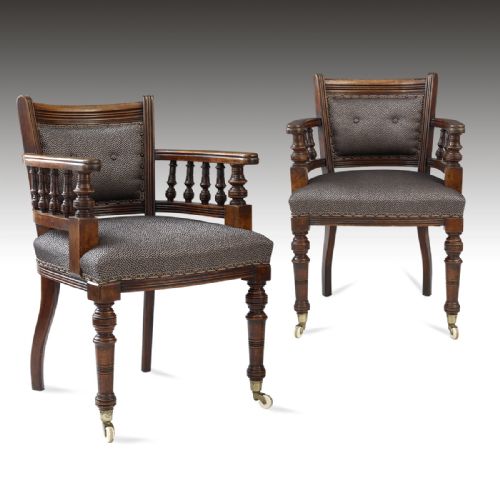
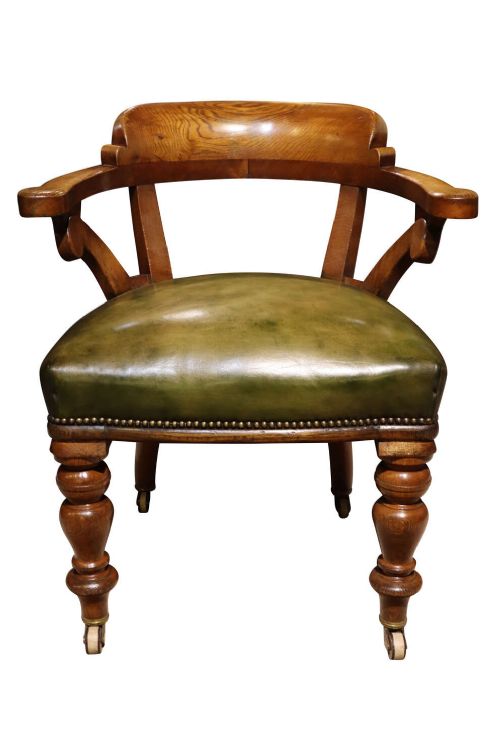
When searching for victorian office seating, buyers encounter robust functional furniture designed for nineteenth-century workplaces. The forms on this page include revolving desk chairs, captains chairs, library chairs, and office armchairs originating from the nineteenth century and the Edwardian era.
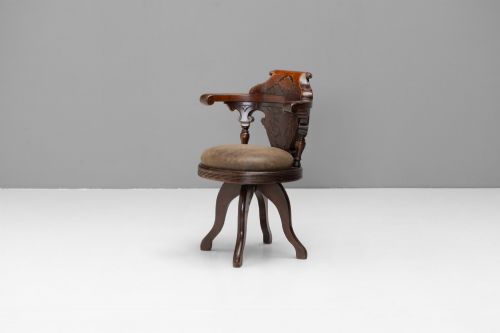
The most common versions met here are revolving and swivel desks chairs constructed from timber with leather or fabric upholstery. These pieces reflect the needs of Victorian study and office environments, combining mobility with heavy wooden frames.
Materials and construction
Makers utilised dense hardwoods such as mahogany, oak, walnut, elm, and yew wood to build durable frames that withstand daily use. Brass mechanisms often provide the swivel and rise and fall functions on rotating models.
Upholstered elements frequently incorporate leather, fabric, and cane seating supported by iron or cast iron components beneath. Carved details and turned wooden spindles appear across Gothic Revival, Aesthetic Movement, and traditional Victorian styles.
Victorian Office Seating Retail Price Guide 2026
Typical asking prices for victorian office seating among the pieces listed under this phrase on Sellingantiques today, from the lower quarter to the upper quarter. They describe what is for sale here now, not the wider market.
Listings feature nineteen-century and Edwardian pieces constructed from mahogany, oak, walnut, and elm.
Evaluating craftsmanship
The standard of carving and the selection of timber dictate the distinction between standard office seating and finer library examples. Well-figured burr elm, golden oak, and richly polished mahogany denote superior workshop selection.
Original swivel mechanisms, smooth revolving action, and intact brass fittings elevate the utility and desirability of a piece. Carved ornamentation executed with depth and precision separates mass production from skilled cabinet work.
Gillows·Bruce James Talbert
The Victorian Office Seating Glossary
- Revolving desk chair
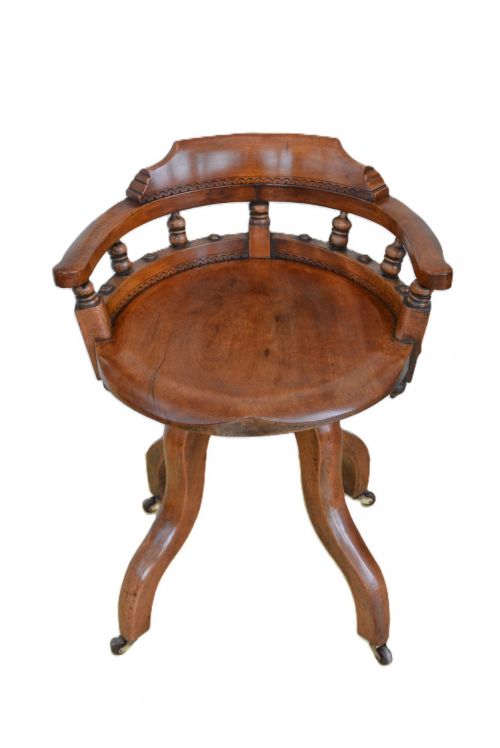
- A chair fitted with a central pivot mechanism allowing rotation, commonly mounted on a timber or cast iron base.
- Captains chair
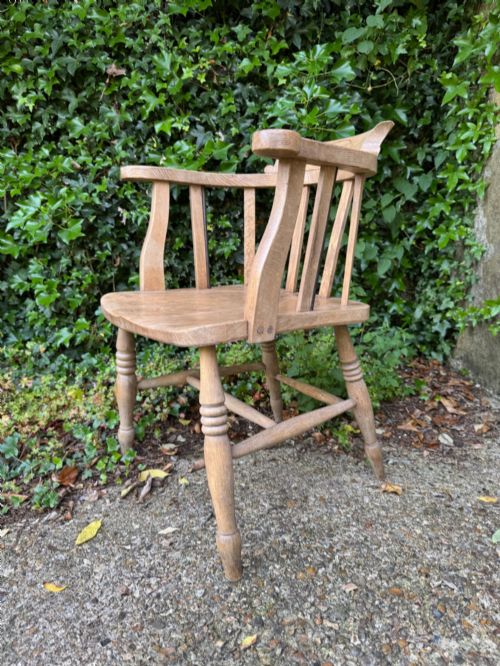
- A sturdy low-backed wooden armchair with a round seat, traditionally associated with office and shipboard use.
- Smokers bow
- A nineteenth-century Windsor-style armchair with a low rounded back rail and turned spindles.
- Gothic Revival
- A design style drawing inspiration from medieval architecture, characterised by pointed arches and heavy carved ornamentation.
- Aesthetic Movement
- A late nineteenth-century design style focusing on visual and material refinement rather than narrative ornament.
Victorian Office Seating: Frequently Asked Questions
What is a captains chair?
A captains chair is a robust wooden armchair characterised by a low, rounded back rail supported by turned spindles above a solid saddle seat. They were widely used in offices, ships, and libraries.
These chairs prioritise comfortable lumbar support and durable construction over soft upholstery, using dense timbers like elm, oak, or mahogany.
Where were ships chairs used?
Ships chairs were specifically designed for maritime use aboard vessels such as P & O liners, featuring weighted or secured bases to prevent sliding during rough seas. They often incorporated revolving mechanisms suited to tight quarters.
These pieces combine standard Victorian office forms with heavy-duty framing and maritime hardware to withstand movement at sea.
How do I care for leather upholstery?
Leather upholstery on office chairs benefits from regular dusting and occasional treatment with specialist leather balms to maintain flexibility. Avoid placing antique leather in direct sunlight to prevent drying and cracking.
Retaining the original studded leather surface preserves the historical character and appearance of nineteenth-century seating.