


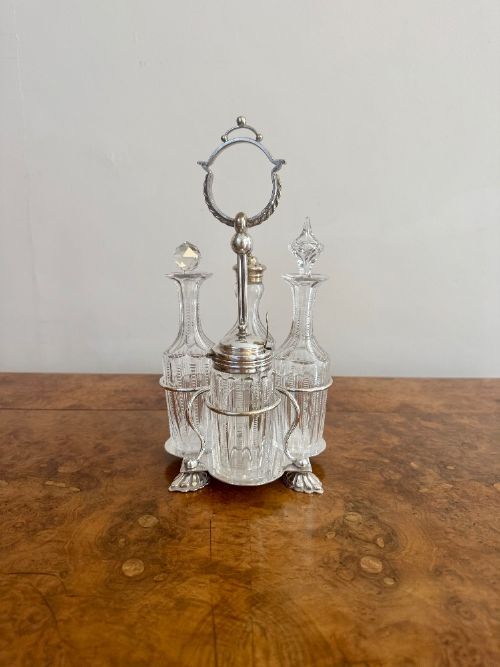


Victorian Mustard Pot
A victorian mustard pot sits ready to hold dry spice and salt, bringing heavy metal and bright glass to the dining table.
Victorian Mustard Pot
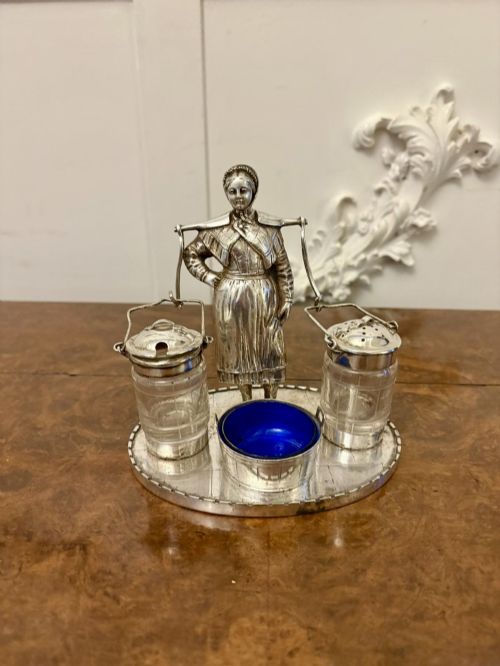
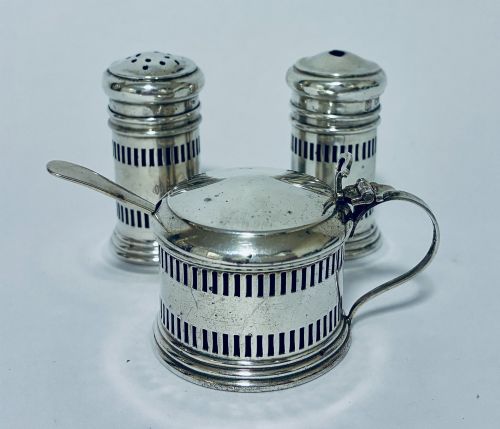
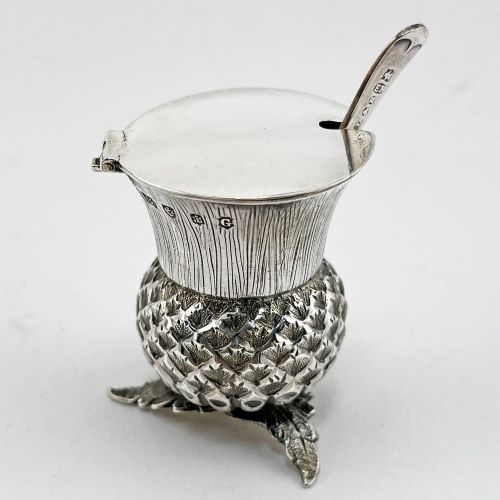
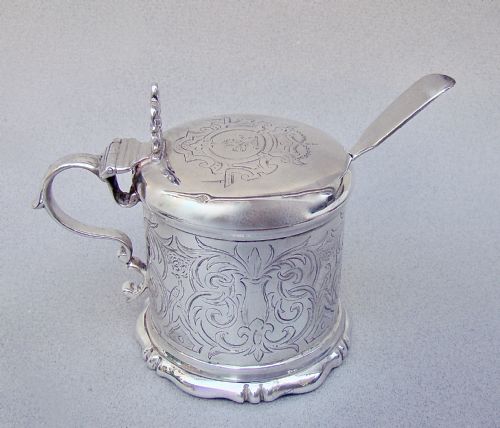
A victorian mustard pot is a small tabletop vessel made to hold prepared mustard, usually paired with a hinged lid and a matching spoon. The examples seen here range from plain drum shapes to elaborate novelty forms modelled as thistles or birds.
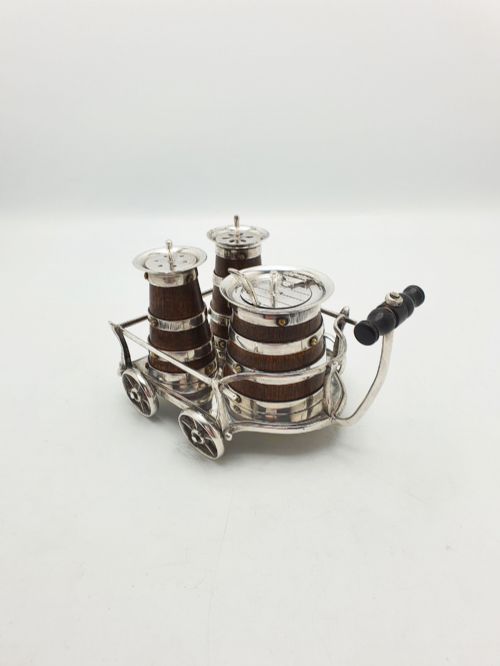
Most pieces date from the nineteenth century, spanning early Victorian decades through to Edwardian interpretations. They appear both on their own and as part of larger cruet sets alongside pepper shakers and salt cellars.
How They Were Made
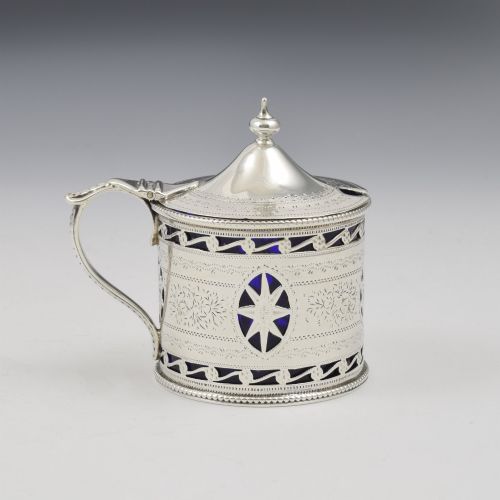
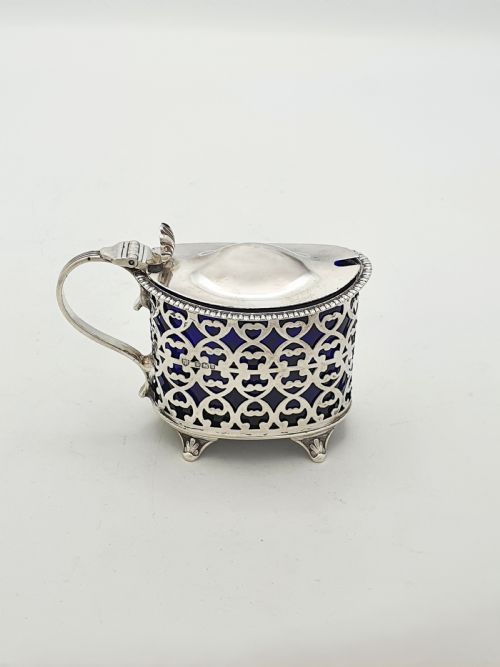
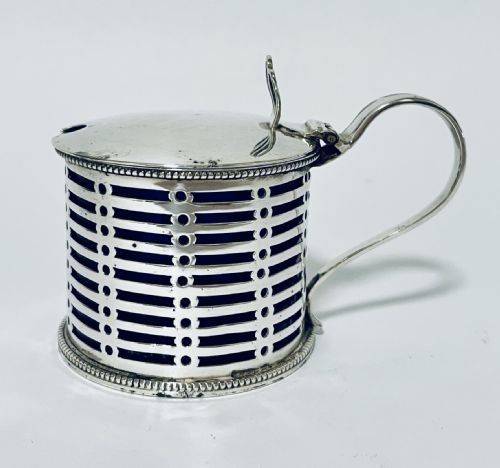
Silversmiths formed these pots from sterling silver or applied silver plate over base metals, often utilising piercing techniques to create intricate openwork patterns. Cobalt glass or ruby red liners sat inside these pierced bodies to protect the metal from acidic mustard and to provide colour contrast.
Makers also turned to alternative materials like oak and walnut for barrel-shaped condiment holders or mounted cut glass with silver rims. Hinges, scroll handles and thumbpieces were cast separately and soldered by hand to the main body.
Victorian Mustard Pot Retail Price Guide 2026
Typical asking prices for victorian mustard pot among the pieces listed under this phrase on Sellingantiques today, from the lower quarter to the upper quarter. They describe what is for sale here now, not the wider market.
Listings feature sterling silver and silver plate alongside cobalt glass, ruby glass, oak, walnut, and velvet.
What Varies in Quality
The standard of craftsmanship shows in the crispness of chased ornament and the weight of the silver used in the body and lid. Superior pieces retain their original coloured glass liners without chips and have lids that close flush against the rim.
Novelty items rely heavily on the sculptural skill of the silversmith to make animal and plant forms convincing. Maker marks stamped clearly into the metal also distinguish standard workshop production from notable silversmith outputs.
Nathan & Hayes·Charles & George Fox·Mappin Brothers·Charles Stuart Harris·William Hutton & Sons
The Victorian Mustard Pot Glossary
- Cruet set
- A matched group of condiment bottles and pots held together on a stand or tray for the dining table.
- Pierced work
- Metal cut through in decorative patterns to reveal the coloured glass liner housed underneath.
- Sterling silver
- An alloy containing a high proportion of pure silver, marked on Victorian pieces to show standard purity.
- Silver plate
- A layer of silver fused or electroplated onto a base metal core such as copper or nickel brass.
- Cobalt glass
- Deep blue glass used extensively for liners inside openwork silver mustard pots.
Victorian Mustard Pot: Frequently Asked Questions
What is a mustard pot liner for?
The glass liner protects the silver body from corrosion caused by the vinegar and spices in prepared mustard. It lifts out easily for washing after use.
Coloured glass liners also provide a bright decorative contrast when viewed through pierced silver panels.
How do I date a silver mustard pot?
British silver bears hallmarks that include a date letter, a lion passant for sterling standard, and a town mark. Consulting assay office records reveals the exact year of manufacture.
Stylistic cues such as heavy Victorian scrollwork or later Edwardian simplicity also help narrow down the period.
Were these pots used individually?
Mustard pots appear both as standalone table pieces and as part of larger matching cruet sets. Standalone versions often accompanied family dining services.
Sets placed condiments together on a silver stand or tray for easy passing around the table.