

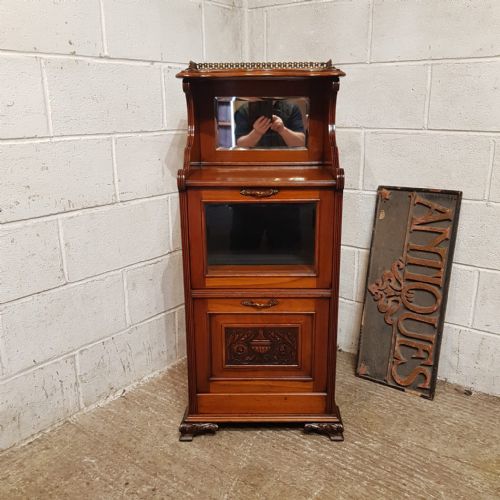


Victorian Music Cupboard
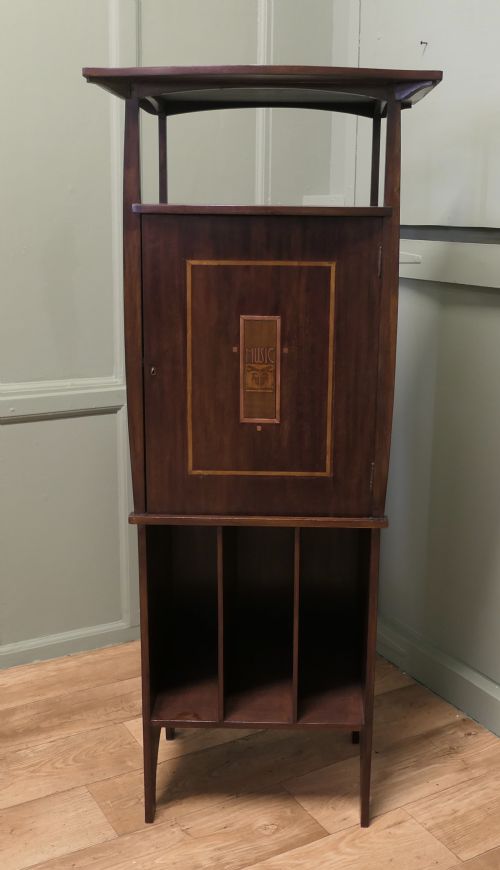
A victorian music cupboard organises domestic sheet music inside a tall, narrow timber frame.
Victorian Music Cupboard
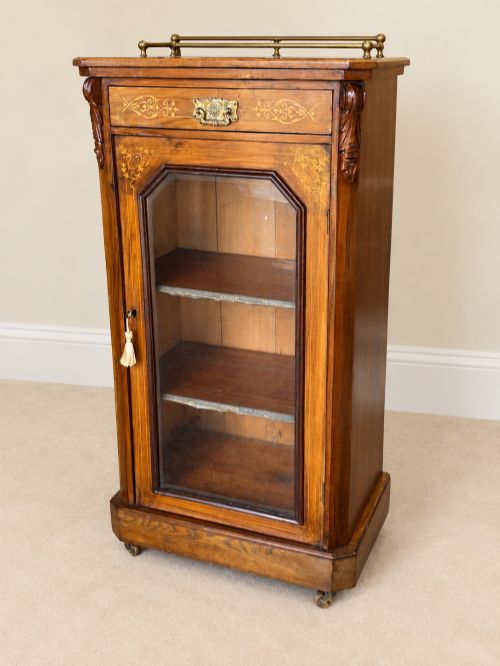
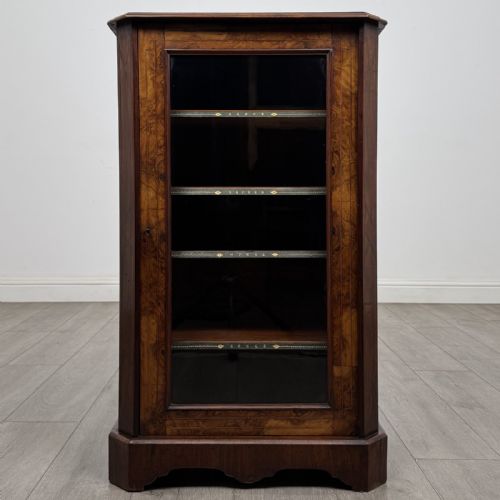
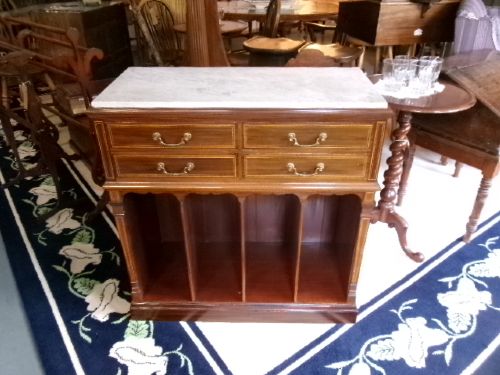
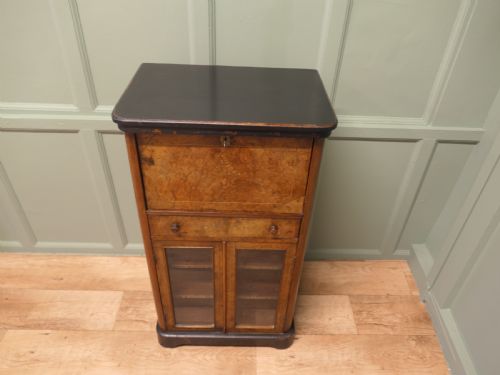
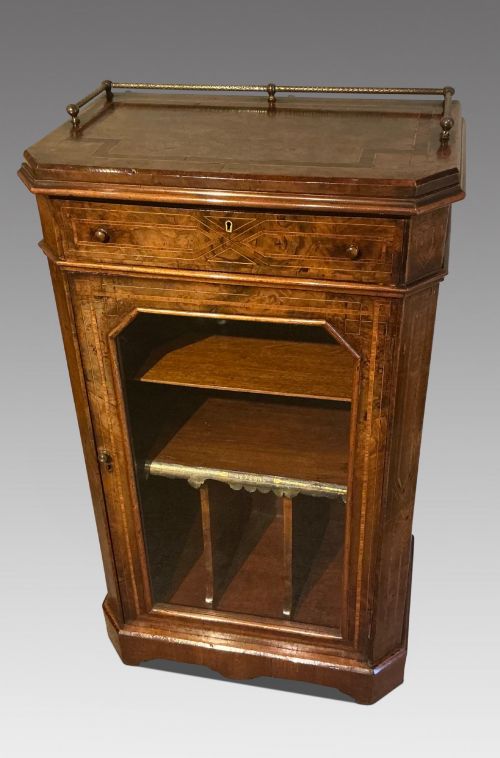
A victorian music cupboard is a dedicated storage piece designed to hold sheet music, folios and scores within nineteenth century parlours. These cabinets appear primarily in walnut, burr walnut, mahogany and rosewood, often taking a tall, slender silhouette to fit compact domestic spaces.
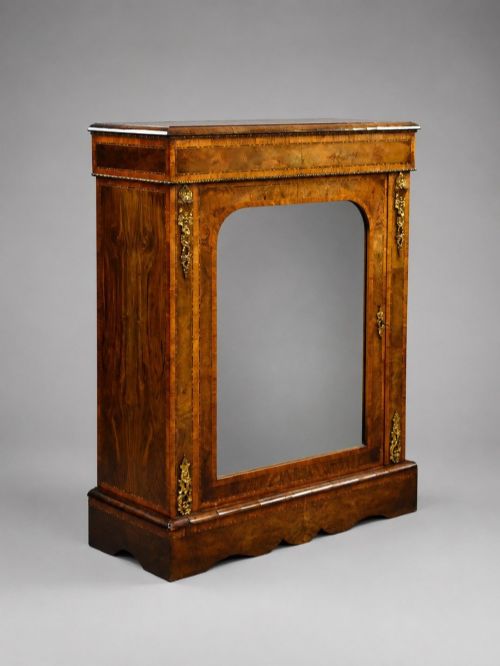
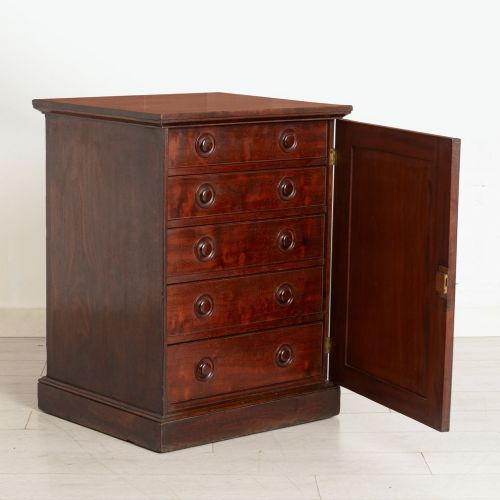
Makers produced these cabinets in various formats, including glazed display units, pier cabinets and fitted storage featuring internal shelves or dropping drawers. The pieces reflect periods spanning the mid nineteenth century through to the early twentieth century, alongside styles such as the Aesthetic Movement and Arts and Crafts.
How they were made
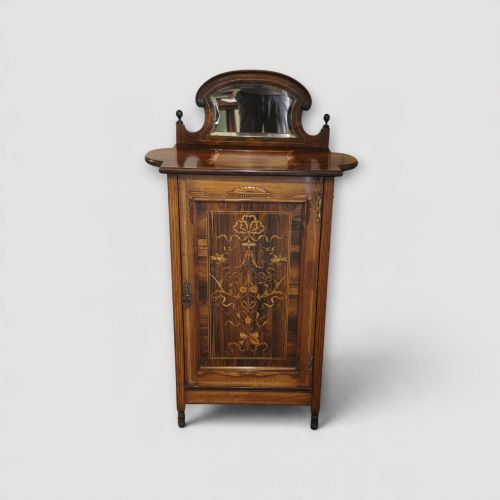
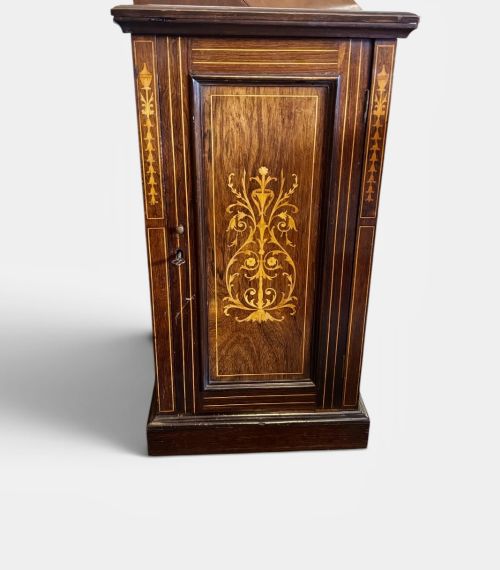
Cabinet makers utilised dense hardwoods including mahogany, walnut and rosewood, frequently applying burr veneers to principal surfaces for distinct grain patterns. Inlays of satinwood, marquetry detailing and brass hardware appear across many examples.
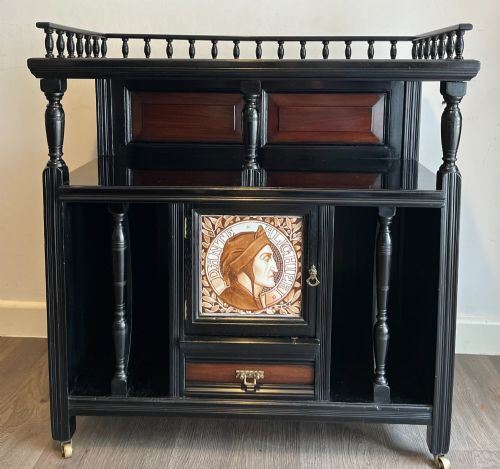
Structural methods combine panelled timber doors, mirrored glass inserts, and internal compartments tailored specifically for paper storage. Ebonised finishes and painted panels also emerge on specific stylistic variants.
Victorian Music Cupboard Retail Price Guide 2026
Typical asking prices for victorian music cupboard among the pieces listed under this phrase on Sellingantiques today, from the lower quarter to the upper quarter. They describe what is for sale here now, not the wider market.
Listings feature walnut, burr walnut, mahogany, rosewood and ebonised wood across Victorian, Arts and Crafts and Aesthetic Movement styles.
What varies in quality
The degree of refinement in timber selection and decorative execution defines the standard of a piece. Examples featuring figured burr walnut veneers, intricate marquetry and fine satinwood inlay sit apart from plainer mahogany or hardwood constructions.
Attribution to documented makers or specific regional workshops elevates the standing of an individual cabinet. The integration of specialist hardware, bevelled mirror glass and complex internal filing arrangements further distinguishes finer production.
GM Elwood for JS Henry·Henry Ogden and Son·Keeble
The Victorian Music Cupboard Glossary
- Pier cabinet
- A narrow cabinet designed specifically to stand against the wall space between windows. These pieces often feature glass doors for display.
- Burr walnut
- A distinctive wood veneer taken from the growth growths of a walnut tree. It yields highly figured, swirling patterns prized by cabinet makers.
- Aesthetic Movement
- A late nineteenth century design style emphasising visual beauty over narrative content. Pieces in this manner often display clean lines and artistic hardware.
- Marquetry
- Decorative woodwork where small pieces of veneer are fitted into a ground material to form pictorial or geometric patterns. It appears frequently on cabinet doors.
- Whatnot
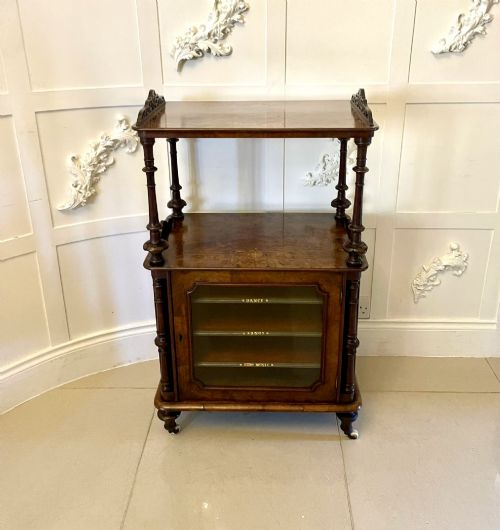
- An open set of multi tiered shelves used for displaying ornaments or holding books. Some variants incorporate enclosed cupboard spaces beneath.
Victorian Music Cupboard: Frequently Asked Questions
What is a music cupboard?
A music cupboard is a specialised nineteenth century cabinet built to store sheet music and folios neatly. They usually feature internal shelves or drop down compartments designed for paper preservation.
These pieces stood in parlours and drawing rooms where families gathered around pianos. Their tall, narrow proportions made them suitable for rooms with limited floor space.
How do I date a cabinet?
Dating relies on observing timber choices, construction techniques and stylistic markers recorded across the Victorian and Edwardian eras. Pieces often incorporate specific regional designs or movement characteristics like Arts and Crafts.
Markings, hardware styles and secondary woods also provide clues to chronological origin. Comparing known workshop traits helps narrow down the period of manufacture.
What woods were used?
Cabinet makers predominantly selected walnut, burr walnut, mahogany and rosewood for these pieces. Ebonised wood and hardwood also appear across various regional workshops.
Surfaces frequently display contrasting inlays of satinwood and marquetry details. Brass handles and hinges provide functional metallic accents.
How do I use one today?
These narrow cabinets adapt well to modern interiors for storing documents, art supplies or media collections. Their compact footprints allow placement in hallways, studies or living rooms.
Display variants with glass doors serve to showcase small collections or books. The internal shelving accommodates modern organisational needs while retaining period character.