



Victorian Mahogany Desk Mirror
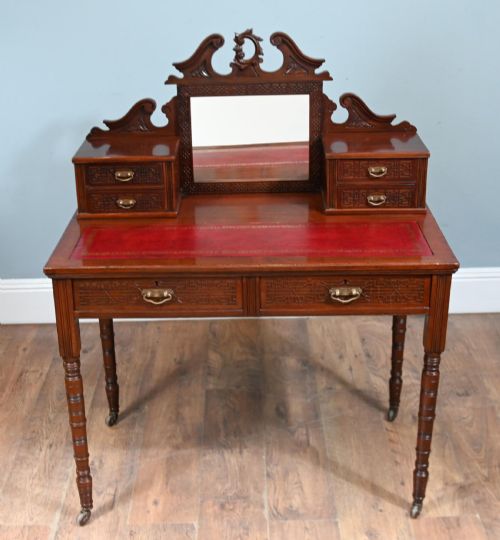
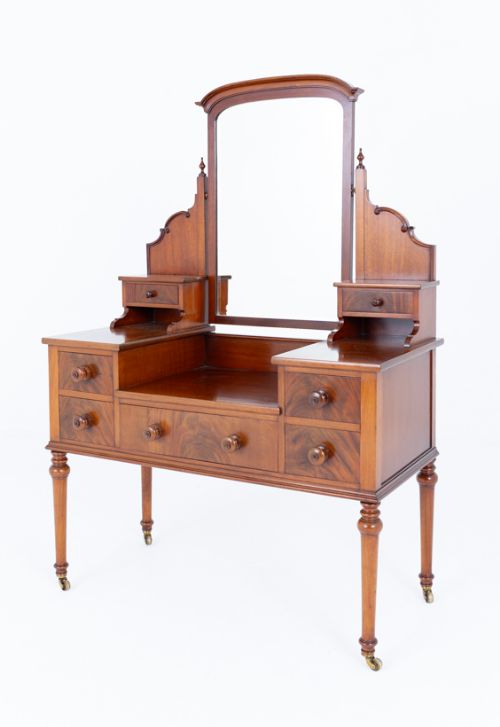
A victorian mahogany desk mirror sits upon the surface to steady the glass while drawers hold small daily items.
Victorian Mahogany Desk Mirror
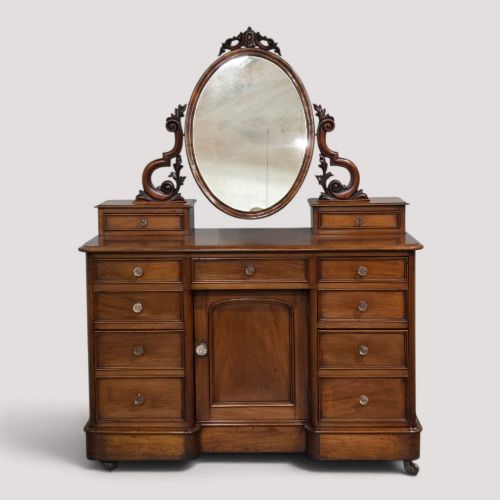
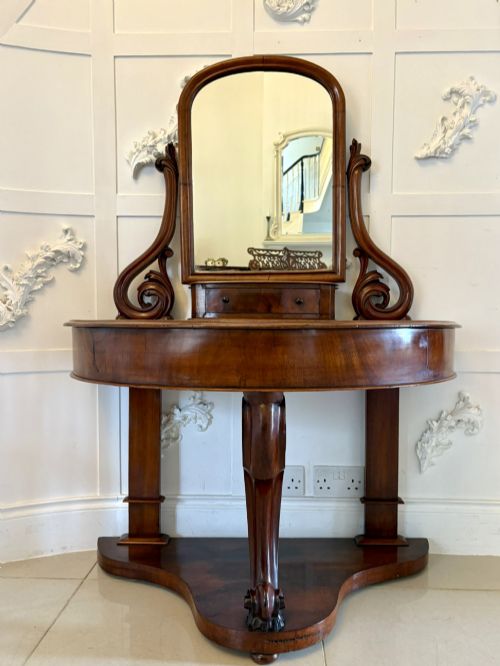
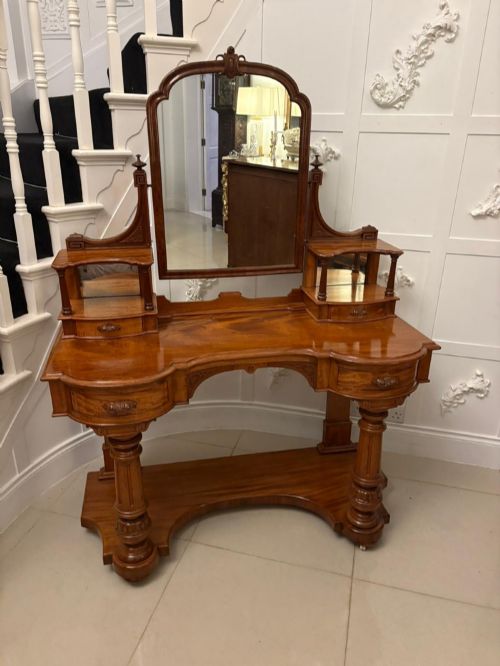
A victorian mahogany desk mirror brings together timber frames and tilting glass plates designed for dressing tables and writing surfaces. These pieces appear in forms ranging from simple swing plates on upright supports to elaborate duchess and pedestal designs with fitted drawers.
The materials recorded across these examples centre on dense mahogany, polished mirror glass and occasional brass fittings. Cabinet makers from the nineteenth century built these items to sit securely on furniture tops while offering adjustable angles for daily grooming or correspondence.
What varies in quality
The refinement of the timber and the depth of the cabinet work separate standard examples from finer commissions. Pieces bearing the marks of established cabinet makers display superior joinery, crisp carving, and well-fitted drawer linings.
The condition of the original glass plate and the integrity of the pivoting mechanism influence the overall standard. Subtle details such as inlaid stringing or figured mahogany veneers indicate higher levels of workshop craftsmanship.
Victorian Mahogany Desk Mirror Retail Price Guide 2026
Typical asking prices for victorian mahogany desk mirror among the pieces listed under this phrase on Sellingantiques today, from the lower quarter to the upper quarter. They describe what is for sale here now, not the wider market.
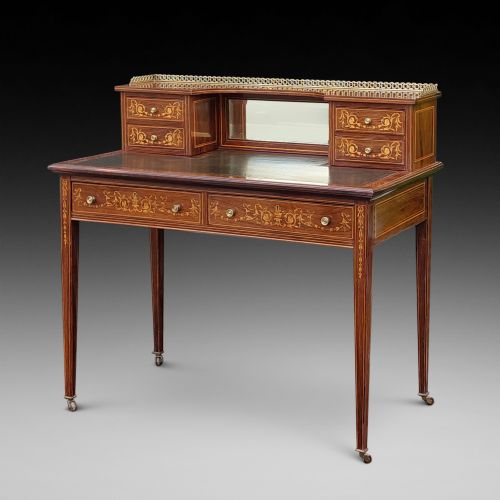
Listings feature mahogany, satinwood inlay, and brass, spanning the Victorian period from the eighteen-fifties to nineteen hundred.
Edwards and Roberts·Maple and Co·Thomas Rubergall·Jas Shoolbred
The Victorian Mahogany Desk Mirror Glossary
- Duchess dressing table
- A large dressing table featuring a fixed or swing mirror flanked by small drawers or shelves above a main desk or table base.
- Bon heur du jour
- A small lady writing desk fitted with a raised tier of small drawers, pigeonholes, and a central mirror or cupboard space.
- Swing mirror
- A glass plate mounted on vertical pivots within a frame that tilts forward and back upon a base or supporting arms.
- Satinwood inlay
- Contrasting pale timber inserted into the darker mahogany surface in decorative geometric or floral patterns.
- Pedestal dressing table
- A heavy writing or dressing unit featuring twin banks of drawers supporting the main work surface and mirror.
Victorian Mahogany Desk Mirror: Frequently Asked Questions
How do I clean the mahogany frame?
Dust the timber gently with a dry, soft cloth to remove everyday particles without disturbing the polish. Apply a suitable beeswax sparingly when the wood appears dry, then buff it softly to restore the natural sheen.
Avoid using household sprays or excessive water on the antique surfaces. Careful treatment preserves the colour and prevents damage to the nineteenth-century finish.
Can the mirror glass be replaced?
Original glass plates often show foxing or silver degradation due to age. Many collectors prefer to retain the original glass for authenticity, even with minor marks.
If replacement is necessary, consult a specialist restorer to fit period-appropriate glass. This ensures the mirror retains its correct weight and reflection quality.
How are different Victorian styles identified?
Early Victorian examples often feature robust proportions and scroll supports rooted in earlier traditions. Later nineteenth-century pieces introduce lighter aesthetic movement lines and inlaid satinwood details.
Observing the carving motifs, leg shapes, and secondary timbers helps determine the decade of manufacture. Comparing these elements against documented workshop pieces clarifies the stylistic period.
Where should I place a desk mirror?
Position the piece on a stable chest, dressing table, or writing desk away from direct sunlight. Excessive heat and light can fade the mahogany timber and dry out the wooden joints.
Ensure the supporting surface is level so the weight distributes evenly across the base. Proper placement protects the pivoting mechanism from unnecessary strain.