

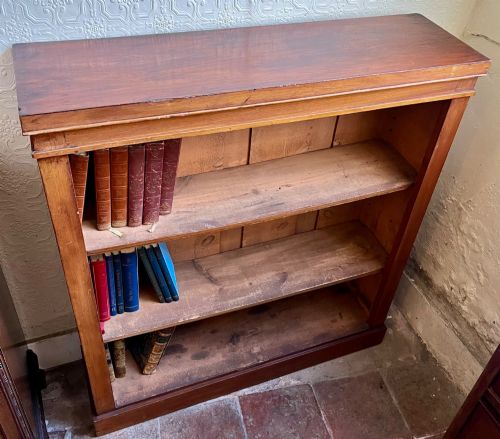
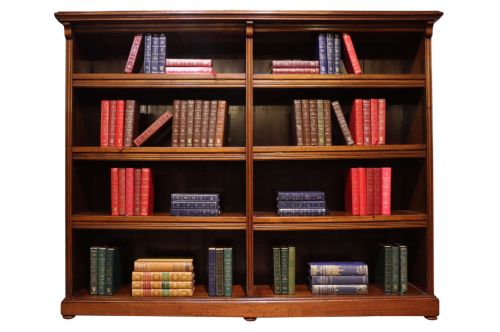
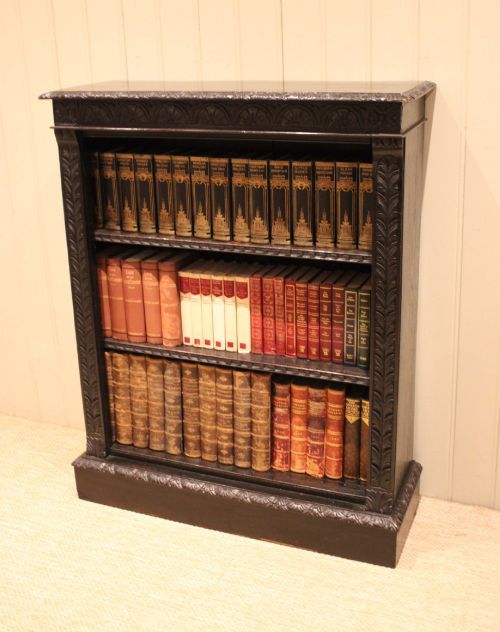
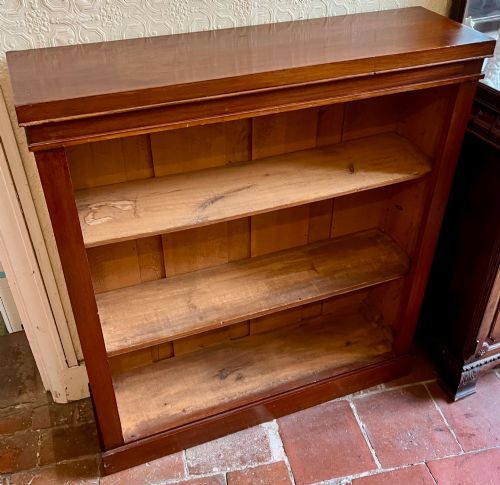
Victorian Low Open Shelving
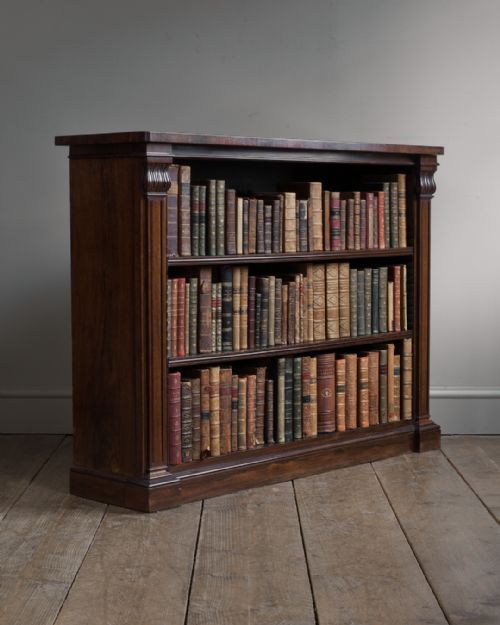
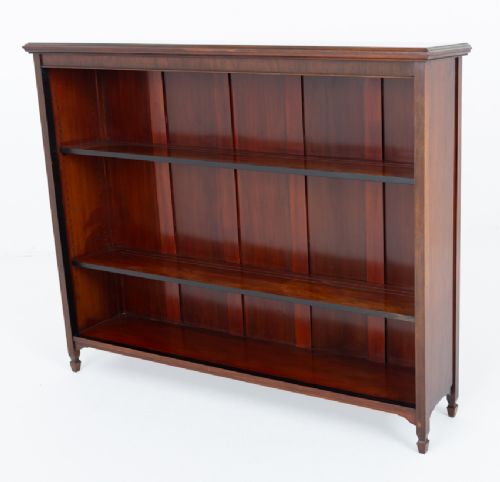
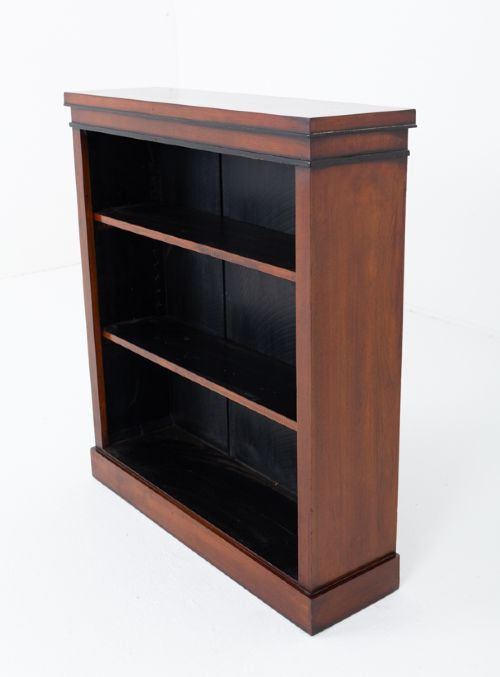
Victorian low open shelving offers accessible display and storage, bringing period character and practical book storage to living spaces.
Victorian Low Open Shelving
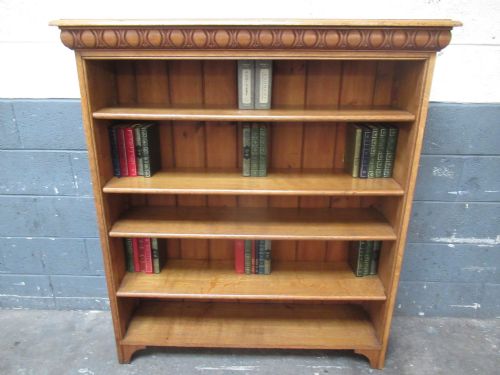
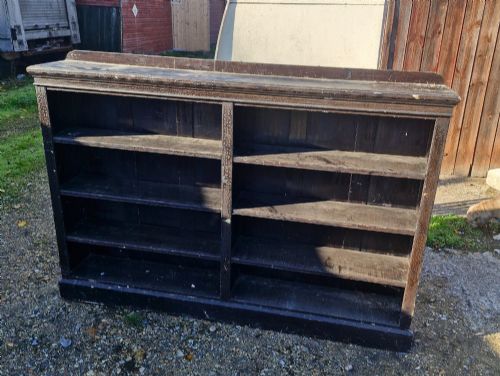
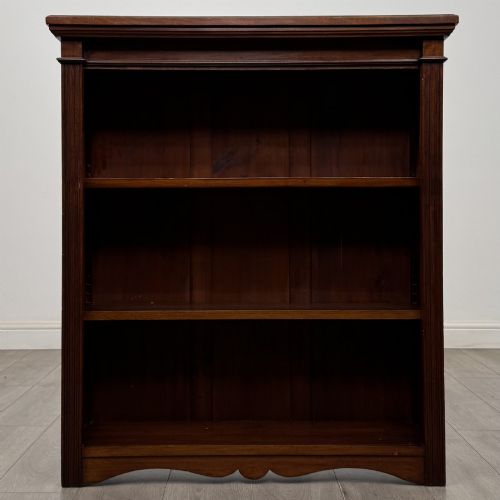
Victorian low open shelving comprises accessible, waist-height bookcases and low library units designed for everyday utility. These pieces provide easy access to books and decorative objects without the visual weight of tall cabinetry.
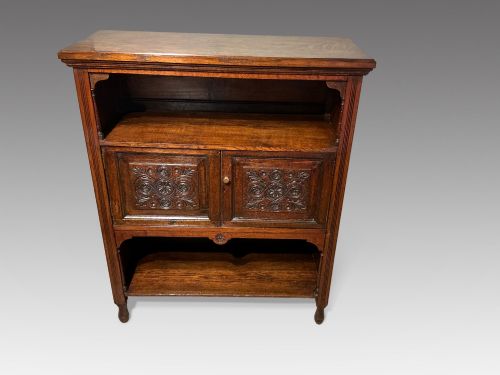
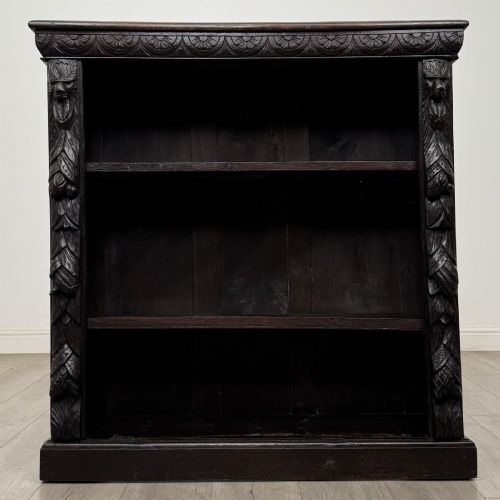
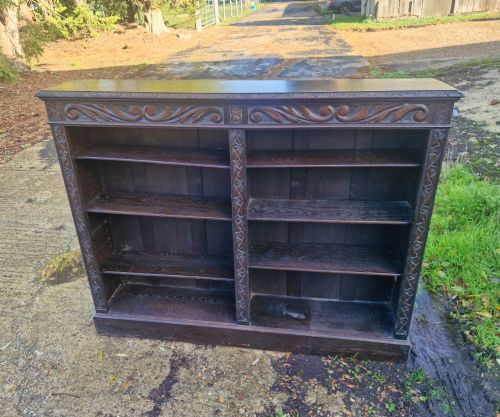
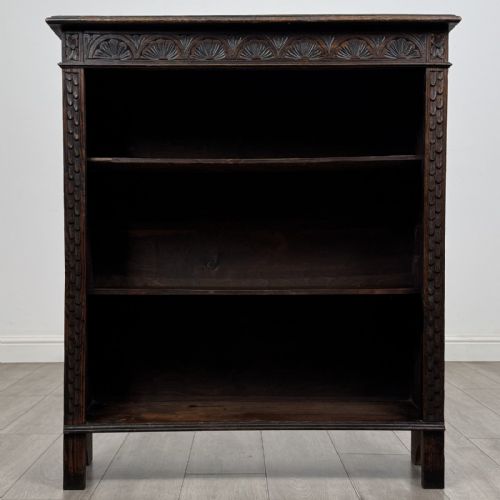
The selections on this page span the 19th century and early 20th century, encompassing styles from Gothic Revival and Aesthetic Movement to rustic country. Mahogany, oak, walnut and rosewood form the primary timbers of these low open units.
Materials and Construction
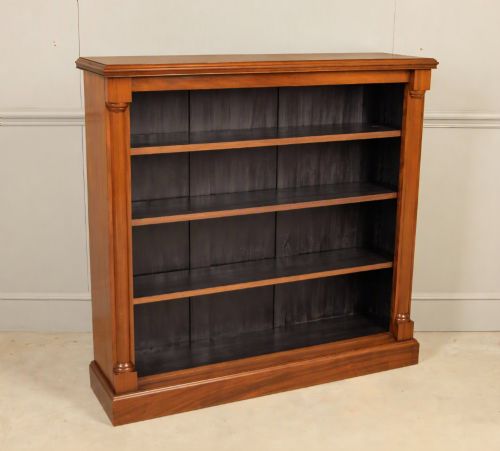
Cabinetmakers constructed these low bookcases using dense hardwoods such as mahogany, walnut, rosewood and oak, alongside utilitarian pine. Timber selection defined the character of the piece, from figured flame mahogany veneers to solid carved oak.
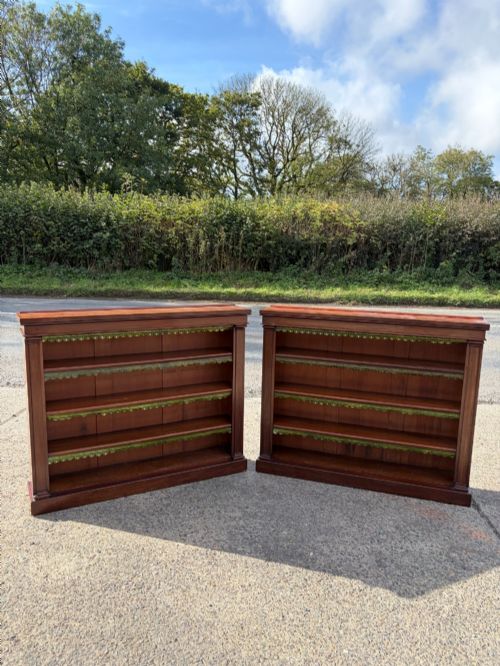
Makers integrated practical elements like adjustable shelves supported by wooden ratchets or brass pins. Decorative enrichment included hand carving, ormolu mounts, brass details and ebonised finishes.
Victorian Low Open Shelving Retail Price Guide 2026
Typical asking prices for victorian low open shelving among the pieces listed under this phrase on Sellingantiques today, from the lower quarter to the upper quarter. They describe what is for sale here now, not the wider market.
Listings feature woods including mahogany, oak, walnut, pine, rosewood, ormolu and burr walnut across the nineteenth and early twentieth centuries.
Assessing Quality and Execution
Quality rests in the selection of timber figures, such as burr walnut or flame mahogany, and the precision of the joinery. Superior examples exhibit refined proportions, balanced grain patterns and meticulous attention to structural details.
Secondary enrichment also separates standard utility pieces from finer commissions. High-grade items display crisp hand carving, quality bronze or ormolu mounts, and robust backing boards rather than thin plywood.
Johnstone and Jeanes
The Victorian Low Open Shelving Glossary
- Open bookcase
- A piece of furniture designed for storing books with front access unobstructed by doors. These units allow immediate visibility of book spines and displayed objects.
- Adjustable shelves
- Shelving boards that can be repositioned at different heights using internal vertical supports. This system accommodates books of varying sizes.
- Ormolu
- Gilded bronze ornamentation applied to furniture mounts and decorative accents. It provides a metallic contrast against dark hardwoods like walnut and mahogany.
- Breakfront
- A piece of furniture featuring a central section that projects forward from the flanking wings. This architectural layout creates depth and shadow on larger library units.
- Ebonised
- Wood finished to resemble ebony through staining or painting. This technique creates a dense black surface popular in nineteenth-century decorative schemes.
Victorian Low Open Shelving: Frequently Asked Questions
What are low open shelves used for?
These low units serve primarily to hold books while keeping the upper wall space clear for paintings or mirrors. Their accessible height makes them practical for everyday reading rooms and studies.
They also function well as display surfaces for ceramics, bronzes and decorative objects. The open format integrates books naturally into the living environment.
How do I identify a Victorian piece?
Victorian pieces typically display characteristic timber choices like mahogany, walnut and rosewood alongside period construction methods. Look for hand-cut dovetails in the drawer construction and solid timber backing boards.
Stylistic cues such as Gothic Revival tracery, Aesthetic Movement ebonising or heavy brass fittings also point to the nineteenth century. Comparing the joinery style helps confirm the era of manufacture.
Are the shelves usually adjustable?
Many nineteenth-century examples feature adjustable shelving supported by brass pins, wooden pegs or rack-and-pinion strips. This adaptability allowed owners to reconfigure the interior space for folios and octavos.
Fixed shelves do appear on simpler utility items or rustic country pieces. Checking the interior vertical uprights reveals the adjustment mechanism used by the maker.
Which woods were most common?
Mahogany and walnut dominated formal nineteenth-century cabinetmaking, prized for their rich colour and responsiveness to polishing. Rosewood appeared on finer, highly decorative library pieces.
Oak served for Gothic Revival and Arts and Crafts designs, while pine acted as the primary material for painted or waxed country furniture.