



Victorian Leaded Cabinet
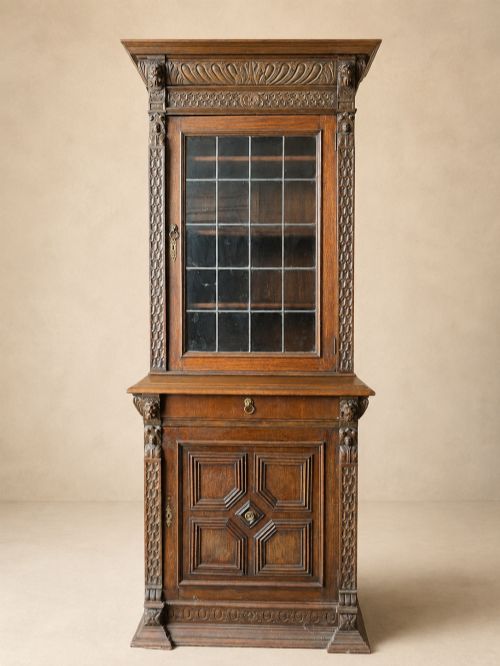
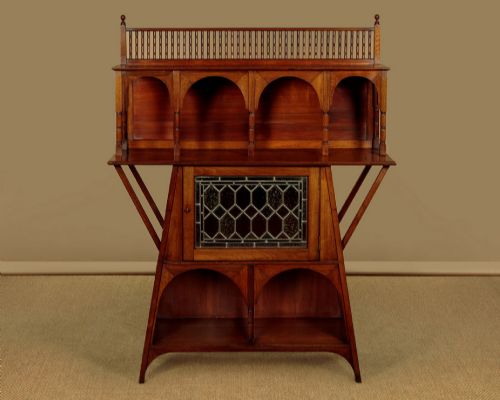
These Victorian leaded cabinets are practical storage pieces with glass panels held by metal came, offering both display space and character for a traditional room.
Victorian Leaded Cabinet
A Victorian leaded cabinet combines timber shelving with glazed doors held together by metal strip work, creating a sturdy piece for books and display. The examples on this page span the nineteenth century, including specific decades such as eighteen eighty, eighteen ninety, and nineteen hundred.
The forms vary across bookcases, corner cupboards, secretaire bookcases, and side cabinets. Oak is the primary timber seen, alongside mahogany, walnut, and pitch pine.
Makers and movements represented include Arts and Crafts, Gothic Revival, Flemish Revival, and the Aesthetic Movement. These diverse styles show how cabinetmakers adapted the form for different domestic settings.
Materials and construction methods
Makers built these cabinets using solid and veneered hardwoods like oak, mahogany, and walnut, joined with traditional techniques suited to heavy domestic furniture. Timber frames provided the structural strength needed to support glazed doors and internal shelving.
The glass panels are secured within lead cames, sometimes accompanied by copper or brass detailing, reflecting the handcraft traditions of the period. Metal hardware such as brass handles and panels adds functional contrast to the wooden bodies.
Victorian Leaded Cabinet Retail Price Guide 2026
Typical asking prices for victorian leaded cabinet among the pieces listed under this phrase on Sellingantiques today, from the lower quarter to the upper quarter. They describe what is for sale here now, not the wider market.
Styles include Arts and Crafts, Gothic Revival, Flemish Revival, and the Aesthetic Movement.
Distinguishing quality in these cabinets
Quality rests in the precision of the timber carving and the weight of the cabinet work, from slim carved oak bookcases to substantial pitch pine examples. Finer pieces display careful joinery and well-chosen grain patterns across the primary surfaces.
The execution of the leaded or stained glass and metal panels separates standard production from superior workshop output. Maker attribution, such as work associated with Liberty and Company or Lambs of Manchester, elevates the standing of a piece.
Liberty & Co.·Lambs of Manchester
The Victorian Leaded Cabinet Glossary
- Came
- A grooved strip of lead used to hold pieces of glass together in a window or cabinet door. It provides the flexible framework that defines leaded glazing.
- Secretaire bookcase
- A tall storage piece containing a pull-down writing drawer with internal compartments above shelving. This form combines a desk with a display cabinet.
- Arts and Crafts
- A design movement valuing handcraft, natural materials, and simple construction over mass production. It appears frequently in nineteenth-century oak furniture.
- Corner cupboard
- A triangular cabinet designed to fit neatly into the corner of a room. These pieces maximise floor space while offering display storage.
Victorian Leaded Cabinet: Frequently Asked Questions
What is a Victorian leaded cabinet used for?
These cabinets serve as practical storage for books, china, and decorative items while protecting the contents behind glass doors. The enclosed shelving keeps dust away from displayed collections.
Many examples include lower cupboards or drawers for concealed storage, making them versatile furniture for living rooms, studies, or dining spaces.
How do I date a Victorian leaded cabinet?
Dating relies on identifying stylistic markers, construction methods, and timber choices typical of the nineteenth century. Pieces often carry influences from Gothic Revival, Arts and Crafts, or Aesthetic movements.
Specific decades and maker attributions found in the listings help narrow the date of manufacture between eighteen sixty and nineteen hundred.
Where should I place a corner cupboard?
Corner cupboards fit into unused room junctions, making them useful for smaller spaces or rooms with limited wall length. They utilise angles efficiently while drawing attention to decorative contents.
Matching the timber of the cupboard to existing room furniture ensures the piece integrates naturally into the interior.
How do I care for antique oak furniture?
Maintenance involves dusting with a soft cloth and applying appropriate wax polish periodically to nourish the wood. Keeping the timber away from direct heat sources prevents warping and splitting.
Careful handling of the leaded glass doors ensures the came framework remains stable and secure over time.