



Victorian Hound Dog Painting
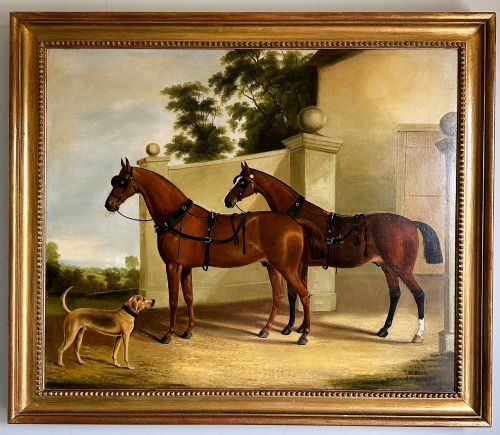
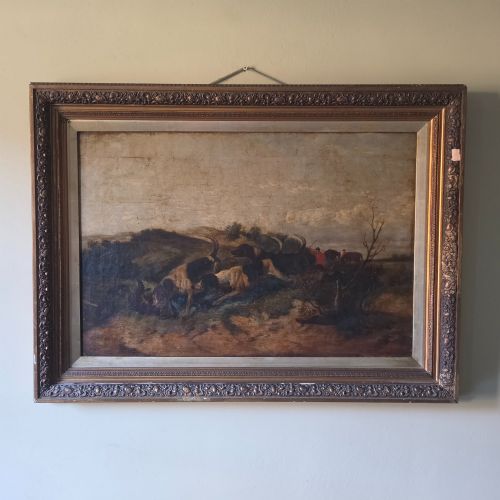
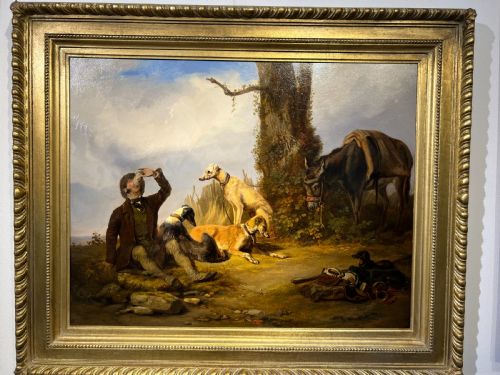
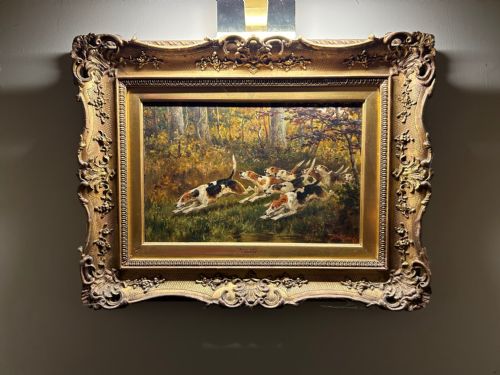
These Victorian hound dog painting examples capture the intense realism and sporting focus of nineteenth-century animal art.
Victorian Hound Dog Painting
A Victorian hound dog painting portrays sporting hounds, retrievers, and working dogs within nineteenth-century landscapes and interiors. These works emerge primarily as framed oil paintings on canvas or board, alongside occasional watercolours.
The selections on this page span the Victorian period, nineteenth-century realism, and Edwardian sporting art. Buyers will encounter individual dog portraits as well as active hunt packs and winter scenes.
Subjects range from single bloodhounds and curly-coated retrievers to dynamic groups of hunting dogs and greyhounds. Many compositions reflect the dominant sporting traditions of the period.
What varies in quality
Anatomy and expression distinguish the finest examples, where the bone structure and alert posture of the hound are rendered with precise observation. Weaker pieces lack this conviction in drawing.
The handling of the surrounding landscape and light elevates a composition, separating standard decorative works from accomplished sporting art by recognised painters.
Several hounds are captured mid-stride in winter snow, proving that nineteenth-century dogs suffered cold paws just as modern ones do.
Sir Edwin Henry Landseer·Arthur Wardle·Colin Graeme Roe·Fannie Moody·Jules Chardigny·Alfred Duke·Thomas Blinks·Philip Eustace Stretton·Henry Frederick Lucas-Lucas
The Victorian Hound Dog Painting Glossary
- Oil on Canvas
- Pigment mixed with drying oil applied to a woven fabric support. This medium allowed artists to build rich textures in animal coats and deep shadows in landscapes.
- Giltwood
- Wood carved and covered with a thin layer of gold leaf. Period frames utilising this technique add significant character to nineteenth-century artworks.
- Sporting Art
- Depictions of rural sports, horses, and hounds. This genre flourished in the nineteenth century through specialised animal painters.
- Watercolour
- Pigments suspended in a water-soluble vehicle applied to paper. These works require protective glazing and framing to prevent fading.
Victorian Hound Dog Painting: Frequently Asked Questions
What is a hound painting?
A hound painting is an artwork depicting sporting dogs, bloodhounds, greyhounds, or foxhounds in pastoral or hunting settings. These pieces date predominantly from the nineteenth century.
Such works reflect the high regard for sporting culture and animal portraiture during the Victorian era. They range from intimate head studies to large canvases showing full hunt packs.
How do I date a Victorian painting?
Dating relies on stylistic evidence, artist signatures, framing materials, and the canvas stretcher construction. Nineteenth-century works often bear specific stylistic markers of realists or sporting artists.
Examining the back of the canvas or board can reveal period inscriptions, artist stamps, or framing labels that narrow down the decade of creation.
Where should I hang a dog painting?
These works suit traditional studies, living rooms, or hallways, particularly alongside other equestrian or sporting art. Their naturalistic palettes harmonize with wood panelling and period interiors.
Avoid placing oil paintings in direct sunlight or areas of high humidity to protect the canvas and the giltwood frame from degradation.
Are these paintings signed?
Some pieces feature visible signatures or monograms by period animal artists, while others remain unsigned or attributed based on style. Unsigned works were common in Victorian production.
Attributions depend on comparative analysis of brushwork, subject matter, and composition matching known nineteenth-century painters.