


Victorian Gold Cross
These victorian gold cross pieces are pendant and brooch forms worked in gold with gemstones or enamel, sought after for their devotional design and period craftsmanship.
Victorian Gold Cross
A buyer searching for a victorian gold cross encounters devotional forms ranging from plain engraved metal to intricate pendant designs set with gemstones. These pieces appear as standalone charms, larger crucifixes, or convertible brooch pendants intended for wear on chains or ribbons.
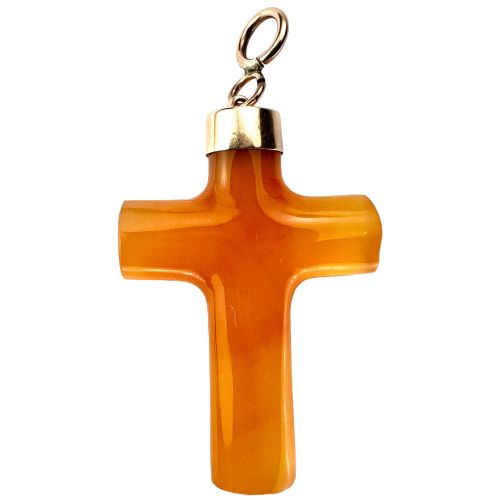
The most frequent examples on this page date from the nineteenth century, utilising yellow or rose gold in varying carats alongside seed pearls, turquoise, diamonds, and enamel work. Spanish colonial or Scottish agate variations also appear among the records, showing regional material preferences.
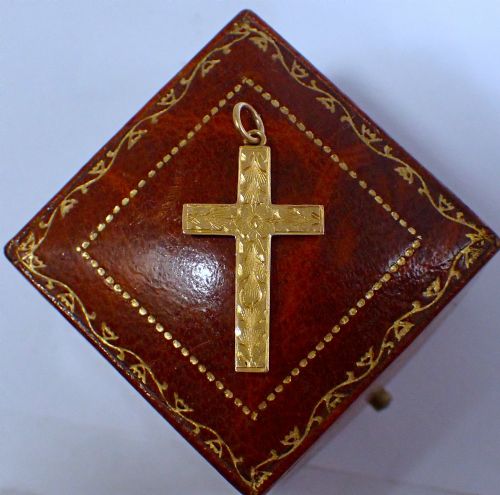
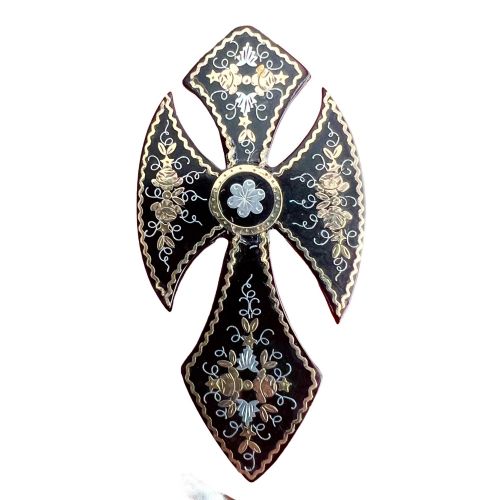
Formats include square cross wheels, Maltese shapes, and traditional Latin crucifixes with surface engraving or inlaid silver detailing. Many retain original suspension loops or pin fittings adapted for multiple uses.
Materials and construction
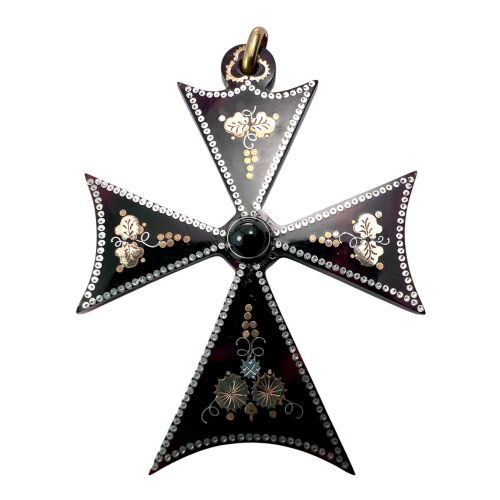
Metals span lower and higher carat golds, including nine carat rose gold, fifteen carat yellow gold, and occasional eighteen carat components, alongside silver utilised for contrasting inlay work and gemstone settings. Pique techniques combine tortoiseshell with metallic foil or wire inlay.
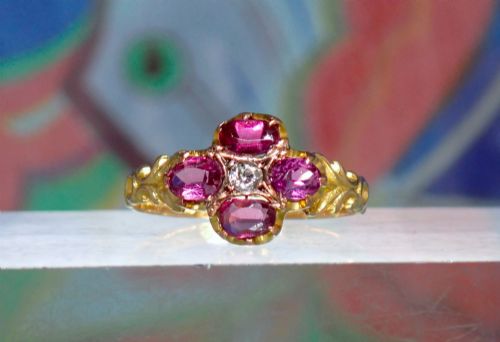
Gemstone decoration relies on rub-over or claw settings holding diamonds, almandine garnets, amethysts, turquoise cabochons, and seed pearls. Enamel work provides blue or black colouration, frequently framing central motifs or forming mourning compartments.
Tortoiseshell piqué crosses hide delicate metallic wire stars within their polished shells.
Distinctions in construction and material
Superior examples utilise higher carat gold standards combined with stones such as matched turquoise cabochons, well-cut diamonds, and intact hand-carved agate or onyx panels. Lower grades rely on rolled gold or lighter hollow stampings with simpler surface engraving.
The crispness of hand engraving and the security of stone settings determine execution standards. Intricate piqué work and undamaged enamel indicate careful historical handling.
The Victorian Gold Cross Glossary
- Pique
- A decorative technique using inlaid gold or silver points and strips within a tortoiseshell base. This method creates geometric or floral patterns across the surface of brooches and pendants.
- Cabochon
- A gemstone cut with a smooth, rounded surface rather than faceted edges. Turquoise and garnet frequently appear in this configuration on period jewellery.
- Almandine garnet
- A deep red variety of garnet utilised in nineteenth century gemstone clusters. These stones contribute dark red colouration to cross pendants and rings.
- Mourning locket
- A hinged compartment piece designed to hold hair or miniature portraits. Black enamel is common on these items.
- T-Bar
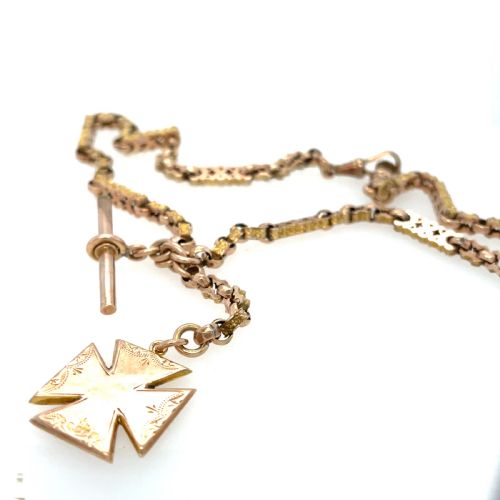
- A horizontal metal bar attached to a watch chain. This component secures the chain through a waistcoat buttonhole.
Victorian Gold Cross: Frequently Asked Questions
How do I wear a antique cross pendant?
These pieces suspend from chains, ribbons, or historical albert chains depending on the presence of original jump rings or bails. Convertible versions include hinged pin stems for alternative use as brooches.
Heavier examples suit sturdier chains, whilst smaller drop pendants pair with finer necklaces.
What gold carats appear in these pieces?
Listings record nine carat rose gold, fifteen carat yellow gold, and eighteen carat gold alongside rolled gold alternatives. Higher carat pieces display deeper yellow or rose tones.
Lower carat items provide lighter weights for daily wear whilst maintaining period styling.
What gemstones decorate these crosses?
Common stones include turquoise, seed pearls, diamonds, amethysts, and almandine garnets set directly into the gold framework. Blue and black enamel also provide decorative contrast.
Carved hardstones such as agate and onyx appear in solid cross formations.
How do I date these items?
Dating relies on material testing, construction methods, and recorded hallmarks where present. Pieces align with Victorian and Edwardian manufacturing traits.
Stylistic indicators include the use of piqué inlay, seed pearl clusters, and specific enamel colours.