



Victorian Glass Salt Dips
Victorian glass salt dips are miniature open vessels that bring period character to a dining table.
Victorian Glass Salt Dips
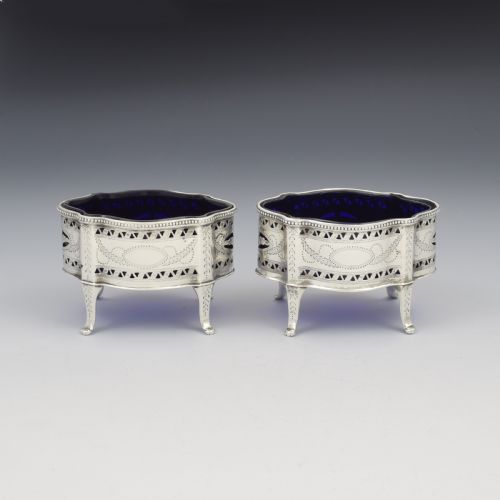
Victorian glass salt dips are small table accessories designed to hold loose salt alongside individual place settings during formal meals. These little vessels appear as open salts, often paired with contrasting metal frames or stands that securely hold the glass body. The items on this page span the Victorian period and surrounding decades, including Edwardian and nineteenth century examples.
Collectors frequently encounter these pieces in pairs or matched sets, sometimes complete with tiny spoons or original presentation boxes. The glassware sits inside pierced silver, silver plated, or carved wood holders, with distinct hues such as cobalt blue and cranberry glass providing vibrant colour. Forms range from simple open bowls to novelty animal figures and serpentine table salts.
How they were made
The manufacture of these pieces combines traditional glassblowing or moulding with metalworking techniques like silver plating and sterling silver smithing. Coloured glass elements, including deep cobalt and rich cranberry tones, derive their hues from metallic oxides added during the glassmaking process. Metal mounts often feature intricate pierced work or Aesthetic Movement decoration.
Specialised items such as Black Forest condiment figures incorporate carved wood to form the body and holder. Glass liners are shaped precisely to fit within their respective silver or plated frames, ensuring a secure and stable union between the two materials.
Victorian Glass Salt Dips Retail Price Guide 2026
Typical asking prices for victorian glass salt dips among the pieces listed under this phrase on Sellingantiques today, from the lower quarter to the upper quarter. They describe what is for sale here now, not the wider market.
A solitary Black Forest bear stands ready to hold your salt, proving that Victorian table manners had a delightfully wild side.
What varies in quality
Quality in these items rests on the precision of the metalwork and the clarity and depth of the glass. Finer examples display crisp piercing on silver mounts and unblemished coloured glass without internal bubbles or surface distortion. Matched sets with their original spoons and fitted boxes command greater interest than assembled groups.
The integration between the glass insert and its metal holder indicates the maker's level of skill. Superior pieces fit together snugly without excessive movement, maintaining proportion and balance across the entire object.
The Victorian Glass Salt Dips Glossary
- Open salt
- A small vessel designed to hold salt without a lid, allowing diners to pinch or spoon the condiment onto their plates. These form the primary category of salt dips found in this period.
- Cobalt glass
- A deep blue glass created by adding cobalt oxide to the molten batch. This striking colour appears frequently in nineteenth century salt liners.
- Cranberry glass
- A translucent pinkish-red glass produced by adding gold chloride to the metal. It became highly popular for tableware during the Victorian era.
- Sterling silver
- An alloy consisting of ninety-two point five percent silver and seven point five percent other metals, usually copper. Many higher grade salt cellars utilise this standard.
- Silver plate
- A base metal substrate coated with a thin layer of pure silver. This technique allowed manufacturers to produce decorative tableware at a more accessible cost.
- Aesthetic Movement
- A late nineteenth century design style that emphasised visual beauty over narrative or moral meaning. Objects from this movement often feature stylised natural motifs.
Victorian Glass Salt Dips: Frequently Asked Questions
What are Victorian glass salt dips?
Victorian glass salt dips are small open containers used on nineteenth century dining tables to hold loose salt for individual guests.
They typically combine a coloured glass insert with a silver, plated, or wooden holder and were often arranged in pairs or sets.
How were salt dips used at the table?
Diners used salt dips by taking a small pinch of salt using their fingers or a tiny salt spoon and placing it on the edge of their dinner plate.
This method predated the widespread use of individual salt shakers and added a decorative element to formal dining.
How do you clean antique silver and glass?
Cleaning requires separating the glass liner from the metal holder to prevent moisture becoming trapped between the two materials.
Use mild soapy water for the glass and appropriate non-abrasive polishes for sterling silver or silver plated mounts.
How do you date these pieces?
Dating relies on hallmarks stamped into the metal mounts, stylistic cues such as Aesthetic Movement motifs, and manufacturing techniques.
Design variations across the Victorian, Edwardian, and broader nineteenth century periods help narrow down the date of origin.