




Victorian Genre Painting Paper
Victorian genre painting paper captures everyday domestic scenes and rural life rendered in delicate watercolours on paper.
Victorian Genre Painting Paper
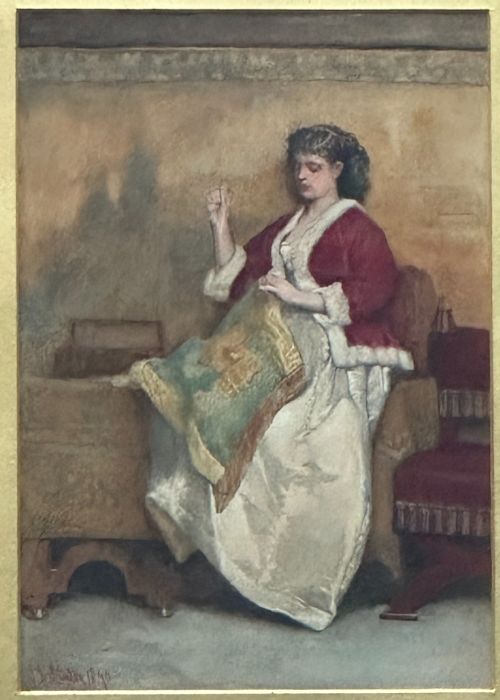
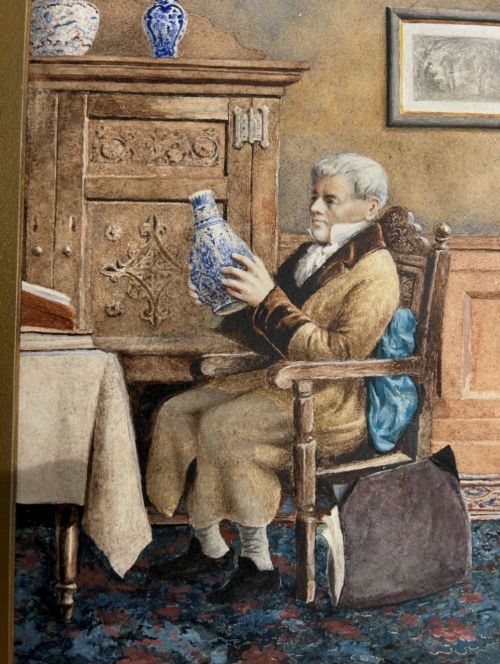
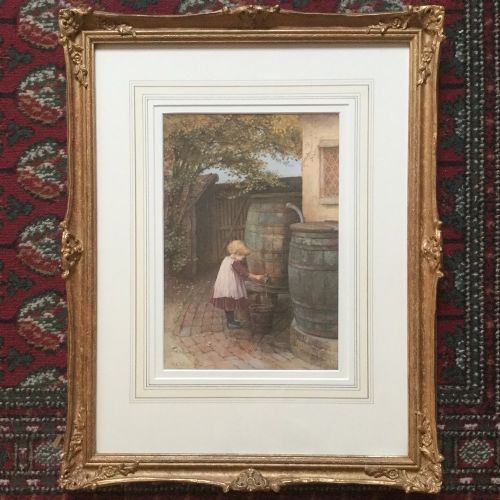
Victorian genre painting paper items primarily comprise original watercolours on paper depicting domestic scenes, rural life, and figurative portraits from the nineteenth century. Buyers encounter works created within the Victorian period, along with related pieces dating around 1900, showing everyday activities such as fishing, sewing, and children playing.
How they were made
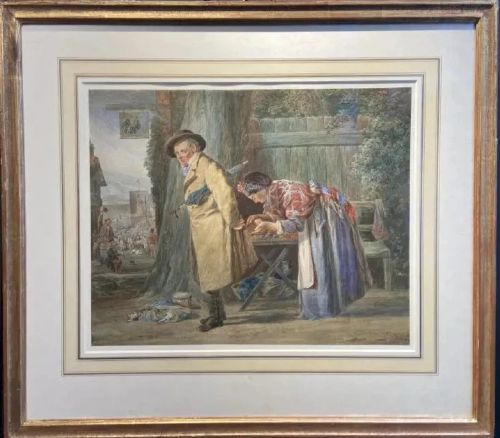
Artists painted these works using watercolour pigment applied directly onto paper supports, sometimes combining ink details to define the figures and settings. The physical construction relies on paper mounted within protective glass and framed in wood or gilt wood to preserve the fragile medium.
Techniques span Victorian genre realism and British impressionism, where layered pigment builds depth in domestic interiors and outdoor landscapes. The works depend upon skilled handling of watercolour washes to capture light across paper surfaces.
Several watercolours delightfully capture young foals stealing fruit from baskets and mischievous children boating on rivers.
What varies in quality
The standard of execution rests upon the artist's brushwork control and the subtlety of colour blending within the watercolour medium. Superior examples display expressive detail in facial expressions and fabric textures, whereas lesser works remain stiff and formulaic.
Condition and preservation also distinguish the pieces, particularly the stability of the paper support and the clarity of the pigments beneath the glass. Works retaining their period frames and clean, unblemished surfaces stand apart from those showing heavy fading or paper degradation.
Sir James Dromgole Linton·Henry Silkstone Hopwood·George Goodwin Kilburne·Charles Edward Wilson·Helena Maguire
The Victorian Genre Painting Paper Glossary
- Watercolour
- A painting method where natural pigments are suspended in a water-based, translucent solution. It is applied to paper to create luminous washes and delicate colour transitions.
- Genre Painting
- Art depicting scenes from everyday life, ordinary people, and domestic interiors. It focuses on narrative moments rather than formal portraiture or grand historical subjects.
- Gilt Wood
- Timber framing coated with a thin layer of gold leaf or metallic gilt finish. It is commonly found protecting nineteenth-century framed watercolours.
- Victorian Realism
- An artistic approach aiming to represent everyday subjects truthfully and accurately without idealisation. It flourished across Britain and Europe during the nineteenth century.
Victorian Genre Painting Paper: Frequently Asked Questions
What subjects appear in these paintings?
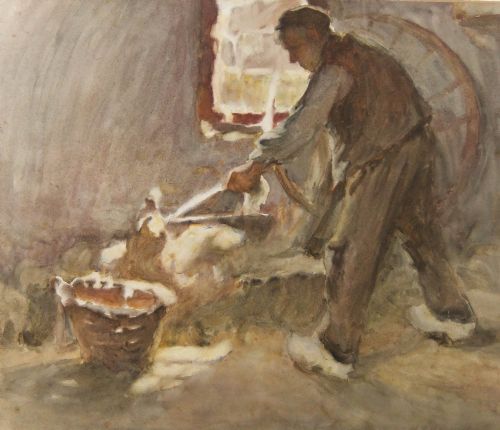
The artworks depict everyday scenes, including rural labourers, children playing in cottage gardens, domestic interiors, and coastal activities. Artists recorded the ordinary routines of nineteenth-century life with careful attention to narrative detail.
Common themes involve figures engaged in manual work, family gatherings, and quiet domestic moments captured outdoors or inside traditional cottages.
How should I display watercolour paper art?
Watercolours require careful placement away from direct sunlight to prevent the pigments from fading over time. Framing behind protective glass shields the delicate paper surface from atmospheric dust and moisture.
Maintaining stable indoor humidity levels helps preserve both the paper support and the timber frame. Hanging pieces on interior walls keeps them safe from temperature fluctuations.
How do I identify the period of a piece?
Dating relies on stylistic markers, artist signatures, framing materials, and inscriptions recorded on the reverse of the work. Nineteenth-century watercolours often feature period handwriting or gallery labels attached to the wood backing.
Clothing styles, interior furnishings, and the specific painting techniques associated with Victorian realism also help narrow down the date of creation.
Are these works always original paintings?
Most listings comprise original hand-painted watercolours created directly on paper by period artists. Some selections include period lithographs produced after original painted compositions.
Examining the surface closely reveals brushstrokes and pigment texture unique to hand-painted works, separating them from mechanical print reproductions.