



Victorian Garden Furniture Set
A victorian garden furniture set brings enduring ironwork and stone into the open air, offering both sturdy seating and period character for outdoor spaces.
Victorian Garden Furniture Set
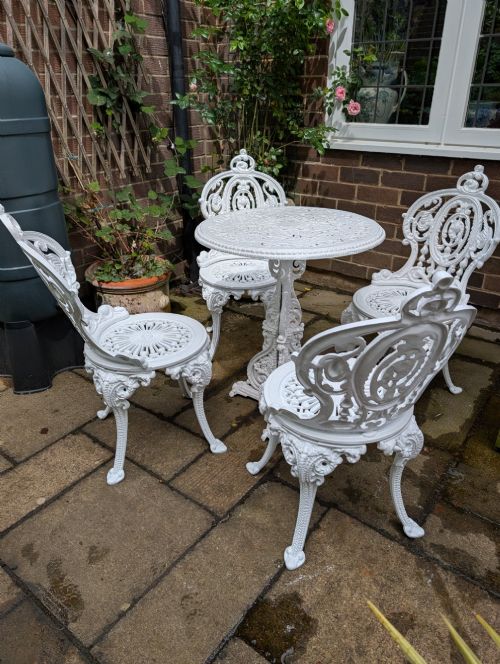
A victorian garden furniture set comprises matched tables, chairs, benches, and bistro settings designed for outdoor use. These arrangements typically pair heavy metal tables with coordinating seating intended to withstand the elements.
The pieces appearing here span from the nineteenth century into later decades like 1930, capturing enduring tastes in outdoor arrangement. Forms range from compact bistro sets to larger dining tables accompanied by four matching chairs or benches.
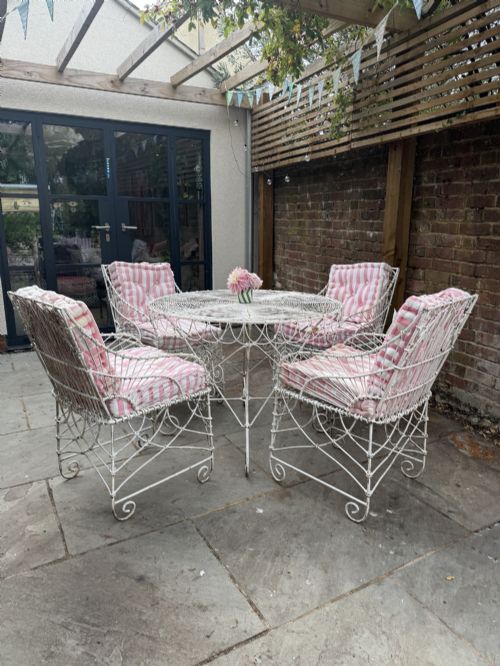
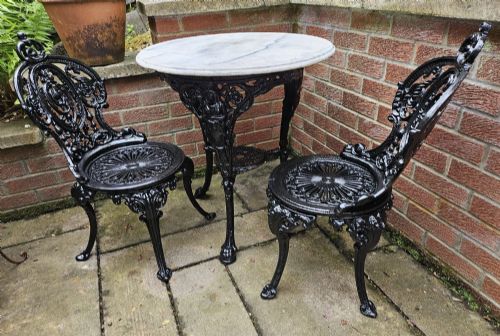
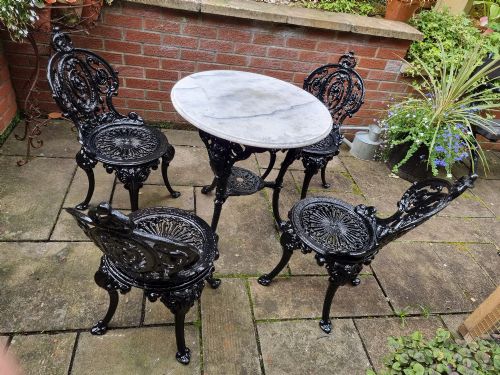
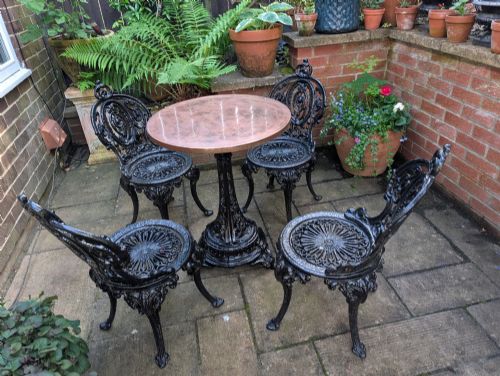
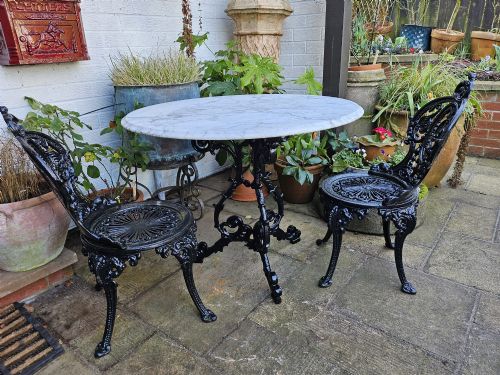
Many examples showcase specific historical styling, including gothic revival patterns and intricate wirework constructions. Buyers encounter configurations featuring marble tops or solid cast metal construction designed for permanent garden placement.
Materials and construction
Foundries utilised heavy cast iron and wrought iron to form durable frames, legs, and decorative chair backs. These metallic elements frequently received protective coats of paint to endure outdoor conditions.
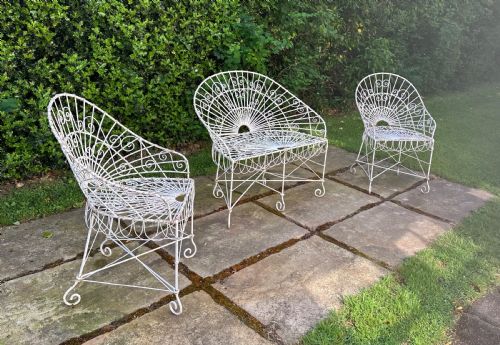
Table surfaces often incorporate contrasting materials such as solid marble or granite slabs fitted to iron bases. Wirework construction also appears, bending metal rods into intricate patterns for lighter structural forms.
Victorian Garden Furniture Set Retail Price Guide 2026
Typical asking prices for victorian garden furniture set among the pieces listed under this phrase on Sellingantiques today, from the lower quarter to the upper quarter. They describe what is for sale here now, not the wider market.
Materials documented across the inventory include cast iron, wrought iron, marble, wirework, paint, granite, fabric, and copper.
Factors of quality
Quality rests heavily on the crispness of the iron casting and the complexity of the design work. Finer sets display deep relief in their patterns and careful finishing on structural joints.
The choice of top material alters the character of a set, with thick marble or granite slabs representing more substantial production than standard metal tops. Associated maker attributions or distinct foundry designs elevate specific pieces above standard utility items.
Christopher Dresser·Val D'osne
The Victorian Garden Furniture Set Glossary
- Cast iron
- Molten metal poured into a mould to create rigid, highly detailed furniture frames. This material provides the substantial weight characteristic of period garden pieces.
- Wirework
- Metal rods shaped and welded into intricate open patterns. It creates lighter, resilient chairs and tables distinct from solid cast forms.
- Bistro set
- A small table paired with two matching chairs intended for compact spaces. These arrangements suit smaller patios and balconies.
- Gothic revival
- A design style drawing on medieval architectural motifs such as pointed arches and pointed tracery. It appears frequently on nineteenth-century bench and chair backs.
Victorian Garden Furniture Set: Frequently Asked Questions
What is a victorian garden furniture set made of?
These sets rely primarily on heavy cast iron and wrought iron for their structural frames and decorative components. Surviving examples frequently incorporate stone elements such as marble or granite tops.
Additional materials include wirework constructions and applied paint finishes. Fabric occasionally appears on associated seating components.
How do I care for iron garden furniture?
Cast and wrought iron pieces require protection from prolonged moisture to prevent oxidation. Maintaining an appropriate painted coating safeguards the metal surfaces.
During harsh winter months, storing stone-topped tables and delicate wirework indoors prevents frost damage. Regular cleaning removes debris from intricate casting crevices.
Are these sets suitable for daily outdoor use?
Period iron furniture is inherently robust and built to withstand outdoor environments. Their substantial weight prevents them from being easily displaced by wind.
While durable, stone tops and painted iron benefit from sensible placement on stable ground. Using protective covers during extreme weather extends their longevity.
How can I identify gothic revival styling?
Gothic revival pieces feature architectural motifs borrowed from medieval buildings. Look for pointed arches, trefoils, and vertical tracery incorporated into the chair backs and bench ends.
These designs impart a severe, ecclesiastical elegance distinct from floral or rustic garden motifs. Foundries often paired these structural patterns with heavy cast iron frames.