


Victorian French Bureau Desk
When you search for a victorian french bureau desk, you are looking at writing furniture shaped by continental taste during the nineteenth century.
Victorian French Bureau Desk
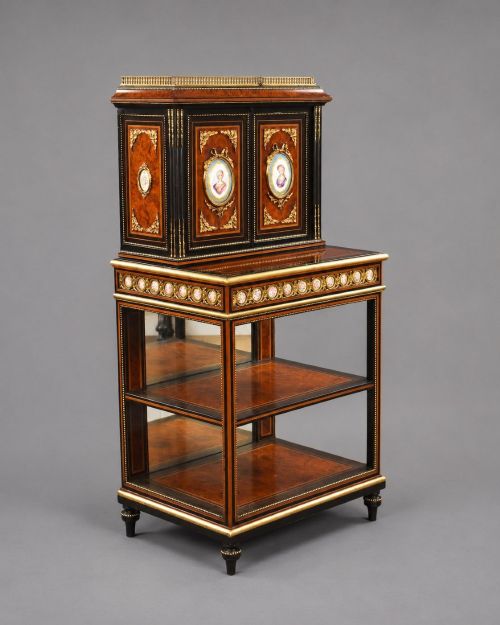
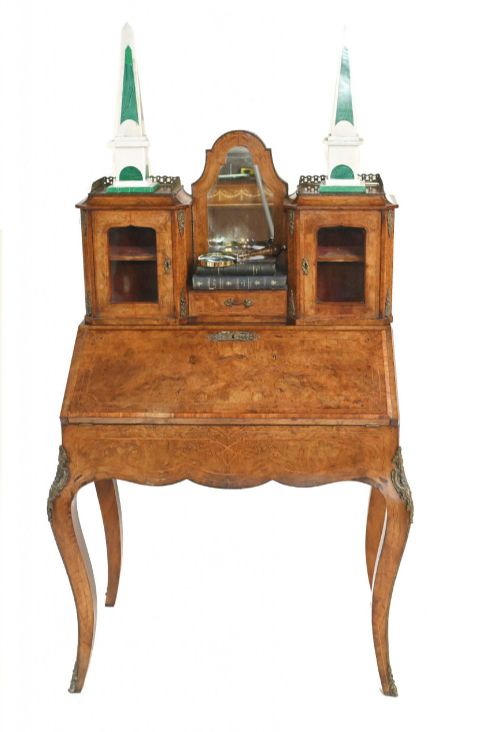
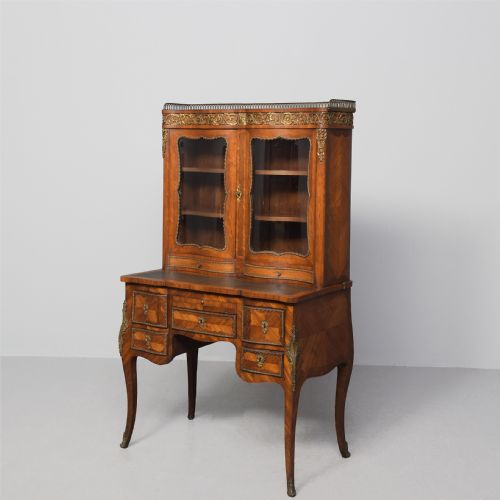
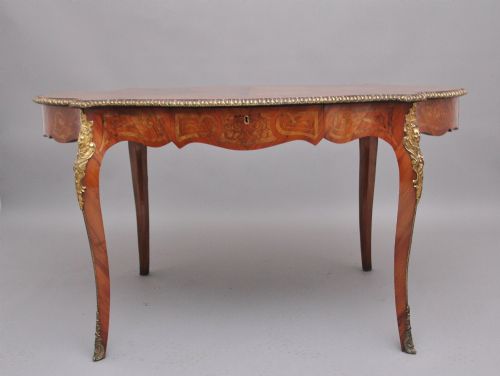
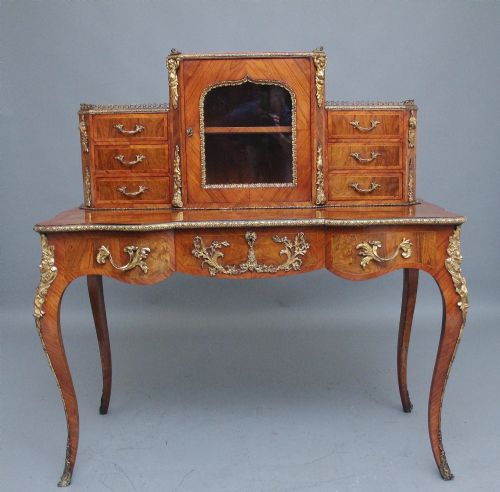
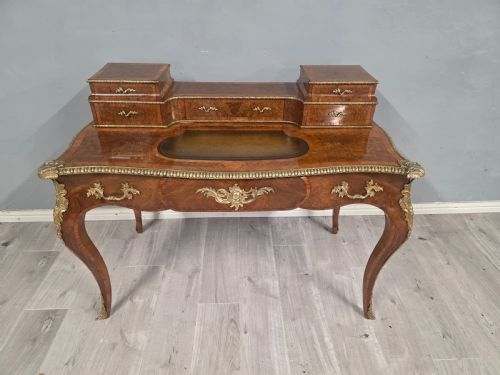
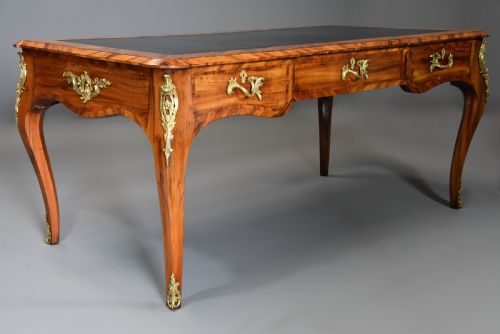
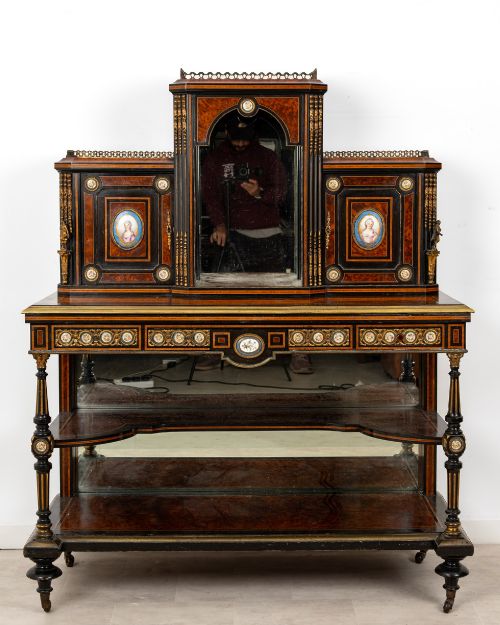
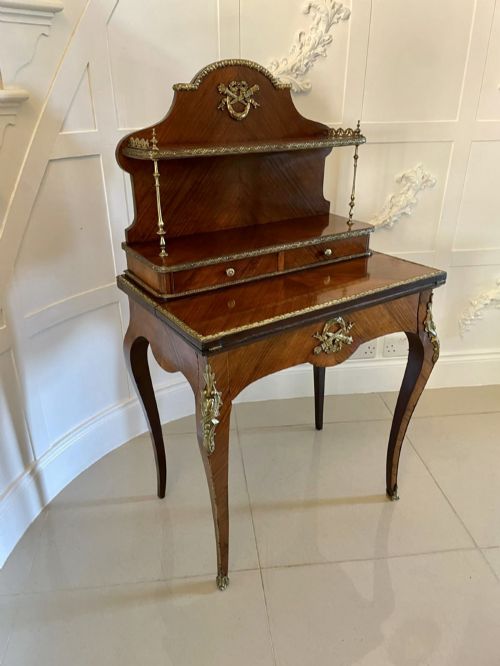
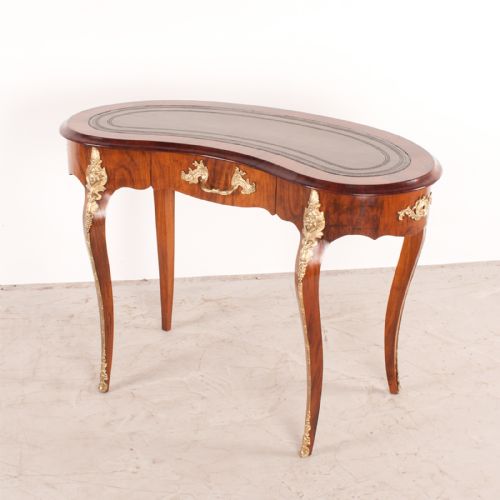
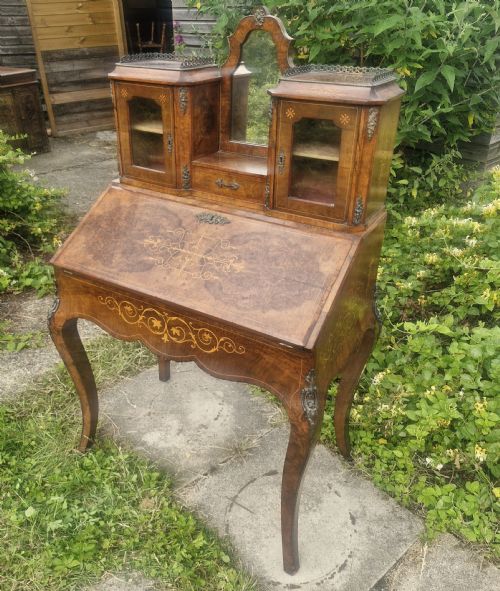
A victorian french bureau desk combines domestic writing furniture with continental design revivals from the nineteenth century. These pieces appear as compact bonheur du jour cabinets, kidney-shaped writing tables, and formal bureau plat designs.
The forms span decades from the mid-nineteenth century onward, drawing heavily on Louis XV and Rococo revival aesthetics. Buyers frequently encounter smaller ladies writing desks fitted with superstructure tiers, pigeonholes, and drawers.
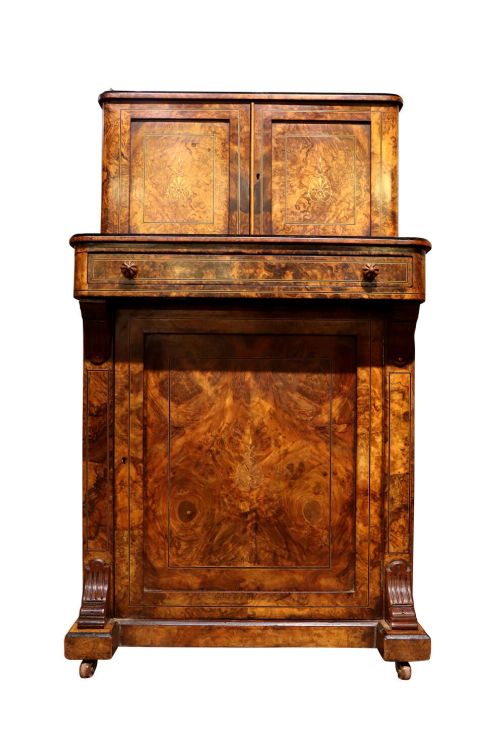
Woods such as walnut, kingwood, rosewood, and amboyna form the primary carcasses of these writing pieces. Many examples incorporate intricate parquetry and marquetry patterns alongside brass and ormolu mounts.
How They Were Made
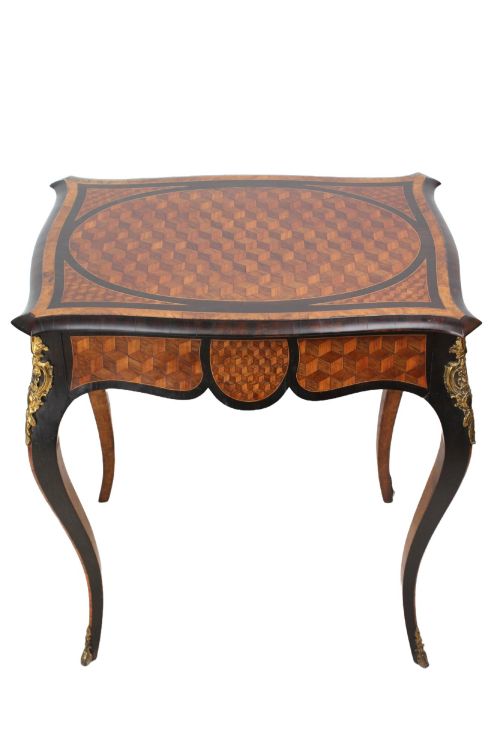
Cabinetmakers utilised dense timbers like burr walnut, kingwood, and rosewood over sturdy pine or mahogany carcases, applying sliced veneers to curved and serpentine surfaces. Marquetry and parquetry panels were hand-cut and fitted into the timber surfaces to create geometric or floral motifs.
Cast ormolu mounts and brass stringing provide decorative accents, fixed carefully around drawers, aprons, and legs. Leather writing inserts were traditionally glued into recessed desk tops, often framed by gilt tooling.
Victorian French Bureau Desk Retail Price Guide 2026
Typical asking prices for victorian french bureau desk among the pieces listed under this phrase on Sellingantiques today, from the lower quarter to the upper quarter. They describe what is for sale here now, not the wider market.
Listings feature woods including walnut, kingwood, rosewood, amboyna, and satinwood combined with brass and ormolu mounts.
What Varies in Quality
The refinement of the timber selection dictates much of the visual hierarchy among these writing desks. Highly figured burr walnut, matched kingwood veneers, and dense amboyna separate standard production pieces from exhibition-grade furniture.
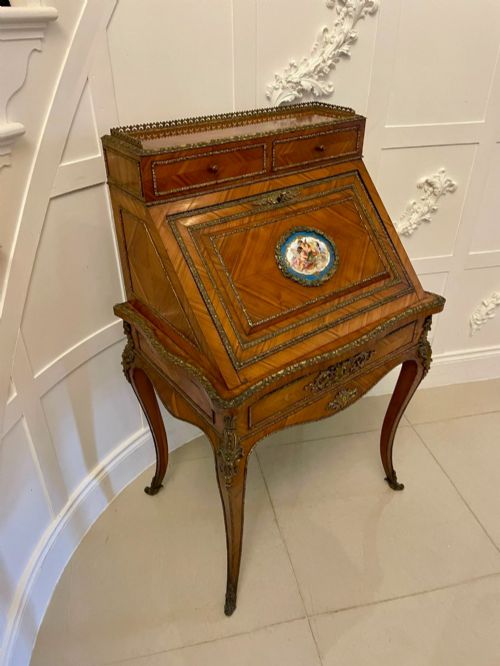
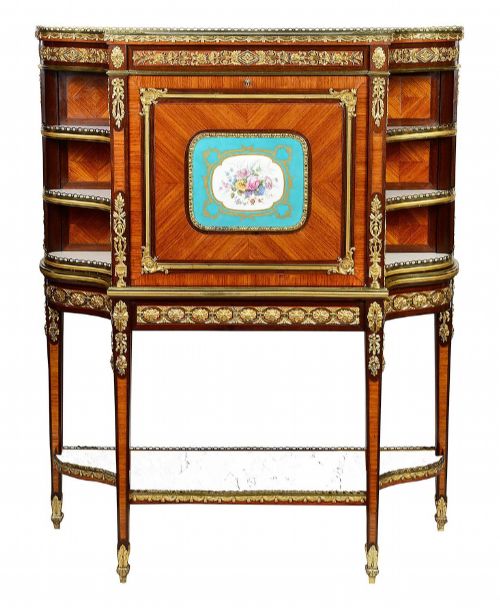
Casting detail in the ormolu mounts and the crispness of hand-cut marquetry reveal the maker's skill. Finer examples integrate porcelain plaques, such as Sevres inserts, and feature fully finished drawer linings constructed from secondary hardwoods.
JAS Shoolbred·Durand·Blake·Donald Ross·Edwards and Roberts
The Victorian French Bureau Desk Glossary
- Bonheur du jour
- A light lady's writing desk featuring a small cabinet or tier of drawers and pigeonholes on top of the writing surface. This form gained popularity during the mid-nineteenth century French revivals.
- Bureau plat
- A flat-topped writing table, typically freestanding with one or more drawers in the frieze. These desks often exhibit cabriole legs and ormolu mounts.
- Ormolu
- Gilded bronze mounts cast and chased by hand to ornament the corners, aprons, and legs of cabinet furniture. It adds bright metallic contrast to dark woods.
- Marquetry
- Decorative veneer patterns formed by fitting together thin slices of different coloured woods to create pictorial or floral designs. It requires steady precision and seasoned materials.
- Parquetry
- Geometric wood inlay forming repeating patterns such as cubes or chequers across tabletops and drawer fronts. Cabinetmakers used contrasting timbers to achieve optical depth.
Victorian French Bureau Desk: Frequently Asked Questions
What is a bonheur du jour?
A bonheur du jour is a small, elegant writing desk featuring an upper tier of enclosed compartments, small drawers, or shelves above the main writing surface. These pieces were designed primarily for ladies to write letters and keep stationery.
Originating in France, the form enjoyed immense popularity during the Victorian era through various revival movements. They often incorporate fine veneers, marquetry, and porcelain plaques.
How do I use a bureau desk today?
These antique desks function well as compact workspace additions in modern studies, bedrooms, or living rooms. Their surface areas accommodate laptops and notebooks while providing compartments for small stationery items.
Care involves maintaining moderate room humidity to protect delicate wood veneers and leather writing surfaces. Gentle dusting and occasional wax polish keep the timber finishes nourished.
What woods were used on these desks?
Cabinetmakers relied on exotic and domestic hardwoods to achieve rich surface textures and colours. Burr walnut, kingwood, rosewood, amboyna, and satinwood appear frequently across these nineteenth-century pieces.
These timbers were often cut into thin veneers and arranged in symmetrical grain patterns or contrasting parquetry borders. Secondary woods like mahogany or oak form the internal drawer structures.
How do I date a Victorian French desk?
Dating relies on examining construction methods, secondary woods, hardware styles, and design motifs. Pieces bearing specific revival styles like Louis XV often date from the mid to late nineteenth century.
Maker stamps, stamps on drawer edges, and trade labels also help narrow the timeline. Stylistic elements such as ormolu casting quality and porcelain inserts correspond to Victorian exhibition standards.