



Victorian Four Poster
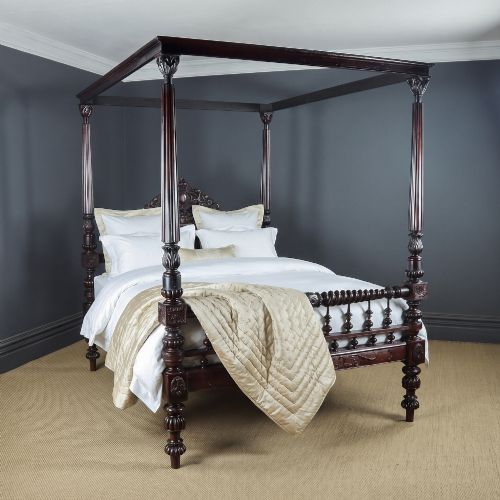
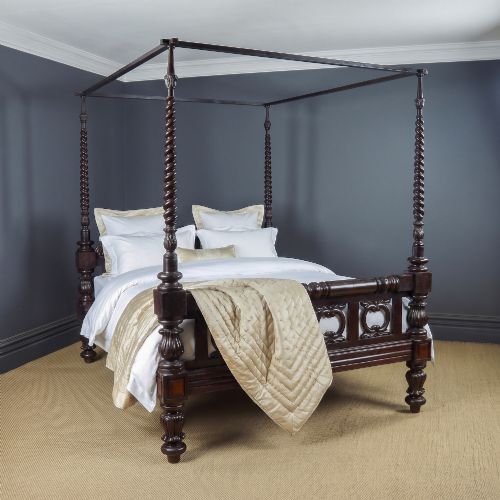
These robust victorian four poster beds and half tester bedsteads bring grand architectural presence to a bedroom, combining substantial timber frames with soaring posts.
Victorian Four Poster
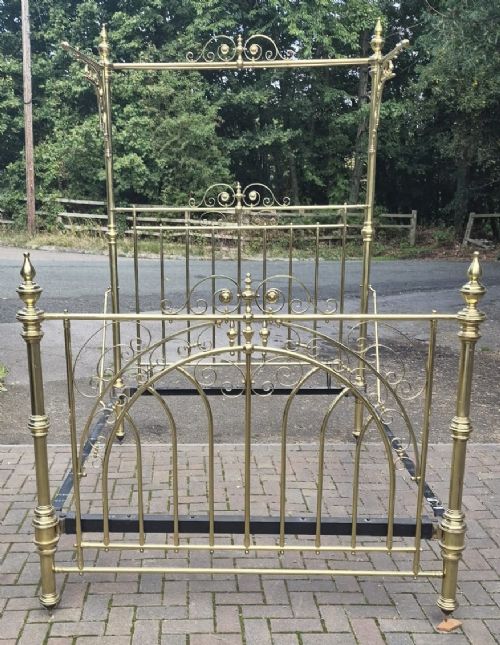
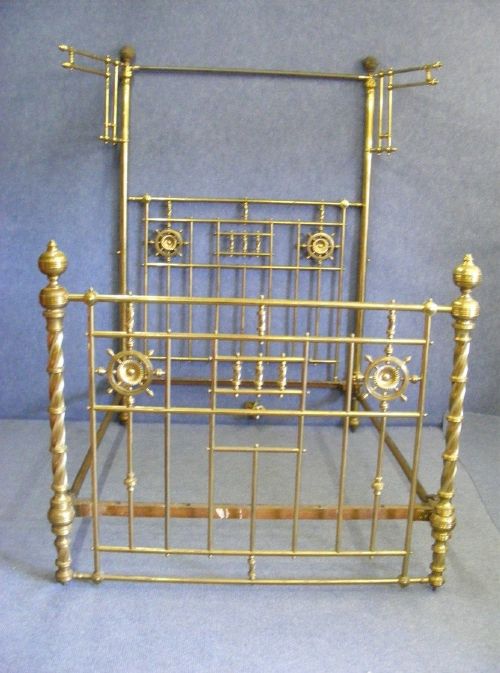
A search for victorian four poster reveals substantial sleeping furniture ranging from massive timber frames to gleaming metal bedsteads. Mahogany remains a dominant material alongside oak, while brass half tester designs provide a lighter alternative to full wooden canopies.
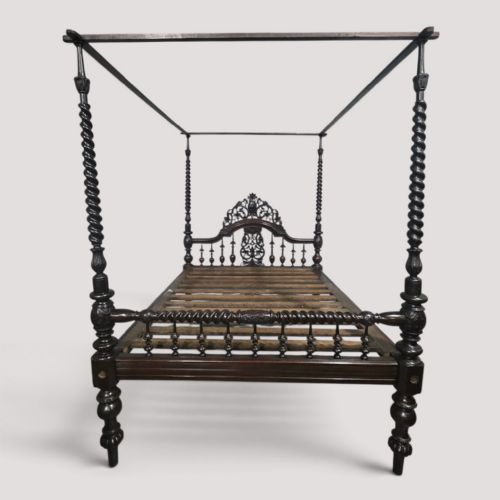
Beyond standard domestic scales, the listings include Anglo-Indian colonial pieces displaying intricate carved detail, alongside miniature doll furniture and pet beds made for dogs. Architectural salvage items such as carved oak bed posts also appear within the selection.
The aesthetic stretches from classical revival lines to Gothic influences and Anglo-Indian colonial forms. Pieces span the nineteenth century, taking in both robust nineteenth century constructions and lighter twentieth century interpretations of earlier styles.
Materials and construction
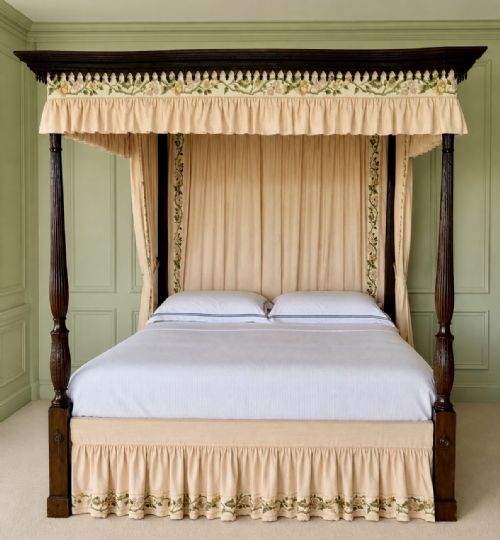
Makers utilised dense timbers such as mahogany, hardwood and oak to build the structural framework of wooden tester beds. Carved details adorn posts and headboards, requiring skilled joinery to support the substantial canopy structures above.
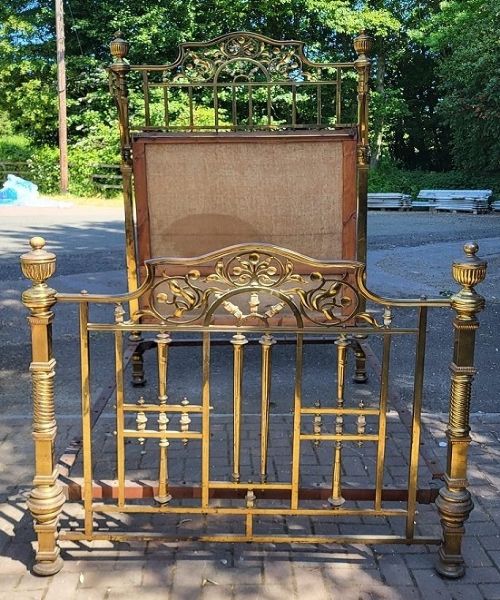
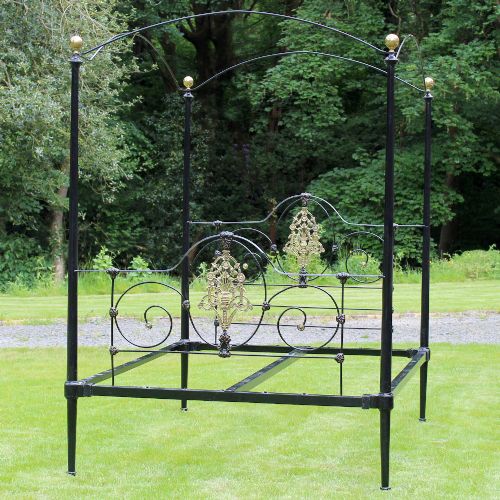
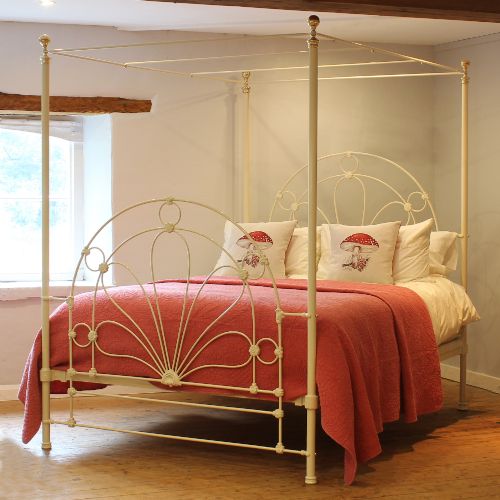
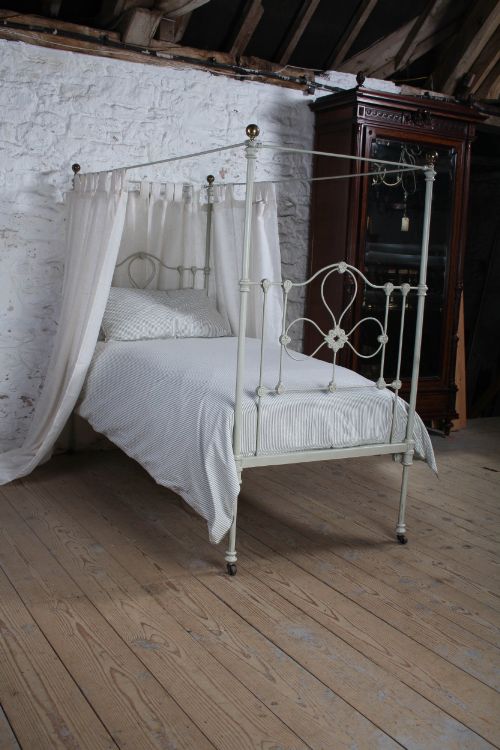
Metal frames rely on brass, iron, cast iron and wrought iron, often combined with porcelain elements or fabric dressings. Brass half tester beds harness metal casting techniques to form elaborate curved headboards and sturdy vertical supports.
Victorian Four Poster Retail Price Guide 2026
Typical asking prices for victorian four poster among the pieces listed under this phrase on Sellingantiques today, from the lower quarter to the upper quarter. They describe what is for sale here now, not the wider market.
Canines also shared in the grand aesthetic, as evidenced by a nineteenth century mahogany dog four poster bed.
Judging quality and proportion
Proportion and scale dictate the visual weight of a tester bed within a room. Finer pieces display crisp, deep carving in the timber or heavy gauge solid brass tubing rather than thin plated alternatives.
The integrity of the original joints and the quality of the timber grain separate standard production from exhibition pieces. Maker attribution also elevates certain brass and mahogany examples.
Howard And Sons·R W Winfield
The Victorian Four Poster Glossary
- Half tester
- A bed with a canopy projecting only partway over the head of the bed rather than covering the full length. This design supports curtains or drapes around the pillow area.
- Tester
- The flat wooden canopy or ceiling suspended above a four poster bed. It often carries decorative moulding or supports fabric hangings.
- Anglo-Indian
- Furniture made in India by local craftsmen during the British colonial period, typically utilising dense tropical hardwoods with deep carved decoration. These pieces often incorporate classical British forms.
- Bedstead
- The framework of a bed supporting the mattress and springs, distinct from the bedding itself. In nineteenth century usage, the term frequently applies to metal and iron frames.
- Architectural salvage
- Building elements or fittings rescued from demolished structures and repurposed. In this context, it includes individual carved bed posts removed from dismantled bedframes.
Victorian Four Poster: Frequently Asked Questions
Will a four poster bed fit in a standard modern bedroom?
These beds require careful measurement of ceiling height and floor space before purchase. Many Victorian examples arrive in king or super king sizes with substantial vertical posts.
Lower height variations also exist within the selection for rooms with restricted vertical clearance.
How do I distinguish between wooden and brass frames?
Wooden frames utilise dense hardwoods like mahogany and oak, often featuring carved structural posts and tester canopies. Brass frames rely on metal tubing, sometimes paired with iron components and porcelain detailing.
Half tester variants frequently combine metal frames with wall-mounted or ceiling-hung canopies.
How should I care for antique mahogany and brass?
Timber surfaces require regular dusting and occasional treatment with appropriate wax to maintain the grain and finish. Metal elements need gentle cleaning to prevent tarnishing without stripping patination.
Checking structural joints periodically ensures the stability of large timber and iron frames.