
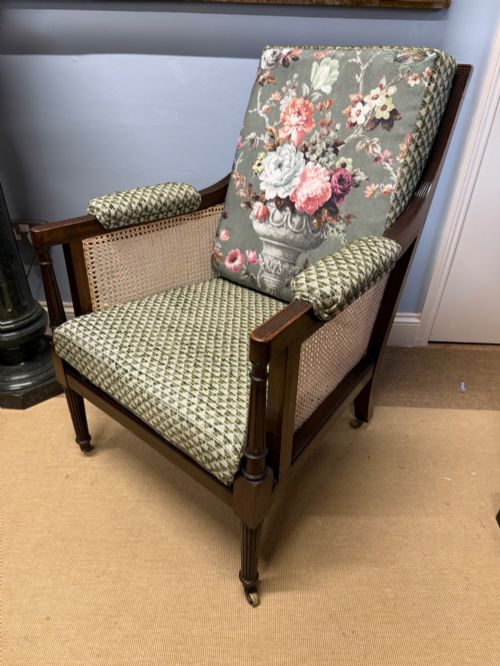
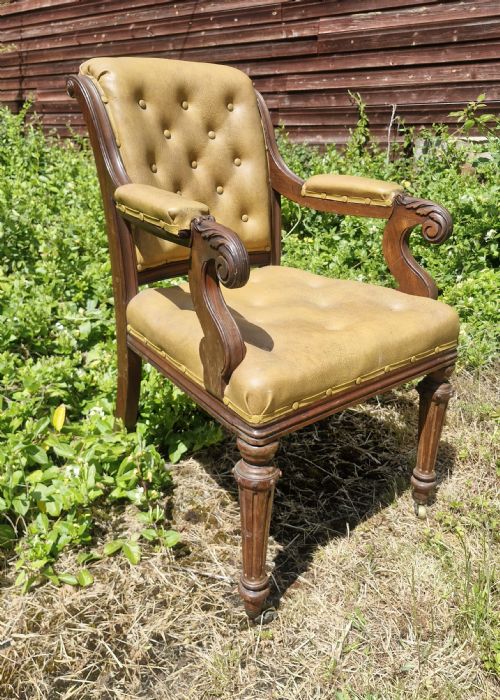


Victorian Fluted Leg Chairs
Victorian fluted leg chairs offer sturdy timber framing and refined carved supports, bringing steady nineteenth-century character to any room.
Victorian Fluted Leg Chairs
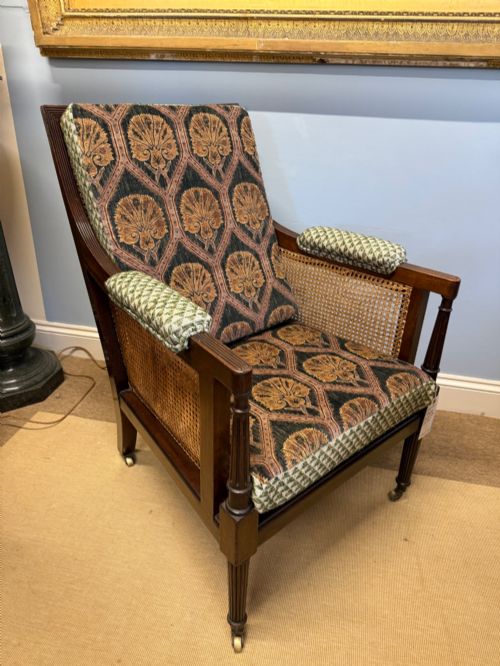
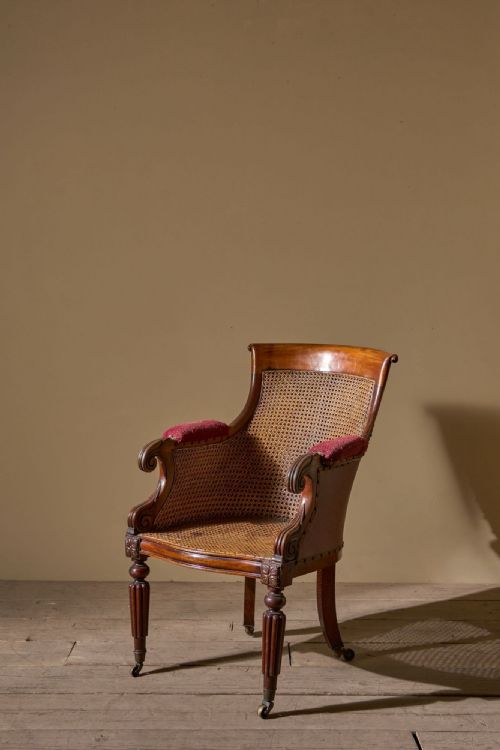
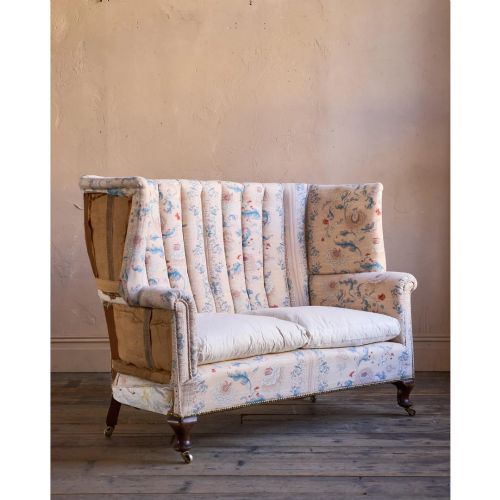
Victorian fluted leg chairs encompass a range of seating forms including dining chairs, armchairs, desk chairs, salon chairs, and sofas. Buyers investigating Victorian fluted leg chairs encounter nineteenth-century pieces spanning the 1850s, 1860s, 1870s, and 1900, with styles extending from Louis XVI Revival to George III Revival.
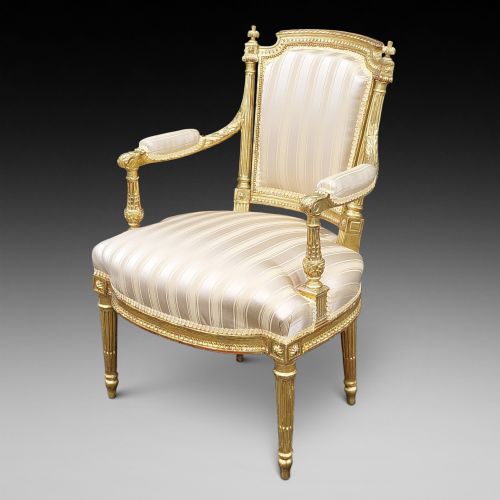
Country house pieces sit alongside giltwood salon chairs, showing how makers adapted classical fluting across formal and informal domestic settings. Each design relies on turned or carved vertical channels on the legs to add architectural rhythm to the frame.
Materials and construction
Cabinet makers built these frames using dense hardwoods like mahogany and walnut, which held crisp carved details along the fluted supports. Joinery techniques relied on traditional mortise and tenon construction to ensure structural rigidity across dining sets and heavy armchairs.
Upholstered items incorporated supportive webbing and natural stuffing beneath linen, hessian, and decorative fabric layers. Cane seating panels were tightly hand-woven into shaped wooden apertures, while giltwood salon frames received delicate layers of gold leaf over prepared gesso surfaces.
Listings feature mahogany, walnut, and giltwood frames paired with cane, hessian, and linen upholstery across the nineteenth century.
Determining quality
Quality rests upon the crispness of the hand-carved fluting on the legs and the structural integrity of the underlying hardwood frame. Superior examples display balanced proportions, tight joints, and refined secondary woods that endure heavy daily use without lateral movement.
The refinement of the upholstery work, the quality of the cane weaving, and the presence of documented workshop attribution separate standard production from exceptional pieces. Attention to detail in the turning and carving marks the distinction between utilitarian seating and high-status commission work.
Gillows
The Victorian Fluted Leg Chairs Glossary
- Fluting
- A series of shallow, parallel vertical grooves carved into a column or furniture leg. This classical detail draws the eye upward and adds visual lightness to heavy timber supports.
- Bergere
- An enclosed upholstered armchair with wooden framing exposed around the sides and back. The armrests typically feature closed upholstered panels rather than open woodwork.
- Fauteuil
- An open-armed upholstered armchair originating in France, featuring exposed wooden arms and a carved frame. Giltwood versions were particularly popular in formal nineteenth-century reception rooms.
- Barrel back
- A seating form where the curved backrest wraps continuously around to form enclosed armrests. This design provides enclosed comfort and draught protection.
- Giltwood
- Timber that has been coated with a thin layer of gold leaf or gold paint for decorative effect. It appears frequently on formal nineteenth-century salon chairs in revival styles.
Victorian Fluted Leg Chairs: Frequently Asked Questions
How do I care for antique mahogany frames?
Keep wooden surfaces away from direct sunlight and heat sources to prevent the timber from drying out and splitting. Apply a microcrystalline wax periodically and buff gently with a soft cloth to maintain the natural sheen.
Avoid using modern liquid polishes containing silicone, which can build up and damage the historic finish over time. Dust regularly with a dry, lint-free cloth.
Are these chairs suitable for daily dining?
Dining chairs from the nineteenth century were built with robust hardwood frames designed for regular household use. Checking the joinery ensures they remain stable enough for modern dining tables.
Heavier armchairs and library chairs offer sturdy support, though delicate giltwood salon chairs are better suited for lighter daily use or decorative placement.
How do I distinguish revival styles from original pieces?
Revival pieces incorporate eighteenth-century design motifs, such as Louis XVI or George III characteristics, executed with nineteenth-century manufacturing techniques and timber selections. Examination of tool marks, joint construction, and secondary woods helps clarify the exact period of manufacture.
Stylistic cues often blend Victorian proportions with classical ornamentation.