

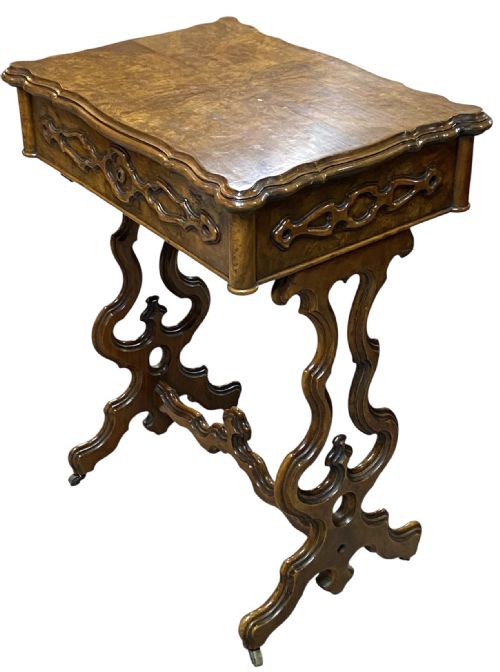


Victorian Figured Walnut Furniture
Victorian figured walnut furniture brings rich grain and warm tone to a room, offering practical utility through desks, tables, and cabinets.
Victorian Figured Walnut Furniture
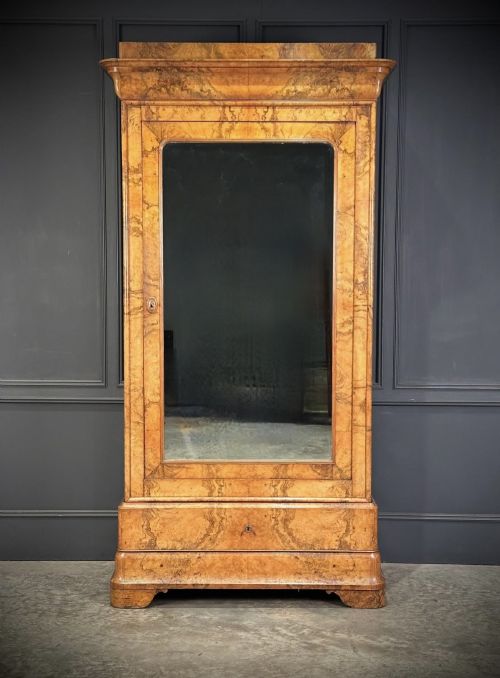
Victorian figured walnut furniture encompasses a diverse selection of domestic pieces produced across the nineteenth century, ranging from intimate work tables and canterburys to substantial bookcases, credenzas, and wardrobes. These items showcase the distinctive figuring of walnut timber, often enriched with burr veneers and marquetry inlay that elevate simple functional forms into decorative centrepieces.
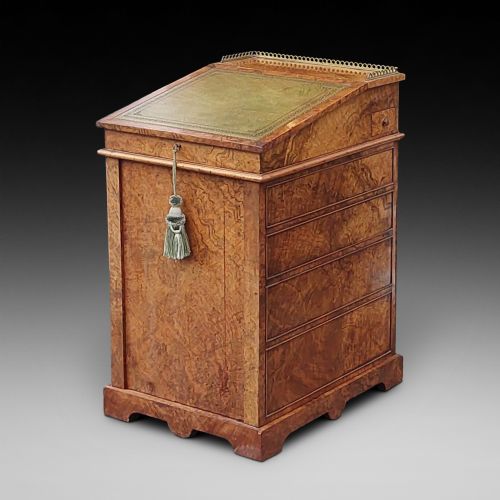
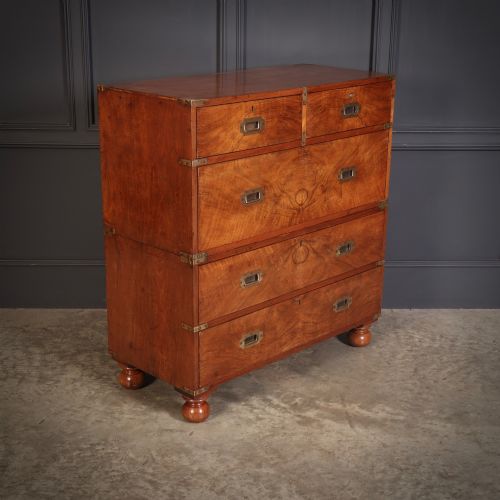
Buyers browsing this selection will most frequently encounter living and entertaining furniture from the mid-Victorian decades, particularly items dated around the eighteen-fifties, sixties, and seventies. Desks, canterburys, and various table forms dominate the range, alongside specialised storage pieces such as Wellington chests and pier cabinets.
The objects originate from the broader Victorian era, spanning early nineteenth-century workshops through to pieces dated up to eighteen-eighty. Makers utilised the striking natural patterns of walnut to create functional household items that doubled as displays of domestic refinement.
Materials and construction
Cabinet makers constructed these pieces using solid walnut and applied veneers of figured and burr walnut over secondary timbers to achieve striking decorative surfaces. Brass mounts, leather writing surfaces, and mirror glass were integrated into desks, cabinets, and dressing tables to enhance both function and appearance.
Ornaments such as ormolu mounts and intricate marquetry inlay frequently embellished credenzas and davenports, requiring precise hand-cutting of diverse woods. Traditional joinery methods secured the structural integrity of chests of drawers, tables, and canterburys, ensuring durability alongside visual complexity.
Victorian Figured Walnut Furniture Retail Price Guide 2026
Typical asking prices for victorian figured walnut furniture among the pieces listed under this phrase on Sellingantiques today, from the lower quarter to the upper quarter. They describe what is for sale here now, not the wider market.
Apprentice chests allowed young woodworkers to demonstrate their mastery of dovetails and drawer fitting on a miniature scale before graduating to full-sized furniture.
Quality variations
The grade of timber selection distinguishes standard items from exceptional examples, with highly figured and burr walnut veneers creating dynamic surface patterns across the primary planes. Master workshops invested greater care in matching grain patterns symmetrically across drawer fronts and table tops.
The complexity and execution of secondary decorative elements, such as marquetry inlay, brass hardware, and ormolu details, set superior pieces apart. Structural refinement in smaller mechanisms, such as writing slides in davenports or pivoting leaves on tables, reflects the tier of craftsmanship involved.
Holland & Sons·Gillows of Lancaster
The Victorian Figured Walnut Furniture Glossary
- Figured walnut
- Timber exhibiting wavy, swirling, or mottled grain patterns prized for decorative cabinet work. It is sliced into veneers to cover larger surfaces.
- Burr walnut
- Wood taken from a tree growth or burl, featuring intricate cluster formations of small knots. This material creates highly prized, richly textured panels on Victorian furniture.
- Canterbury
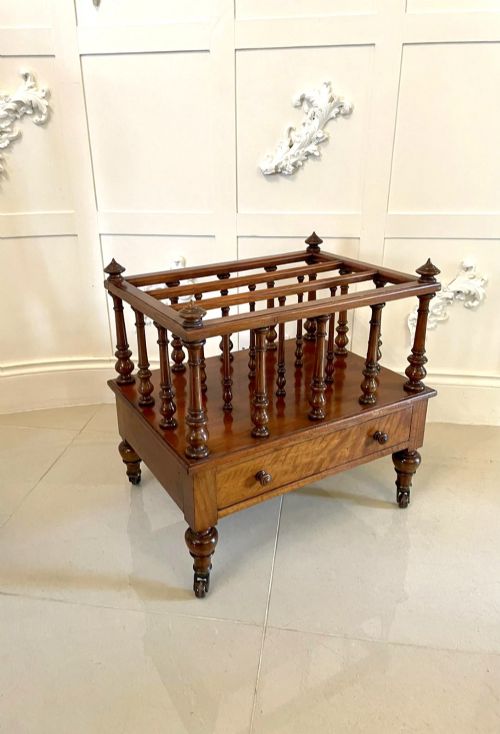
- A low stand with partitions designed for holding sheet music, books, or magazines. Many examples feature slender legs and small drawers below.
- Credenza
- A sideboard or low cabinet intended for display and storage, often fitted with glass doors and decorative marquetry. These pieces became prominent in nineteenth-century formal interiors.
- Wellington chest
- A tall, narrow chest of drawers secured by a hinged locking side stile that fastens with a key. This form originated in the early nineteenth century for efficient storage.
Victorian Figured Walnut Furniture: Frequently Asked Questions
How do I care for walnut furniture?
Walnut furniture requires protection from direct sunlight and extreme humidity fluctuations to prevent veneer cracking and timber warping. Regular dusting with a soft, dry cloth preserves the finish without requiring heavy polishes.
Keeping the wood away from direct heat sources maintains the stability of the antique timber and applied veneers over time.
What is a pier cabinet?
A pier cabinet is a low display piece designed specifically to fit against the wall space between windows, known as the pier. These cabinets frequently feature glazed doors and decorative ormolu mounts.
Victorian homes utilised these units to display ceramics and ornaments while complementing the symmetry of the room's architecture.
How do I identify a Victorian piece?
Victorian pieces often display characteristic timber choices, such as figured and burr walnut, combined with specific construction methods like hand-cut dovetails. Design motifs and hardware styles correspond to the manufacturing standards of the nineteenth century.
Consulting date markers within listings, such as eighteen-fifty or eighteen-seventy, helps place the object within its specific decade of production.