

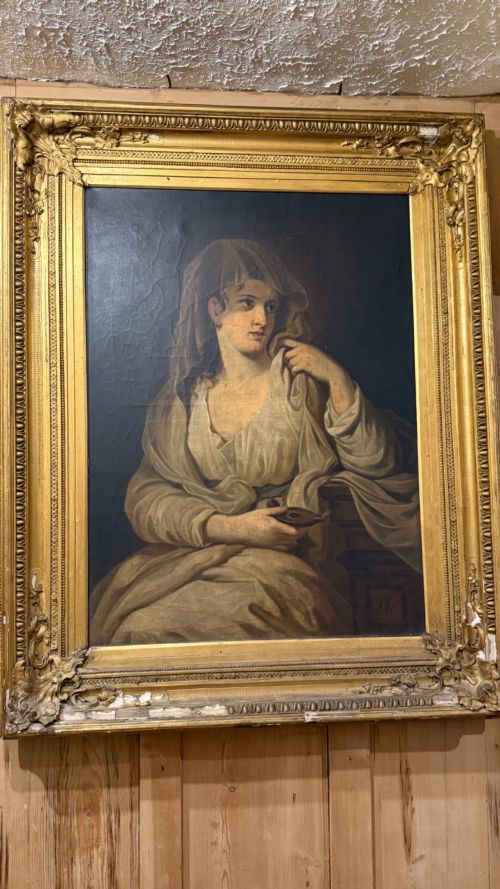

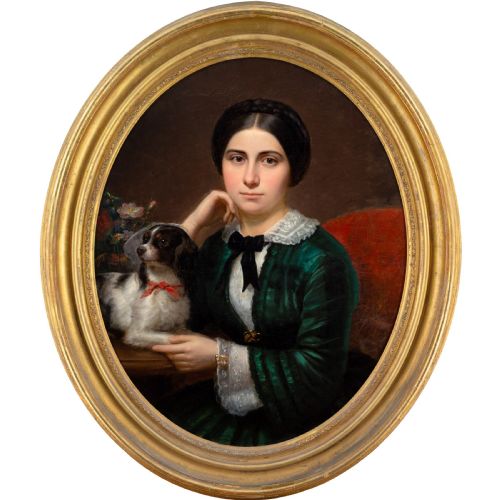
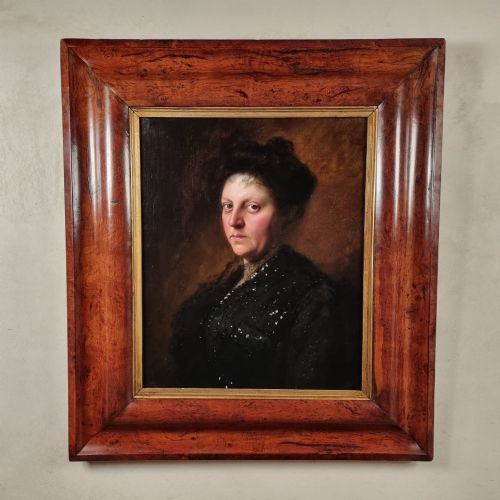
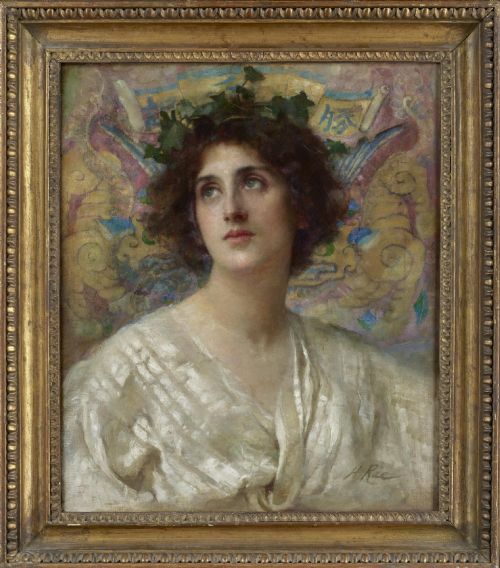
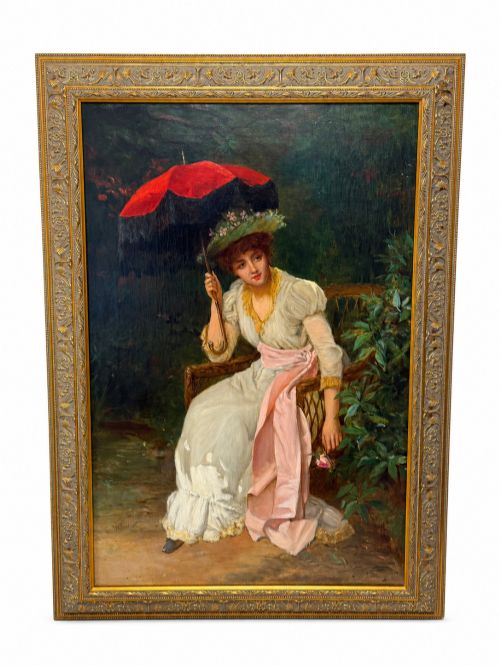
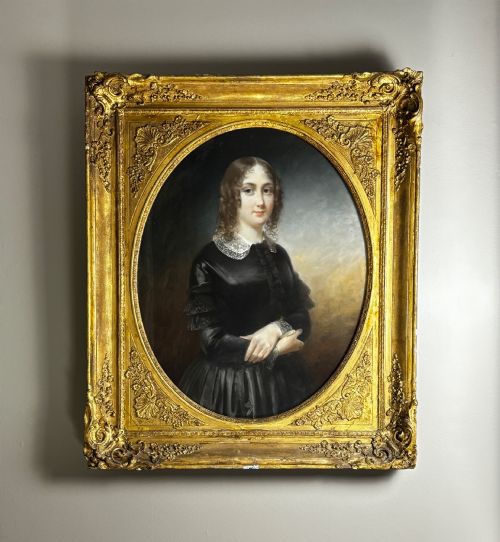
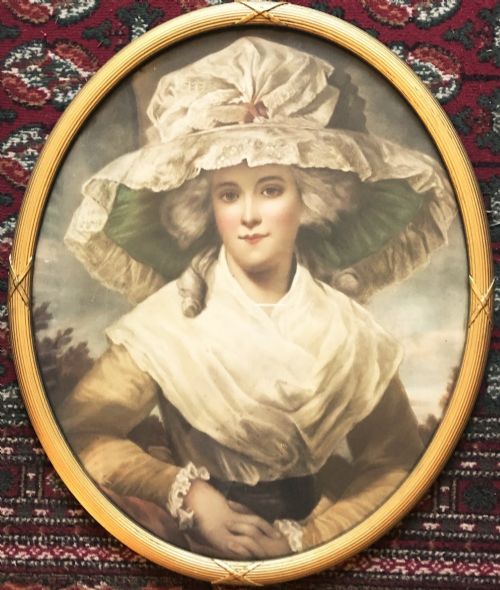
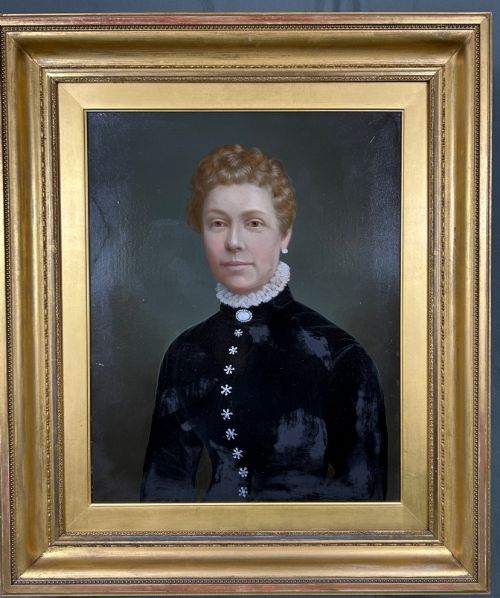
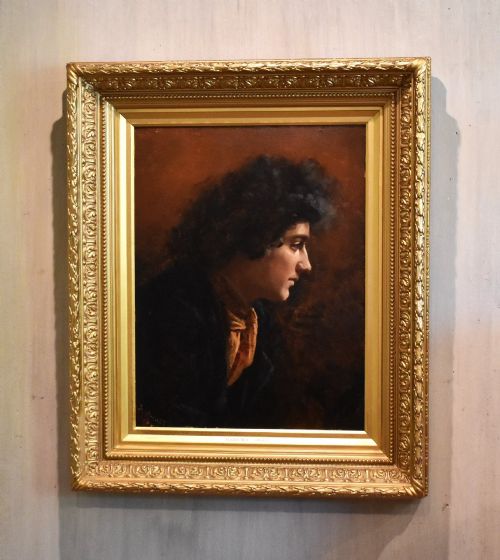


Victorian Female Portrait Oil
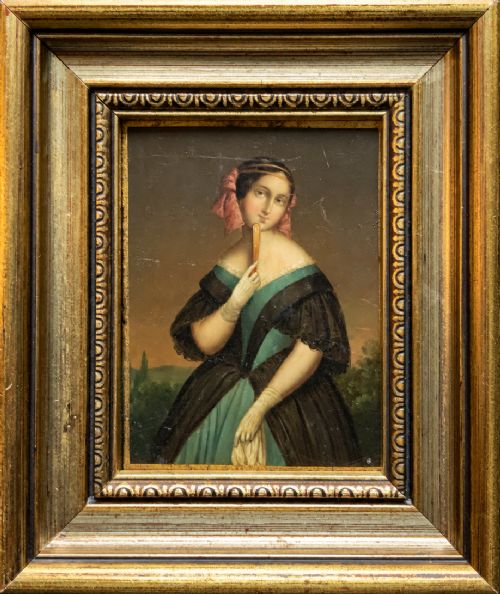
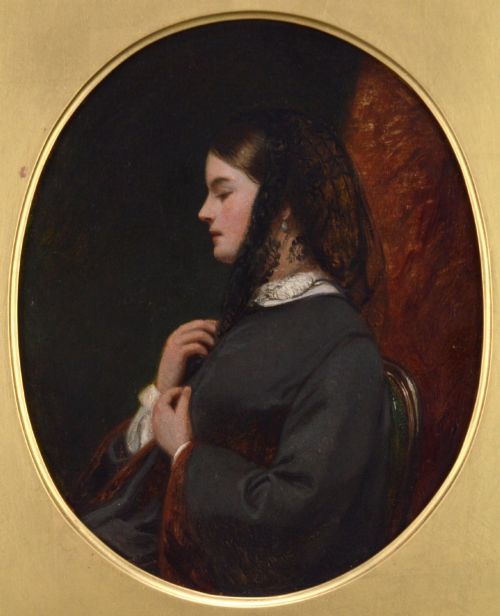
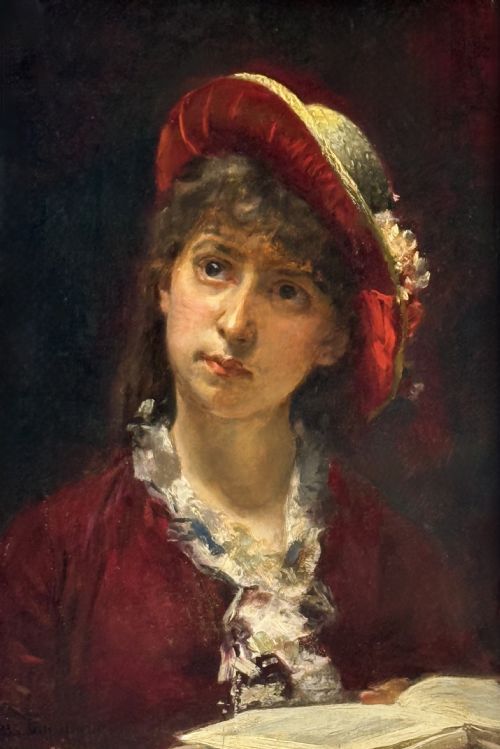
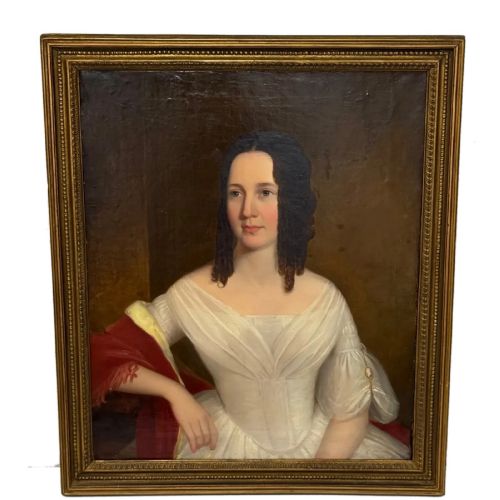
A victorian female portrait oil captures the likeness of women from the nineteenth century through layered pigment and canvas.
Victorian Female Portrait Oil
A victorian female portrait oil brings nineteenth-century sitters into domestic spaces through painted depictions on canvas or board. These works range from intimate bust-length studies of young women to large-scale representations of society figures and aristocrats.
The selections here encounter the era through diverse stylistic lenses, including French Academic, Impressionist, and Neoclassical approaches. Many works record specific individuals with documented biographies, while others capture anonymous subjects set against woodland pools or domestic interiors.
Materials and Technique
Artists built these portraits using oil paint applied to stretched canvas, wood panels, or boards. Pigments were layered to achieve depth in fabrics like velvet and silk, often complemented by detailed brushwork on lace, bonnets, and accessories.
Finished paintings were commonly housed in heavy wooden surrounds, frequently utilising gilded wood, gesso mouldings, or ebony frames to enhance the visual weight of the composition.
Victorian Female Portrait Oil Retail Price Guide 2026
Typical asking prices for victorian female portrait oil among the pieces listed under this phrase on Sellingantiques today, from the lower quarter to the upper quarter. They describe what is for sale here now, not the wider market.
Listings feature works spanning the nineteenth century, utilising oil on canvas, wood, and gesso frames within Victorian and Academic styles.
Distinctions in Quality
Quality rests upon the artist's ability to render facial expression, hand gestures, and textile textures with anatomical conviction and psychological presence. Finer examples demonstrate sophisticated management of light across skin tones and drapery.
The execution of the surrounding frame also influences the overall standing of a piece, with period-appropriate giltwood and gesso surrounds contributing to the historical integrity of the artwork.
Henrietta Rae·William Oliver·Florence Small·Thomas Edward Roberts·John Robert Dicksee·Louis William Desanges·Alexander Maclean·August Heinrich Riedell·William Edward Frost·William Joseph Carroll
The Victorian Female Portrait Oil Glossary
- Oil on Canvas
- Pigment mixed with drying oil applied to a woven fabric support. This combination allowed artists to work with rich colour blending and textured brushstrokes.
- Gesso
- A plaster-like mixture applied to wooden frames before gilding or painting. It provided a smooth base that could be moulded into ornamental relief details.
- French Academic
- A style of painting promoted by European art academies in the nineteenth century. It emphasised polished technique, classical themes, and formal portraiture standards.
- Impressionist
- A movement focusing on light, loose brushwork, and everyday scenes. In portraiture, this approach prioritized atmospheric effects over rigid academic finish.
Victorian Female Portrait Oil: Frequently Asked Questions
How do I identify the sitter in a portrait?
Many works bear inscriptions, labels, or signatures on the reverse of the canvas or frame that record the subject's name and dates. Researching archival records and exhibition histories can often connect these names to historical biographies.
Unidentified sitters frequently appear in nineteenth-century art, sometimes categorized simply by attire or setting, such as studies of women in bonnets or with specific props.
Where were these paintings displayed originally?
Nineteenth-century portraits typically hung in the reception rooms, libraries, and galleries of substantial townhouses and country estates. They served to record family lineage, social status, and personal relationships.
Smaller formats and studies were often kept in more private domestic spaces, such as boudoirs or personal studies, rather than public reception areas.
How should I care for an oil painting on canvas?
Paintings require stable indoor humidity and temperature levels to prevent the canvas from slackening and the wood from warping. Direct sunlight should be avoided to protect oil pigments from fading over time.
Dusting should be performed gently with a soft, dry brush, avoiding any moisture, chemical cleaners, or abrasive cloths on the painted surface.
How can I distinguish a Victorian portrait from an earlier Georgian work?
Victorian portraiture often incorporates richer colour palettes, more varied lighting effects, and looser brushwork influenced by mid-nineteenth-century artistic developments. Clothing styles, hairstyles, and framing conventions also shift noticeably from the preceding Georgian era.
Examination of the canvas weave, stretcher frames, and framing materials often provides additional clues regarding the precise decade of production.