


Victorian Entryway Mirror
A victorian entryway mirror brings together practical function and decorative presence, offering a clear reflection alongside sturdy hooks or stands for daily use.
Victorian Entryway Mirror
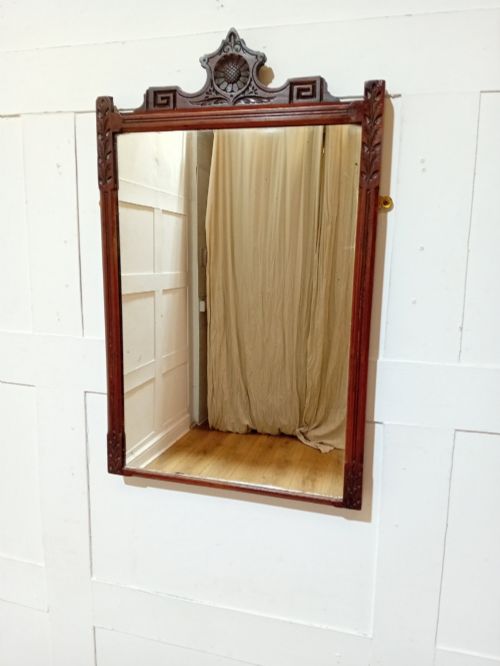
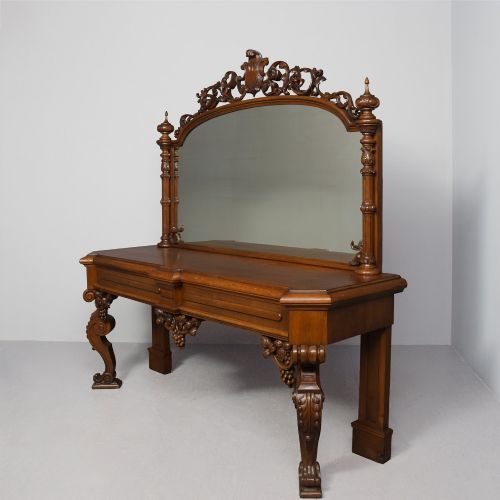
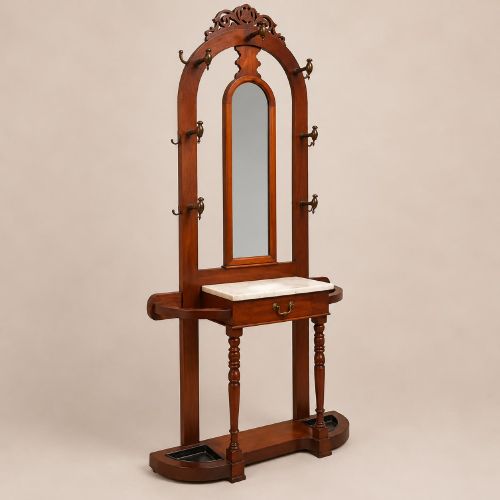
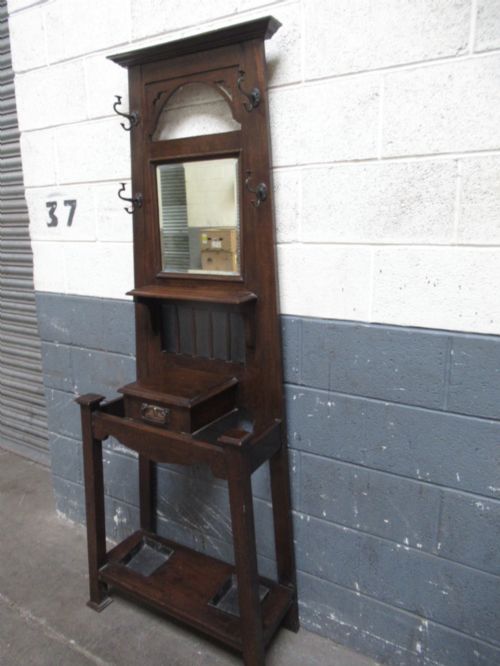
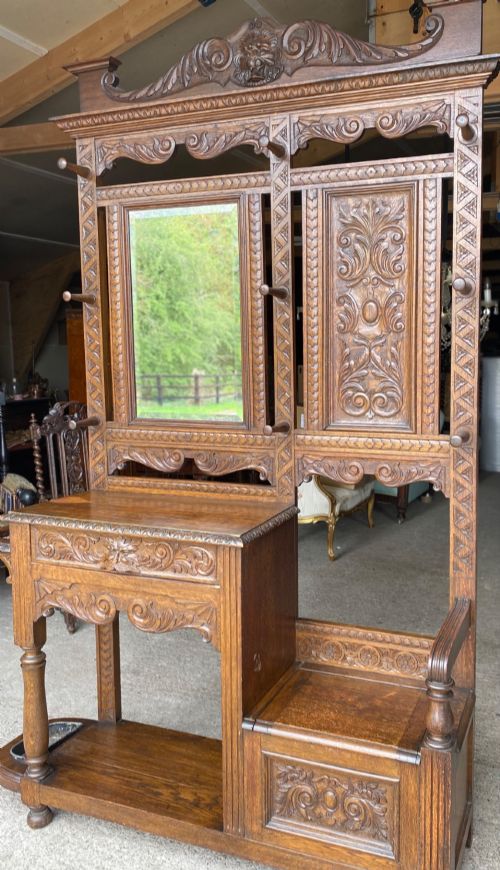
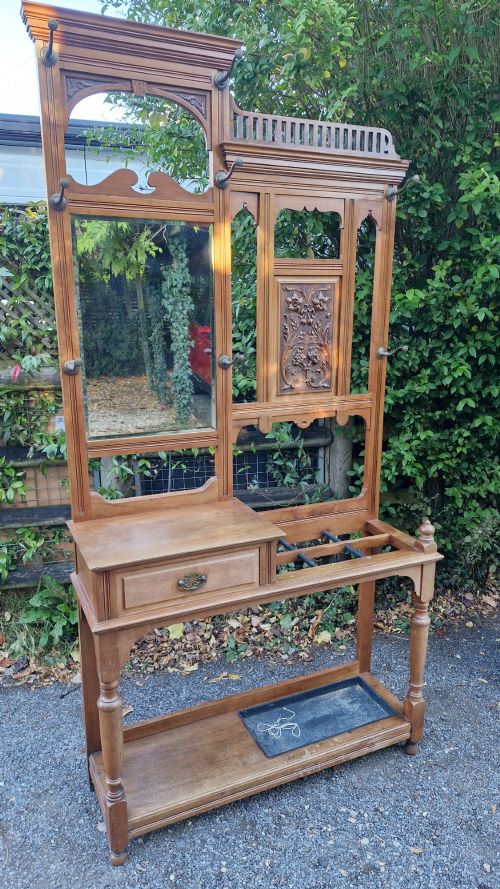
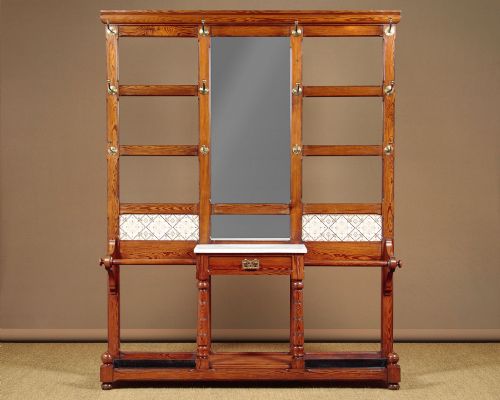
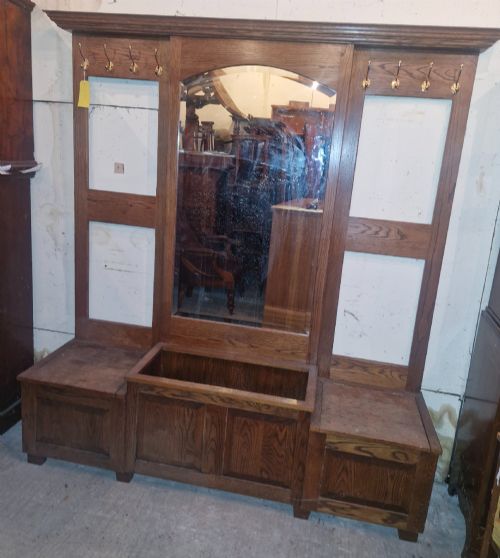
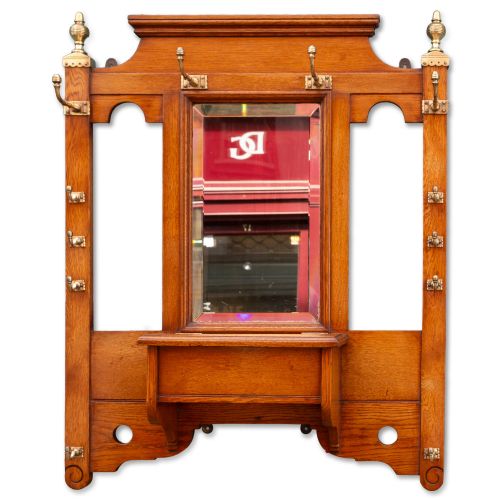
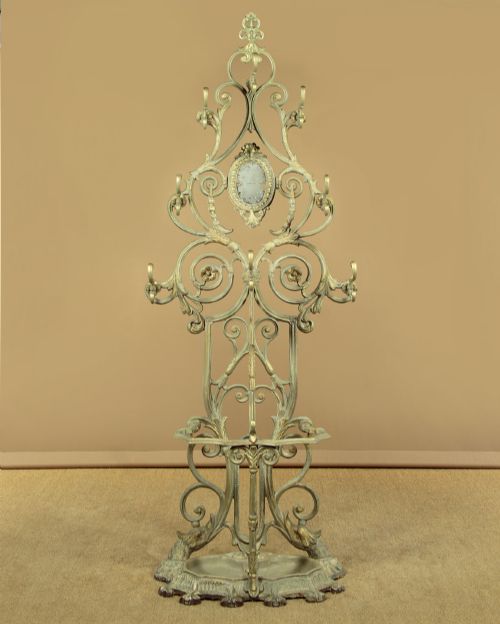
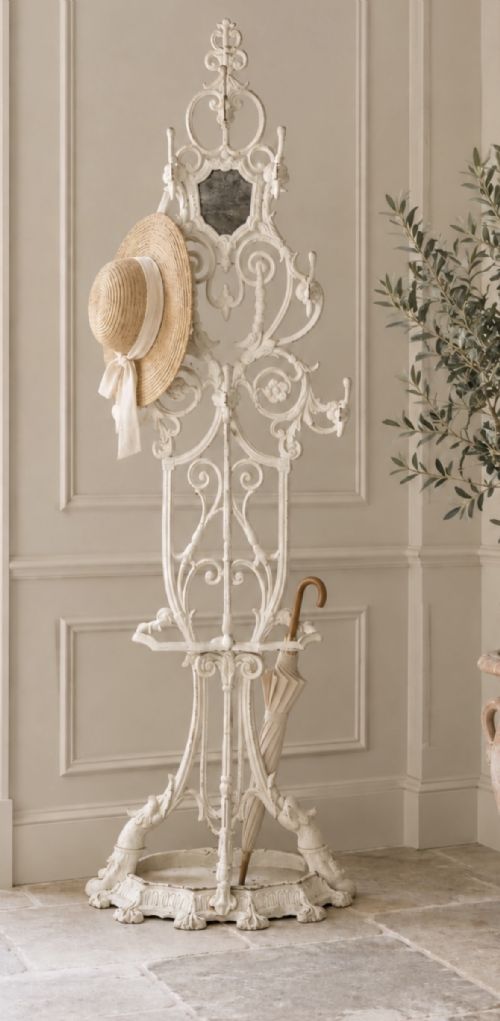
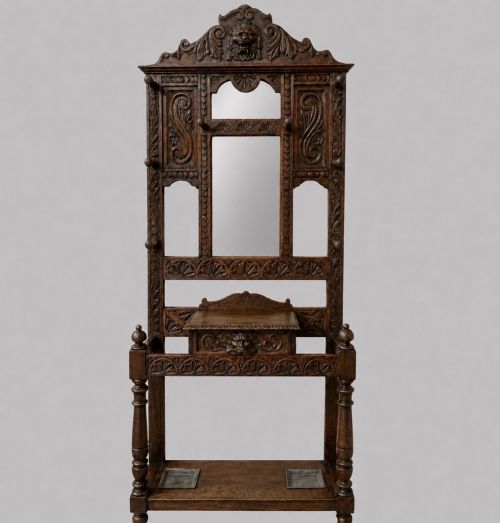
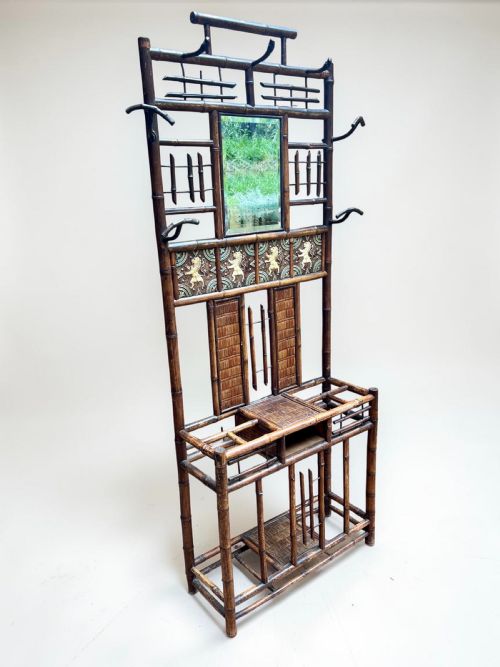
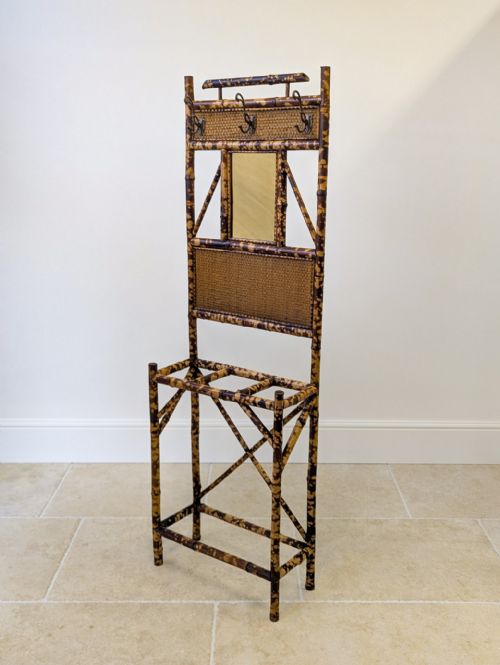
A victorian entryway mirror appears in several distinct forms across these listings, most commonly integrated into large hall stands or wall-mounted hat and coat racks. The primary function serves the entrance of a house, combining glass with wooden frames, brass hooks, and often umbrella compartments.
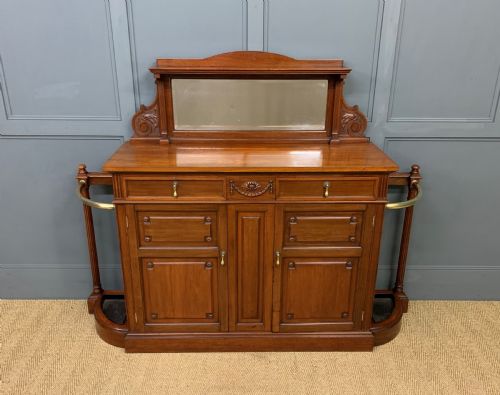
The objects span periods from the mid-nineteenth century into the Edwardian era, taking shape as wall mirrors, console tables, and multi-functional hall stands. Oak, mahogany, and walnut dominate the wooden structures, whilst cast iron and brass provide support for smaller wall-mounted racks.
Materials and construction methods
Makers utilised dense hardwoods such as oak, mahogany, and walnut to build the substantial frames and stands, frequently employing detailed carvings like Green Man motifs or faux bamboo turning. Cast iron and brass supplied structural strength and functional hardware, forming durable umbrella drip pans and coat hooks.
Glass plates were set securely into wooden or gilt gesso frames, occasionally accompanied by marble tops on console table bases. Joinery techniques of the period ensured these tall, heavy pieces could bear the daily weight of winter coats and heavy garments.
Victorian Entryway Mirror Retail Price Guide 2026
Typical asking prices for victorian entryway mirror among the pieces listed under this phrase on Sellingantiques today, from the lower quarter to the upper quarter. They describe what is for sale here now, not the wider market.
A Green Man carved into the oak crown watches over coats with leafy resolve.
Distinctions in construction and design
Quality separates pieces through the depth of wood carving, the integrity of the timber selection, and the presence of makers' names or attributed designs. Simpler pine or basic oak racks contrast with massive carved oak Flemish pieces and walnut stands attributed to known workshops.
The integration of the mirror plate into the wider furniture piece dictates the overall finish, where gilt heightening, marble inserts, and solid brass fittings elevate the standard of the construction.
Shoolbred & Co.·Gillows
The Victorian Entryway Mirror Glossary
- Hall Stand
- A large multi-functional piece of hallway furniture combining a mirror, coat hooks, a glove drawer, and umbrella stands. These items anchored the entrance hall of period homes.
- Aesthetic Movement
- A late nineteenth-century design style focusing on art for art's sake, often represented here by bamboo and faux bamboo structures. It introduced lighter, more eclectic forms to interior decoration.
- Gilt Gesso
- A plaster-based material applied to wooden frames and covered in gold leaf. This technique created ornate, reflective surfaces popular on decorative mirrors.
- Console Table
- A table designed to fit flush against a wall, frequently paired with a wall-mounted mirror above it. In grander settings, these tables featured marble tops.
- Faux Bamboo
- Wood turned and carved to imitate natural bamboo stalks. This decorative finish gained popularity during the Victorian period through Japanese design influences.
Victorian Entryway Mirror: Frequently Asked Questions
What rooms suit a victorian entryway mirror?
These pieces fit naturally into hallways, entrance lobbies, and boot rooms where visitors arrive and outdoor wear is stored. Their vertical proportions make them practical for narrow circulation spaces.
Larger combination pieces require adequate wall space and floor clearance to accommodate their depth, whilst wall-mounted versions adapt easily to smaller apartments.
How were these mirrors used historically?
Households utilised these mirrors and stands for a final check of attire before stepping outside, as well as a convenient drop-off point for hats, walking sticks, and umbrellas.
The inclusion of glove boxes and small shelves provided storage for calling cards and keys in busy entrance areas.
How do I identify a Victorian period piece?
Dating relies on timber choices, such as solid oak, mahogany, and walnut, alongside construction methods like hand-cut joints and cast brass hardware. Stylistic clues like Aesthetic Movement bamboo or Rococo Revival curves also point to specific decades.
Makers' stamps or labels, when present, provide a direct link to nineteenth-century workshops and retailers.
Are these stands sturdy enough for daily use?
The original construction from dense hardwoods and cast iron meant these pieces were built to support heavy wool coats and wet umbrellas on a daily basis. Many surviving examples retain their structural integrity.
Securing taller hall stands to the wall provides stability and prevents tipping in busy modern households.