

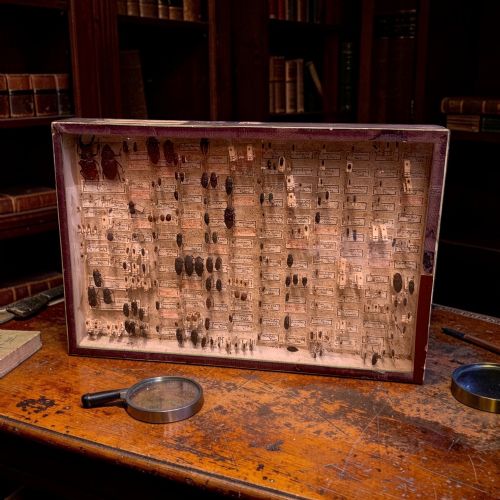


Victorian Entomology Display
A victorian entomology display brings the disciplined study of the natural world directly into a room through preserved specimens and framed botanical engravings.
Victorian Entomology Display
Buyers encounter substantial multi-drawer chests alongside smaller display storage units intended for domestic study. These objects reflect the Victorian fascination with classifying insects and botanical subjects.
The material record includes framed art featuring nineteenth-century engravings alongside substantial cabinetry. Together these items document how collectors stored and viewed their specimens.
Materials and construction
Makers utilised dense timbers including mahogany, walnut, and figured pitch pine to build sturdy drawer frames and outer cabinetry. Boxwood inlay frequently provides decorative detail on cabinet surfaces.
Glass panels protect the contents while brass hardware secures doors and drawers against dust and moisture. Paper labels and linings often complete the interior storage compartments designed for delicate specimens.
Victorian Entomology Display Retail Price Guide 2026
Typical asking prices for victorian entomology display among the pieces listed under this phrase on Sellingantiques today, from the lower quarter to the upper quarter. They describe what is for sale here now, not the wider market.
John Curtis's nineteenth-century botanical engravings quietly insert beetles and butterflies among the plant stems.
Assessing quality and craftsmanship
Quality rests in the precision of the drawer construction and the selection of figured timbers like pitch pine or mahogany. Smoother operation of multi-drawer chests distinguishes superior pieces from simpler storage.
Maker attribution elevates certain cabinets, particularly when constructed by established specialists such as J.T. Crockett. The choice of secondary woods and the refinement of boxwood inlay also mark the upper tier of the range.
J.T. Crockett
The Victorian Entomology Display Glossary
- Specimen cabinet
- A piece of furniture fitted with multiple shallow drawers designed to hold natural history collections. These units protect fragile items from light and pests.
- Collectors cabinet
- A secure chest built specifically for housing classified objects such as insects or botanical samples. They feature closely fitted drawers to maintain interior integrity.
- Pitch pine
- A resinous softwood noted for its pronounced grain patterns, utilised in nineteenth-century cabinetry. It offers both durability and a distinct visual texture.
- Boxwood inlay
- Contrasting pale wood set into the surface of darker timbers for decorative effect. This technique highlights the edges and panels of finer Victorian furniture.
Victorian Entomology Display: Frequently Asked Questions
What are victorian entomology displays?
These items are nineteenth-century cabinets, chests, and framed works created for housing and viewing natural history specimens.
They combine functional storage with decorative woodwork using materials like mahogany, walnut, and glass.
How were these cabinets used?
Nineteenth-century naturalists and collectors utilised multi-drawer chests to organise and protect delicate insect and botanical specimens.
Glass-fronted cases allowed owners to study and exhibit their collections without damaging the physical contents inside.
What woods appear most often?
Makers constructed these pieces primarily using dense hardwoods such as mahogany and walnut alongside figured pitch pine.
Boxwood inlay frequently provides subtle ornamentation on the exterior surfaces of the finer cabinets.
How do I date a piece?
Dating relies on period construction methods, timber choices, and specific hardware styles characteristic of the nineteenth century.
Maker signatures or labels inside the drawers can also help narrow the specific decade of manufacture.