




Victorian Earthenware Creamers
Victorian earthenware creamers bring domestic charm to the table, offering tactile pleasure and distinct nineteenth-century utility that collectors prize.
Victorian Earthenware Creamers
Victorian earthenware creamers encompass practical jugs and pitchers produced throughout the nineteenth century, including notable examples from 1860 and early Victorian periods. These pieces serve primarily as cream jugs and milk jugs for the table, reflecting the everyday domestic habits of the era.
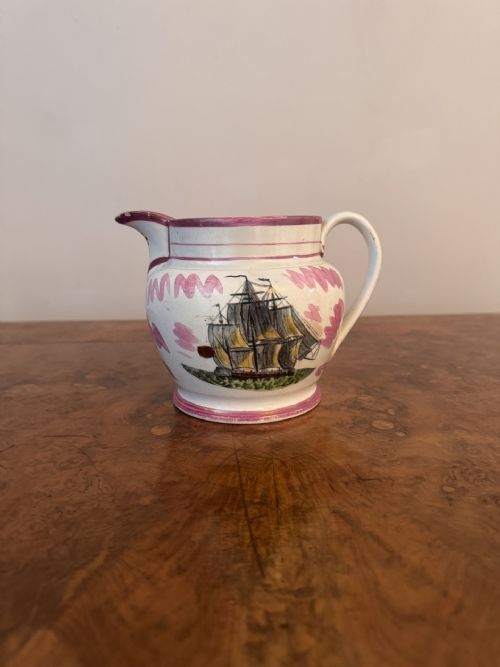
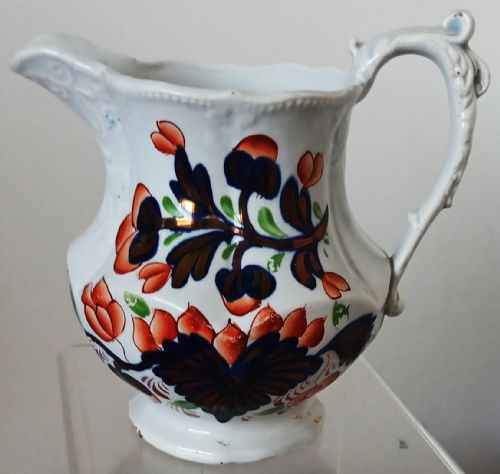
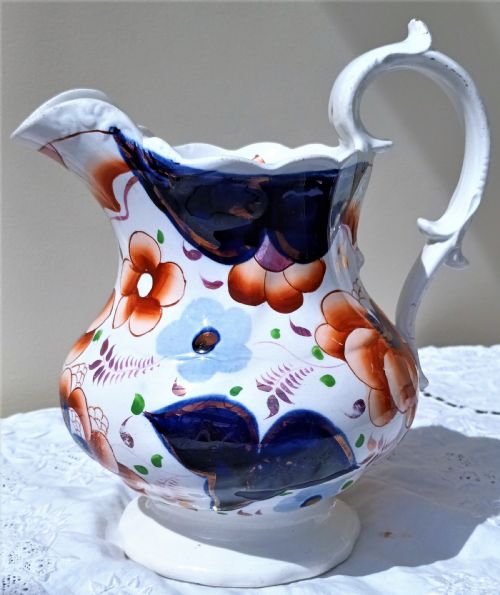
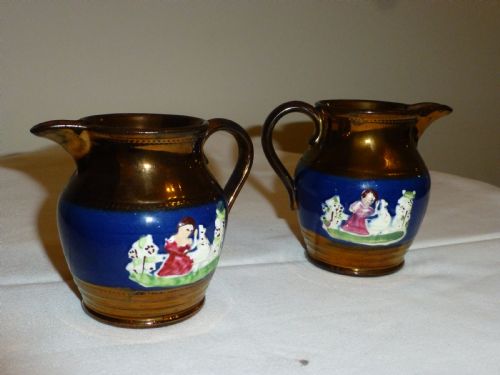
Makers and regional potteries utilised specific motifs, resulting in pieces like Gaudy Welsh pattern jugs and Sunderland lustre wares. These earthenware items capture the robust utility and decorative variety typical of nineteenth-century ceramics.
Materials and Techniques
Potters shaped these creamers primarily from earthenware and glazed ceramic bodies, applying metallic oxide, copper lustre, or enamel finishes to achieve rich surface colour. Some pieces incorporate gilt highlights or feature specialised bodies such as black basalt and Jackfield pottery.
Techniques varied from slip casting and moulding to hand-painting, producing durable vessels finished with protective glaze layers. The application of lustre and enamel demanded precise firing control to secure the characteristic sheen seen on nineteenth-century jugs.
The available pieces span Victorian, early Victorian, and Victorian folk art styles across various jug and pitcher forms.
Judging Quality and Execution
Quality in these creamers rests upon the crispness of the moulding and the dexterity of the hand-painted or transferred decoration. Finer examples display precise control over copper lustre and enamel pigments, whereas simpler pieces show more rustic application.
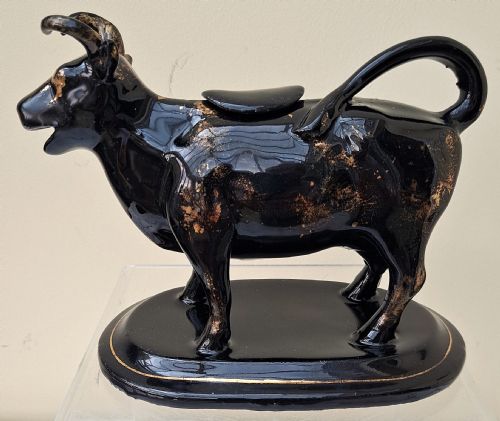
The desirability of a creamer also depends on the survival of its original glaze surface and the crisp definition of novelty forms like cow creamers. Superior artistic ambition distinguishes standard utilitarian vessels from highly collectible folk art pieces.
Keeling & Co.
The Victorian Earthenware Creamers Glossary
- Earthenware
- Porous pottery fired at lower temperatures than stoneware or porcelain, requiring a vitreous glaze to hold liquids.
- Copper Lustre
- A metallic glaze finish imparting a coppery, reflective sheen popular on nineteenth-century jugs.
- Jackfield
- A glossy black-glazed pottery type often associated with novelty animal creamers and utilitarian jugs.
- Gaudy Welsh
- A vibrant style of pottery decoration characterised by cobalt blue, copper lustre, and bright enamel colours.
- Pratt-ware
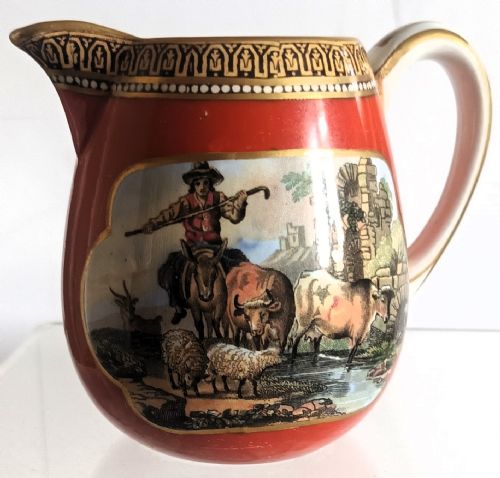
- Earthenware decorated under the glaze with multi-coloured metallic oxides, producing distinctive historical scenes and motifs.
Victorian Earthenware Creamers: Frequently Asked Questions
What are Victorian earthenware creamers?
These are small nineteenth-century ceramic jugs and pitchers designed for serving cream or milk at the table. They range from simple utilitarian vessels to highly decorative novelty shapes.
Potters across Britain produced them using various earthenware bodies, often finishing them with coloured glazes, lustres, or hand-painted patterns.
How were cow creamers used?
Cow creamers served as novelty vessels for pouring cream or milk from the animal's mouth during tea service. They added a touch of whimsy and rural charm to formal or domestic tables.
Guests would tilt the cow by its tail or back to dispense the liquid contents.
How do I care for antique earthenware?
Wash these pieces gently by hand using warm water and mild soap, avoiding harsh scrubbing or dishwashers. Protecting the glaze and any delicate lustre or enamel decoration ensures their longevity.
Display them away from direct sunlight and extreme temperature fluctuations to preserve the ceramic body.
How can I tell early Victorian pieces apart?
Distinguishing periods relies on examining the specific ceramic body, glaze chemistry, and decorative styles recorded in the evidence. Early Victorian items often exhibit traditional folk art traits or specific regional lustre techniques.
Comparing handle attachment, base characteristics, and pattern names helps establish the chronological placement within the nineteenth century.