



Victorian Duchess Mirror Table
A victorian duchess mirror table combines a generous vanity surface with a pivoting mirror, built to anchor a formal bedroom.
Victorian Duchess Mirror Table
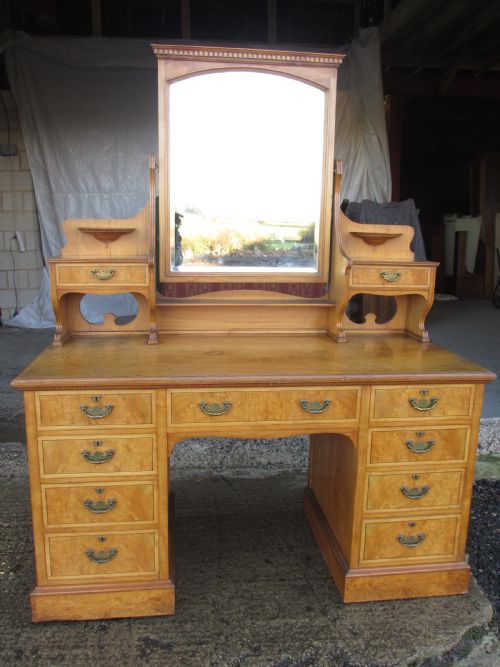
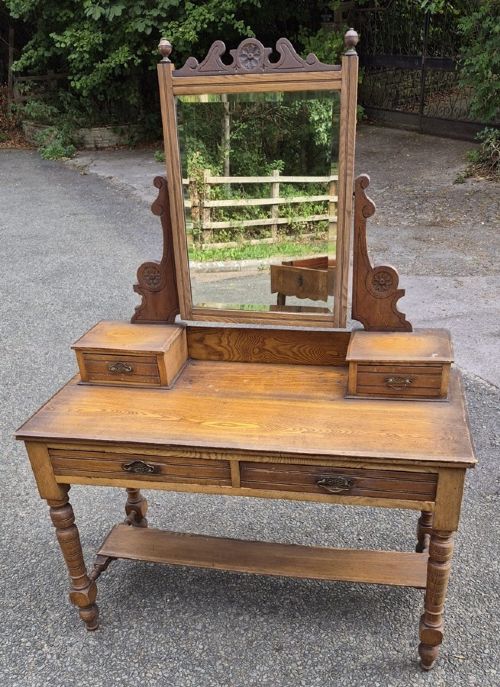
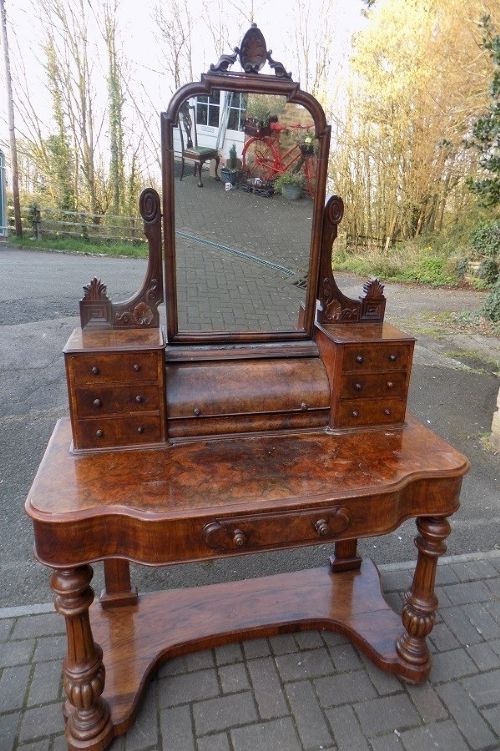
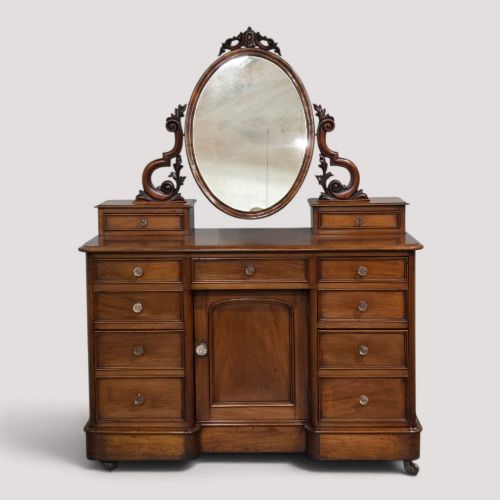
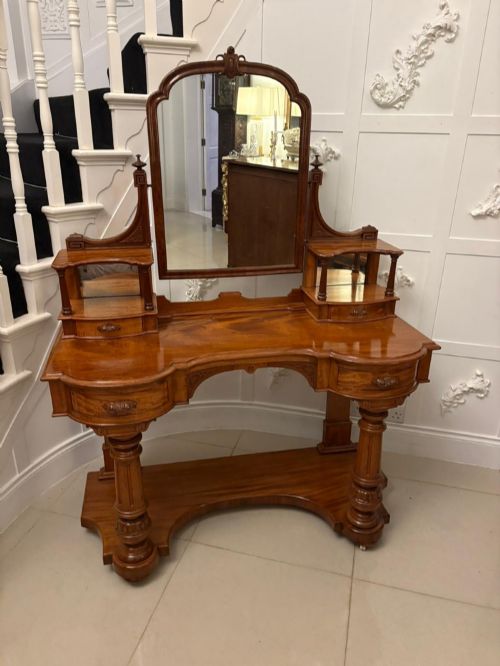
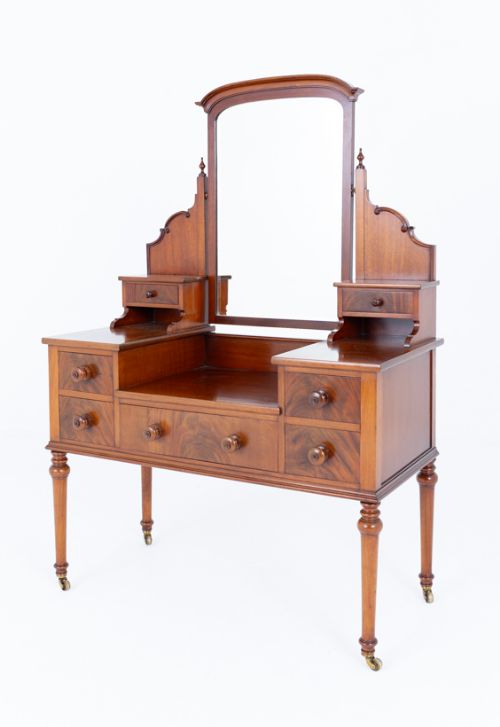
A victorian duchess mirror table is a substantial vanity piece designed with a central swing mirror supported by scrolling arms or side pedestals. These items serve as both functional dressing stations and prominent bedroom furniture.
The pieces appearing on this page span the Victorian and Edwardian eras, encompassing grand duchess forms alongside pedestal dressing chests and toilet mirrors. Mahogany and burr walnut dominate the selection, often featuring tier arrangements of small drawers.
Regional variations appear in the record, ranging from Scottish satinwood examples to rustic pine country pieces. The scale shifts from large multi-drawer iterations down to compact demi lune designs.
Materials and Construction Methods
Cabinetmakers utilised solid timbers such as mahogany, oak, and pine for the main framework, applying highly figured burr walnut, flame mahogany, and satinwood veneers to the visible drawer fronts and table tops. These veneers were laid over secondary woods to create decorative grain patterns.
Joinery techniques combined traditional frame and panel construction with hand-cut dovetails for the drawer construction. Swing mirrors were mounted within carved or turned wooden frames supported by pivoting brass hardware.
Victorian Duchess Mirror Table Retail Price Guide 2026
Typical asking prices for victorian duchess mirror table among the pieces listed under this phrase on Sellingantiques today, from the lower quarter to the upper quarter. They describe what is for sale here now, not the wider market.
Piano-topped dressing tables successfully disguised the keyboard origins of recycled instrument cases.
Distinctions in Grade and Execution
The standard of timber selection marks the primary division in quality, where richly figured burr walnut and flame mahogany sit above plain pine or standard mahogany. Finer examples display meticulous marquetry inlay, elaborate hand-carved scrollwork, and original stencilled decoration.
Structural integrity and the retention of original components dictate the standing of a piece. The presence of the original mirror glass, matching brass fittings, and unreplaced drawer pulls elevates the integrity of the surviving furniture.
John Taylor of Edinburgh
The Victorian Duchess Mirror Table Glossary
- Duchess dressing table
- A large vanity furniture type featuring a built-in swing mirror, a tiered surface, and numerous small trinket drawers.
- Swing mirror
- A looking glass hung on pivots within a frame, allowing the user to tilt the angle of reflection.
- Burr walnut
- A highly prized timber veneer harvested from the wart-like growths on walnut trees, creating swirling patterns.
- Demi lune
- A half-moon shape used to describe the curved front edge of certain table tops and dressing surfaces.
- Scumble glazed
- A painted surface finish manipulated with tools or rags to imitate the appearance of natural wood grain.
Victorian Duchess Mirror Table: Frequently Asked Questions
What is a duchess dressing table?
A duchess dressing table is a specific Victorian vanity form that incorporates a large, central pivoting mirror mounted above a surface with tiered drawers for cosmetics and jewellery.
These pieces were designed as prominent bedroom furnishings, combining the functions of a dressing table and a writing desk.
How do I identify the period?
Dating relies on observing stylistic markers such as Gothic Revival carvings, Aesthetic Movement lines, or heavy Victorian scrollwork alongside construction methods like dovetailing.
Evidence from nineteenth and early twentieth-century examples shows shifts from dense mahogany and burr walnut towards lighter satinwood and painted pine.
Are the mirrors original?
Many surviving pieces retain their original mirror glass, though the silvering behind older glass can show areas of dark speckling or foxing.
Replacement glass is sometimes fitted when the original has cracked or deteriorated beyond repair over the decades.
Where were these tables used?
These dressing tables were placed in the principal bedrooms of large homes, serving as the main station for morning grooming and dressing.
Smaller variants and toilet mirrors were also adapted for guest chambers or dressing rooms where floor space was limited.