



Victorian Duchess Dressing
Victorian duchess dressing tables are substantial bedroom pieces combining large swing mirrors and central surfaces, sought after for grand period interiors.
Victorian Duchess Dressing
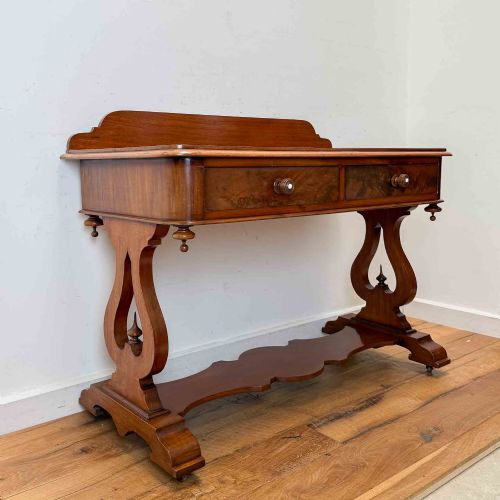
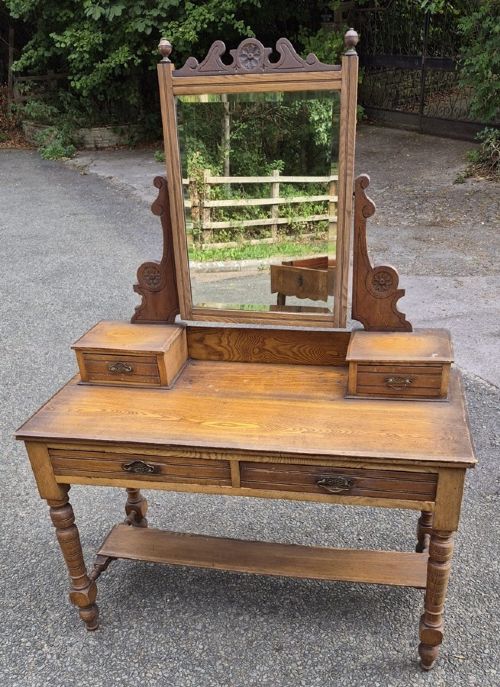
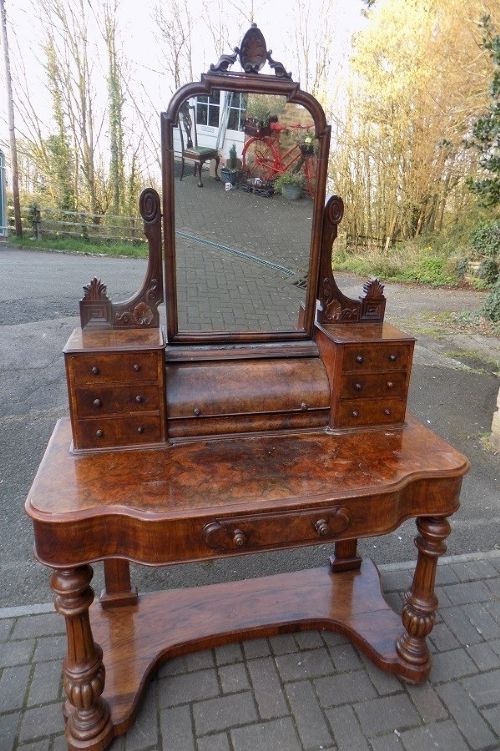
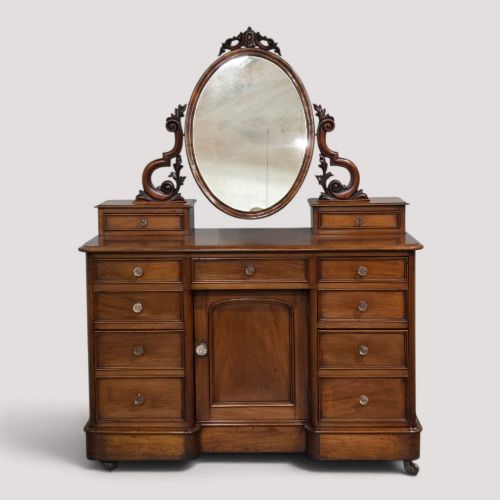
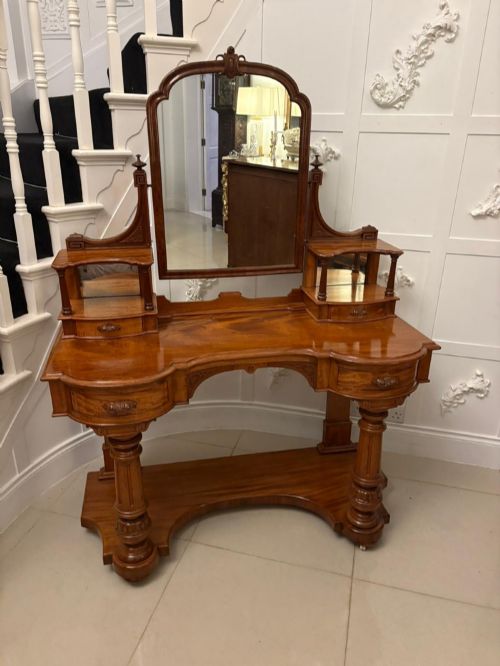
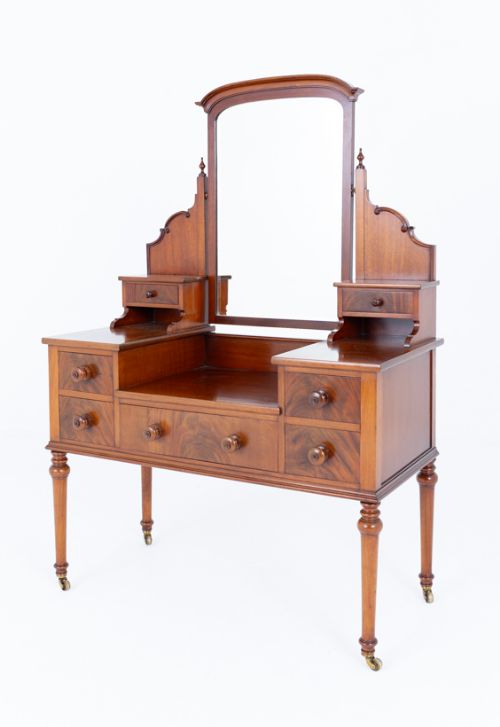
A victorian duchess dressing table is a grand form of vanity furniture designed for nineteenth century bedrooms, typically featuring a prominent central mirror supported by smaller drawers or superstructure. These pieces emerge predominantly from the Victorian and Edwardian eras, spanning walnut, mahogany, and pine constructions.
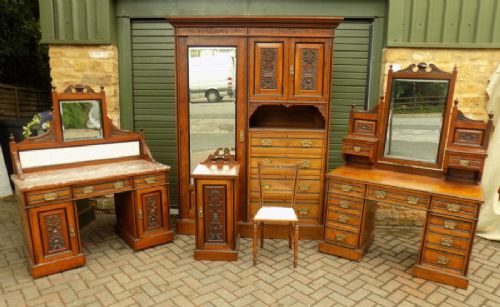
Buyers commonly encounter mahogany and burr walnut examples equipped with swing mirrors, often accompanied by matching washstands or bedroom suites. The design prioritises both display and utility, offering surface space alongside tiered drawers for personal items.
Materials and Construction
Cabinet makers utilised dense hardwoods like mahogany and burr walnut for primary surfaces, often selecting pine for secondary framing and internal drawer construction. Timber selection governed the visual weight of the piece, with figured veneers adding decorative grain patterns.
Glass mirrors were housed within carved or scroll frames, supported by brass hardware on drawers and swing mechanisms. Additional decorative treatments included marquetry inlay, stencilled decoration, and scumble glazing on pine variants.
Victorian Duchess Dressing Retail Price Guide 2026
Typical asking prices for victorian duchess dressing among the pieces listed under this phrase on Sellingantiques today, from the lower quarter to the upper quarter. They describe what is for sale here now, not the wider market.
Listings feature mahogany, burr walnut, and pine across Victorian and Edwardian periods, alongside washstands and dressing chests.
Quality Variations
The standard of a victorian duchess dressing table rests upon the choice of timber and the execution of carved details. Elaborate scrollwork, deep burr walnut veneers, and solid mahogany construction distinguish finer examples from simpler pine pieces.
Internal joinery and the retention of original mirror glass and brass hardware dictate the integrity of the piece. Superior examples exhibit precise dovetailing in the drawers and harmonious proportions between the dressing chest and the mirror superstructure.
John Taylor of Edinburgh
The Victorian Duchess Dressing Glossary
- Duchess dressing table
- A large vanity table featuring a fixed or swing mirror mounted above a tiered arrangement of small trinket drawers. This form became central to nineteenth century bedroom furniture.
- Burr walnut
- A prized wood veneer harvested from the growth warts of walnut trees, displaying intricate, swirling grain patterns. Cabinet makers applied it to drawer fronts and tabletops for decorative impact.
- Swing mirror
- An adjustable looking glass suspended on pivot pins within a vertical frame, allowing the user to alter the angle of reflection. These are integral to the superstructure of duchess dressing tables.
- Scumble glazing
- A decorative painting technique applied to cheaper woods like pine to imitate the appearance of more expensive figured timbers. Artisans dragged or combed translucent glazes over a lighter base coat.
- Gothic Revival
- A nineteenth century design style incorporating medieval architectural motifs such as pointed arches and heavy carved tracery. This aesthetic influenced the ornamentation of selected dressing tables.
Victorian Duchess Dressing: Frequently Asked Questions
How do I date a dressing table?
Dating these pieces relies on examining the timber species, construction methods, and prevailing styles such as Gothic Revival or Aesthetic Movement influences. The presence of hand-cut dovetails, original mirror glass, and specific secondary woods like pine helps narrow the period of manufacture.
Cabinet makers during the Victorian and Edwardian eras also incorporated distinct decorative techniques, from stencilled drawer decoration to marquetry inlay, which align with specific decades.
Are mirrors usually original?
Many surviving dressing tables retain their original mirror glass, though the silvering behind older glass often shows characteristic foxing and spotting from age. The framing and support arms should match the timber and patina of the lower table base.
Because mirrors sustained frequent damage during moves, replacements are not uncommon in pieces from the nineteenth century.
How do I fit one in a modern bedroom?
These dressing tables require adequate floor space and wall clearance to accommodate their substantial footprint and towering mirror superstructures. Positioning them against a bedroom wall where natural light falls across the mirror ensures practical daily use.
Their rich mahogany and walnut tones pair effectively with neutral walls, allowing the figured wood grain and carved details to stand out as a central furnishing.