




Victorian Drop Leaf Dining Table
A victorian drop leaf dining table offers adaptable surfaces and rich timber character, suiting homes that value both historic utility and compact living.
Victorian Drop Leaf Dining Table
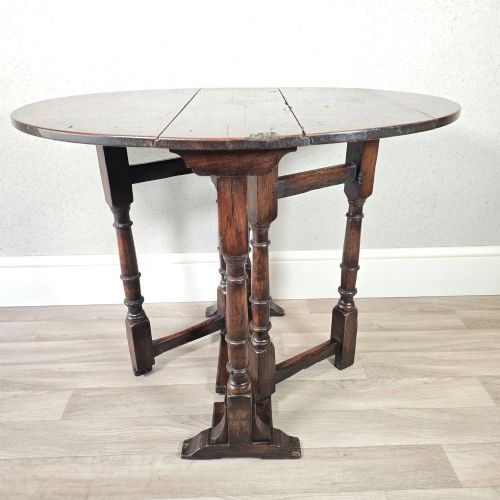
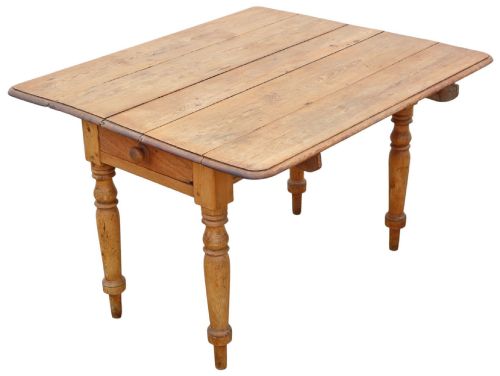
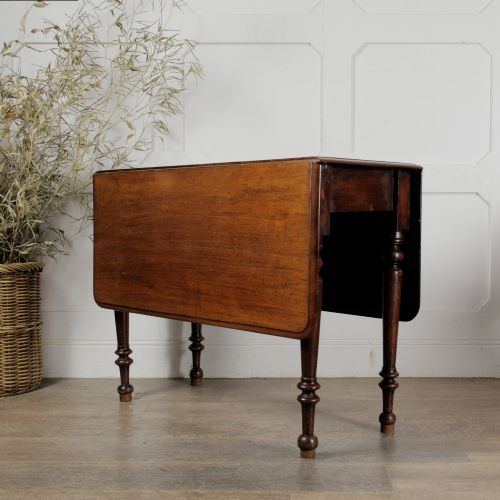
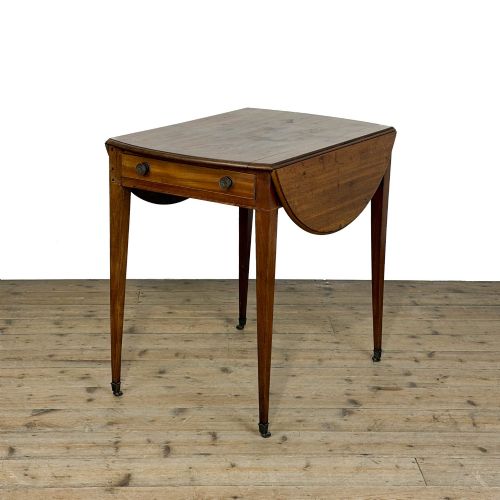
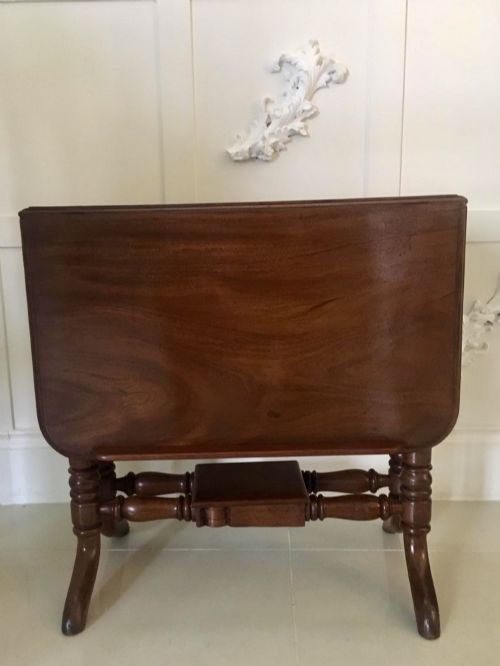
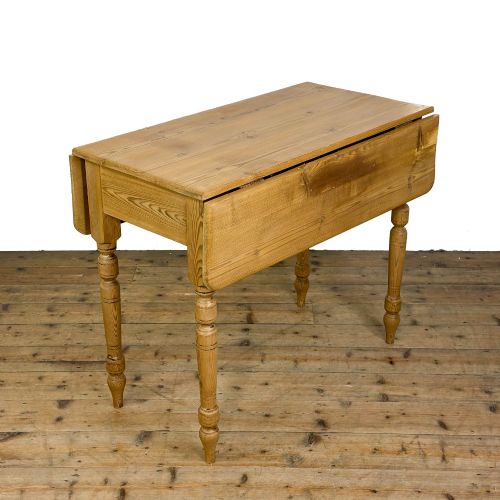
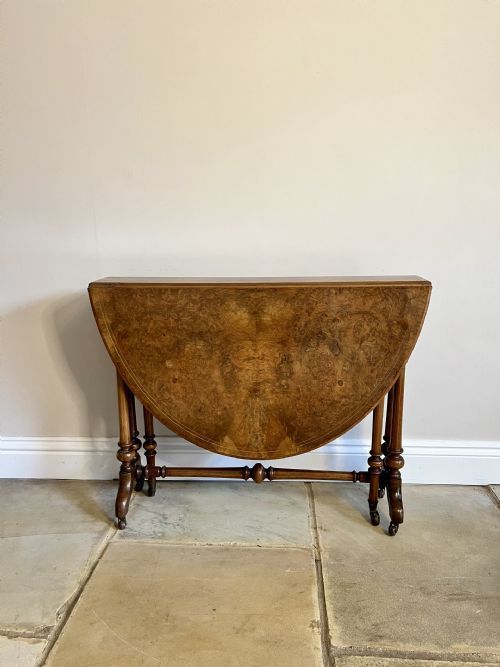
A victorian drop leaf dining table provides an extendable surface through hinged flaps that fold down when space is at a premium. These pieces span the nineteenth century, encompassing forms such as Pembroke tables, gatelegs, and Sutherland tables.
Mahogany and walnut appear frequently in formal rooms, while pine and oak serve utility in kitchens and rustic settings. Buyers often meet dark hardwoods intended for parlours or pale scrub-top timbers used for daily domestic work.
Makers constructed these tables to adapt quickly from compact side furniture to full dining surfaces. The folding mechanisms rely on gate legs, swing brackets, or drop leaves supported by pivoting wooden arms.
Markers of Quality
Superior examples display careful timber selection, such as matched burr walnut veneers or thick, figured mahogany boards that remain flat across the hinge joints. Lesser pieces rely on utility softwood or plain timber with simpler joinery.
The precision of the folding mechanism and the stability of the legs when extended determine the daily utility of the table. Fine joinery ensures the leaves meet the fixed centre top evenly without noticeable gaps or sagging.
Victorian Drop Leaf Dining Table Retail Price Guide 2026
Typical asking prices for victorian drop leaf dining table among the pieces listed under this phrase on Sellingantiques today, from the lower quarter to the upper quarter. They describe what is for sale here now, not the wider market.
Listings for a victorian drop leaf dining table feature materials including mahogany, burr walnut, pine, oak, elm, and fruitwood alongside brass hardware.
The Victorian Drop Leaf Dining Table Glossary
- Drop leaf table
- A table with a fixed centre section and hinged flaps on either side that fold down to save floor space. When lifted, pivoting supports hold the leaves level for dining.
- Pembroke table
- A small rectangular drop leaf table featuring narrow hinged leaves and usually one or two drawers. They served as breakfast or writing tables in nineteenth-century drawing rooms.
- Sutherland table
- A narrow drop leaf table featuring particularly slender leaves that fold down almost vertically. They were designed to occupy minimal space when closed.
- Gateleg table
- A table with legs hinged to swing outward like a gate to support the dropped leaves. This framing provides robust load-bearing strength across the open leaves.
- Burr walnut
- A highly prized timber veneer showing swirling growth patterns created by tree deformities. Cabinet makers applied it to the top surfaces of fine Victorian occasional and dining furniture.
Victorian Drop Leaf Dining Table: Frequently Asked Questions
How many people can sit at a drop leaf table?
Seating capacity depends on the length of the centre board and the span of the folding leaves. Many smaller versions seat two to four people comfortably when fully extended.
Larger gateleg and dining variants accommodate more guests once the leaves are raised and supported by the swing legs.
Are these tables suitable for daily kitchen use?
Pine and oak kitchen versions withstand daily domestic wear and function well for meal preparation. Scrub-top variants show a history of utilitarian service and tolerate regular cleaning.
Polished mahogany and burr walnut examples require more care to protect the veneer and finish from moisture and heat.
How do I care for a polished mahogany surface?
Keep polished hardwood away from direct sunlight and excessive heat sources to prevent the timber and veneer from drying out. Use placemats and coasters to shield the polish from hot dishes and moisture.
Apply traditional wax polish occasionally to maintain the sheen and nourish the historic timber.