



Victorian Drinkware
These Victorian drinkware pieces bring nineteenth-century craft to the table, offering glass, silver, and pewter vessels built for historic hospitality.
Victorian Drinkware
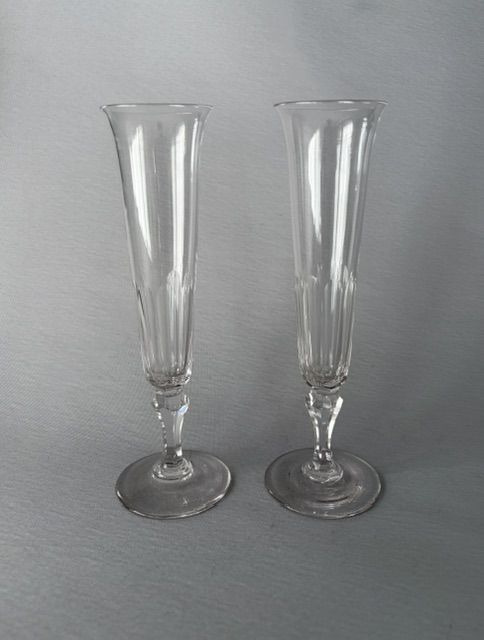
Victorian drinkware encompasses a diverse selection of vessels designed for wine, beer, spirits, and ceremonial toasts during the nineteenth century. These pieces range from delicate glass champagne flutes and cranberry wine glasses to robust pewter measures and silver-plated beer tankards.
Buyers frequently encounter glass and silver forms spanning the period, including cut glass items and novelty silver mugs shaped like thimbles. The selection includes matched sets alongside individual table pieces originating from English, Bohemian, and Russian workshops.
How they were made
Glass production relied on heavy lead crystal and clear metal, shaped through blowing and finished with wheel-cutting, etching, or enamelling. Cranberry glass achieved its distinct hue through the addition of gold chloride to the molten batch.
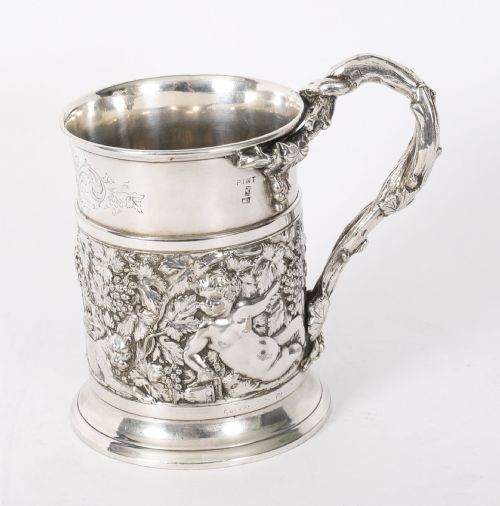
Metal vessels utilised sterling silver and silver plate over base metals, alongside traditional pewter alloys. Silversmiths employed techniques such as embossing, engraving, and casting to decorate tankards, goblets, and novelty cups.
Victorian Drinkware Retail Price Guide 2026
Typical asking prices for victorian drinkware among the pieces listed under this phrase on Sellingantiques today, from the lower quarter to the upper quarter. They describe what is for sale here now, not the wider market.
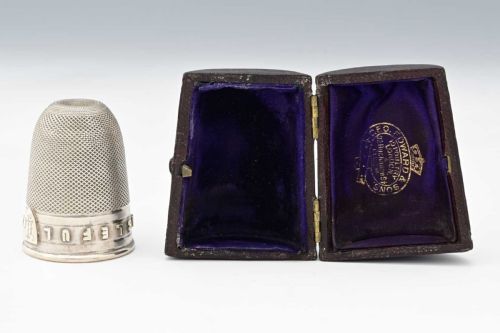
One Victorian silver tumbler takes the playful form of a giant sewing thimble, complete with the motto 'just a thimbleful'.
What varies in quality
Quality rests upon the crispness of the cutting on crystal pieces and the depth of the hand-engraving on silver and pewter surfaces. Fine examples display precise geometric or floral motifs executed without hesitation by skilled hands.
The weight of the metal and the balance of the glass vessel dictate its standing. Superior items maintain structural integrity while demonstrating refined proportions and deliberate attention to decorative detail.
G R Collis·George Unite·Watts and Harton·Aleksandr Timofeyevich Shevyakov·Hadley Worcester
The Victorian Drinkware Glossary
- Cranberry glass
- A rich red-pink glass popular in nineteenth-century table settings. It was produced by mixing gold into the glass formula before blowing.
- Rummer
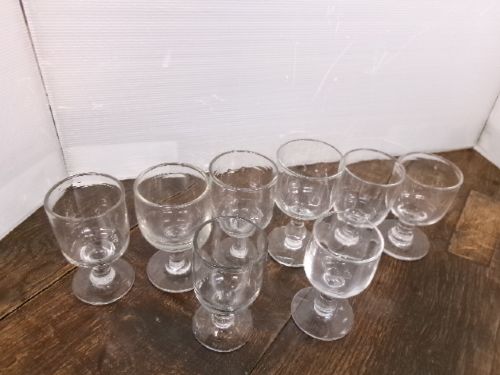
- A large, sturdy drinking glass used for wine or punch during the Georgian and Victorian eras. These typically feature a short stem and a bucket-shaped bowl.
- Quart measure
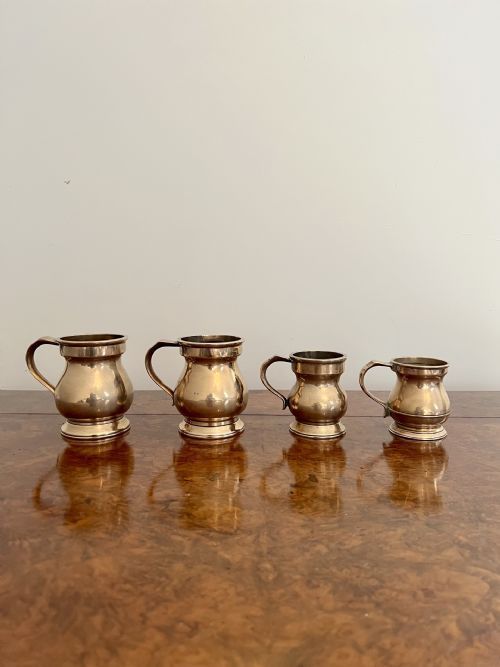
- A standardised metal or glass vessel holding two pints of liquid. These were utilised in public houses and domestic settings for serving beer or cider.
- Lead crystal
- A high-clarity glass containing lead oxide that increases its refractive index and weight. This material allows for deep, sharp wheel-cutting.
- Silver plate
- A manufacturing method where a thin layer of silver is fused to a base metal such as copper or Britannia metal. This provided an accessible alternative to solid sterling silver.
Victorian Drinkware: Frequently Asked Questions
What is a rummer?
A rummer is a substantial drinking glass designed for wine, ale, or punch. These vessels feature thick bowls and sturdy stems suited for everyday nineteenth-century dining.
They often display cut or engraved decoration and sit comfortably in the hand due to their solid proportions.
How are cranberry glass pieces identified?
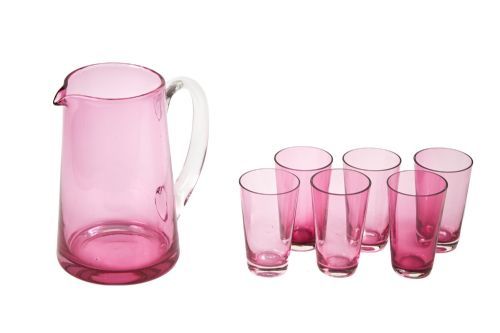
Cranberry glass is recognised by its distinctive transparent red-pink coloration, created by adding gold to the molten glass. The shade ranges from a pale pink to a deep raspberry tone.
These pieces frequently appear in matching table sets alongside jugs, decanters, and small wine glasses.
How do silver-plated and sterling items differ?
Sterling silver consists of solid precious metal throughout the piece, marked with traditional hallmarks indicating purity and origin. Silver plate applies a thin layer of silver over a base metal foundation.
Both materials were widely utilised for Victorian tankards, mugs, and goblets, offering distinct weights and manufacturing signatures.