




Victorian Domestic Scene Art
These pieces of victorian domestic scene art capture intimate moments in nineteenth-century cottages and country houses, offering a tangible window into everyday historical life.
Victorian Domestic Scene Art
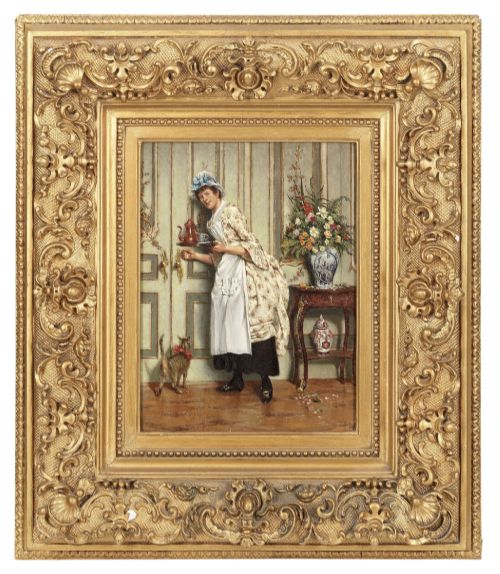
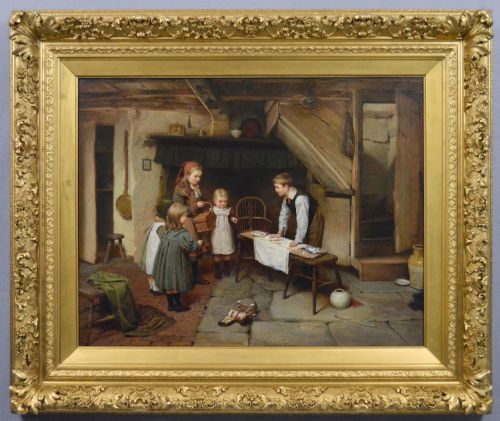
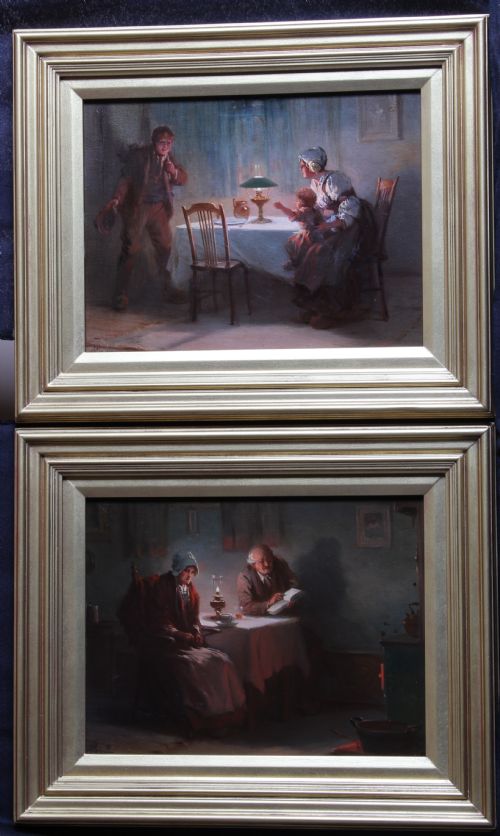
When you search for victorian domestic scene art, you encounter framed paintings depicting quiet daily moments within nineteenth-century interiors. These artworks portray mothers and children, fireside rests, tea times, and spinning maids in cottage or country house settings.
The selections span from mid-nineteenth-century works to later interpretations stretching into the early twentieth century. Most pieces on this page emerge as oil paintings on canvas or panel, alongside detailed watercolours.
Materials and Technique
Artists relied primarily on oil paint applied to canvas or wood panels, building rich surfaces that capture indoor light and shadow. Watercolour on paper forms the other main technique, often paired with traditional framing.
Many works incorporate gold leaf and gesso within their original frames, providing a structured border that complements the domestic warmth of the painted interior.
Several cottages clearly needed better heating, judging by the number of afternoon snoozes happening entirely beside the fireside.
Assessing Quality
The distinction between ordinary and exceptional works lies in the handling of interior light, the precision of facial expressions, and the subtlety of narrative detail. Masterful brushwork brings domestic textures, from woven wool to polished wood tables, into sharp, convincing relief.
Exhibition history and maker attribution elevate certain canvases above anonymous decorative pieces. A documented provenance or association with established painters transforms a simple cottage scene into a significant historical document.
Stephen Samuel Lewin·James Hayllar·Harry Brooker·Alexander Rosell·James Kyd·George Smith·William Henry Knight·Théophile Emmanuel Duverger·Henry Spernon Tozer·Pauline Delacroix Garnier·Alfred Provis·Henry Silkstone Hopwood·Jonathan Pratt·Pierre-Louis Bouchard·Charles Lewis
The Victorian Domestic Scene Art Glossary
- Genre Painting
- A style of art depicting scenes from everyday life, typically involving ordinary people engaged in domestic activities. These works focus on narrative storytelling rather than formal portraiture.
- Oil on Panel
- A painting created by applying oil pigments directly onto a prepared wooden board rather than woven canvas. This technique provides a rigid support that preserves fine detail over centuries.
- Gesso
- A traditional paint mixture consisting of a binder mixed with chalk, gypsum, or pigment, used to prepare wood or canvas surfaces. It also forms the sculpted relief on gilded frames.
- Watercolour Painting
- An artwork made using water-soluble pigments on paper, valued for its translucent washes and delicate tonal shifts. These works require careful framing behind glass to prevent environmental damage.
Victorian Domestic Scene Art: Frequently Asked Questions
What defines a domestic scene painting?
These artworks depict everyday indoor activities, focusing on family life, cottage interiors, and quiet moments of leisure or labour.
They offer intimate glimpses into historical lifestyles, highlighting the domestic routines of nineteenth-century households.
Are these pieces original nineteenth-century works?
The selection includes period pieces created during the nineteenth century alongside related works stretching into the early twentieth century.
Each listing specifies the medium, period, and artist where known, distinguishing original nineteenth-century paintings from later interpretations.
How should I display framed oil paintings?
Hang these artworks away from direct sunlight and damp environments to protect the canvas, oil pigments, and original gesso frames.
Ensure secure wall fixings, as traditional frames featuring gold leaf and wood can carry substantial weight.
What is the difference between oil and watercolour?
Oil paintings utilise viscous pigments on canvas or panel, yielding rich textures and deep shadows suitable for dim interior lighting.
Watercolours employ translucent washes on paper, offering a lighter palette that requires protective glazing behind glass.