




Victorian Diamond Earrings
Victorian diamond earrings bring nineteenth-century candlelight into contemporary wear through hand-cut stones and rich metalwork.
Victorian Diamond Earrings
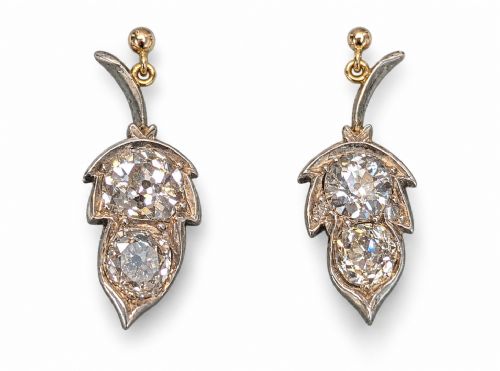
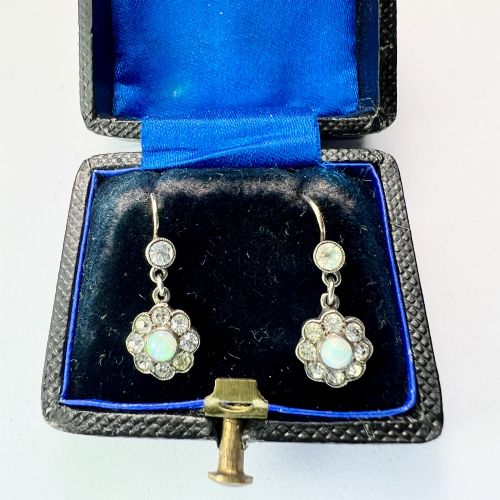
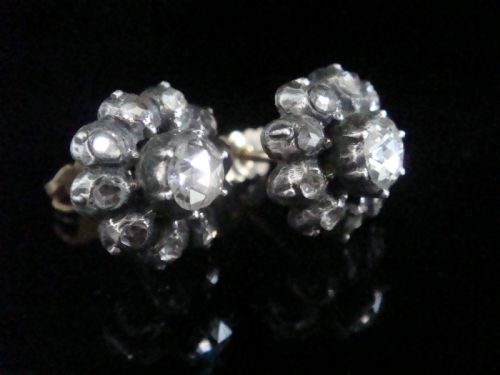
When you search for victorian diamond earrings, you encounter an array of configurations ranging from simple cluster studs to elaborate drop and dangle designs. The examples found here span genuine nineteenth-century output alongside related Edwardian and revival pieces that share the same aesthetic vocabulary. Drop earrings and floral cluster studs appear most frequently, often pairing diamonds with natural pearls, garnets, or sapphires.
Makers of this era employed motifs such as stars, crescents, bows, and naturalistic foliate designs. These jewel formats reflect the transition from daytime formality to evening brilliance, engineered to catch the light of lamps and candles. The pieces combine distinct nineteenth-century silhouettes with hand-finished metal settings that mark them out from modern mass-produced jewellery.
Materials and technique
The construction of these pieces relies on a pairing of yellow or rose gold with silver settings for the stones. Jewellers mounted diamonds in silver over gold to enhance the whiteness of the gems against darker precious metals before platinum came into common use. Stones were hand-cut, typically displaying old mine or old European facets with characteristic open culets.
Support elements such as hinged wires, screw backs, and secure cluster mounts were hand-forged by skilled artisans. Many designs integrate natural pearls, enamel work, or coloured gemstones like rubies and emeralds directly into the gold and silver frameworks. This construction method creates distinct weight and dimension unique to period jewellery.
Victorian Diamond Earrings Retail Price Guide 2026
Typical asking prices for victorian diamond earrings among the pieces listed under this phrase on Sellingantiques today, from the lower quarter to the upper quarter. They describe what is for sale here now, not the wider market.
Dormeuses let nineteenth-century wearers sparkle straight through until morning without unfastening their jewels.
Evaluating quality and execution
Quality in these items rests upon the harmony of the design and the integrity of the stone setting. Superior examples demonstrate meticulous hand-cut faceting in the diamonds and secure, flush mounting that holds each gem firmly without excessive metal bulk. The integration of secondary elements, such as natural pearls or calibrated gemstones, reveals the workshop's initial standard.
The execution of delicate details like foliate engravings, starbursts, or enameled tassels dictates the upper tier of the range. Pieces that retain their original clasps, hooks, and balanced proportions command greater appreciation among collectors. Subtle variations in metal colour and stone matching highlight the individual hand of the maker.
The Victorian Diamond Earrings Glossary
- Old cut diamond
- A hand-faceted diamond shape from the nineteenth century featuring a small table, high crown, and large open culet. These stones were cut specifically to maximise sparkle under low artificial light.
- Dormeuses
- French sleeping earrings designed with secure closures so the wearer could keep them on overnight. They often feature cluster or drop formats close to the earlobe.
- Natural pearl
- An organic gem formed naturally in a mollusc without human intervention. These contrast with cultured pearls and appear frequently alongside diamonds in period drops.
- Cluster earrings
- A central gemstone surrounded by a tight ring of smaller stones, frequently diamonds framing a ruby, sapphire, or garnet. This layout amplifies total visual impact.
- Culet
- The small flat facet at the bottom tip of an antique diamond. Old cuts possess a noticeable open culet visible through the top of the stone.
- Etruscan revival
- A nineteenth-century design style inspired by archaeological discoveries, featuring granulated gold work and classical motifs. Earrings in this taste apply ancient techniques to Victorian forms.
Victorian Diamond Earrings: Frequently Asked Questions
Can I wear antique diamond earrings every day?
These pieces were built for regular nineteenth-century wear, but their age requires a mindful approach to daily activities. Taking them out before swimming, sleeping, or strenuous exercise protects the antique settings and delicate mountings.
Storing them in a dedicated lined box prevents friction against other items. Regular gentle cleaning maintains the brilliance of the stones without straining the historic metalwork.
Are these earrings fitted for modern pierced ears?
Many nineteenth-century examples feature hook wires, lever backs, or screw fittings adapted to the piercing standards of the period. Some items have been converted over time to modern post fittings for convenience.
Checking the specific listing details reveals whether the fixings remain original or have been altered. A jeweller can also discuss minor adjustments if required.
What is the difference between old mine cut and old European cut?
Old mine cuts typically present a cushion or rectangular outline with a smaller table and steeper crown. They reflect the dominant diamond cutting style of the early to mid-nineteenth century.
Old European cuts evolved later in the period toward a rounder girdle and more standardised symmetry. Both cuts utilise hand-polishing methods that produce a distinctive warm scintillation.